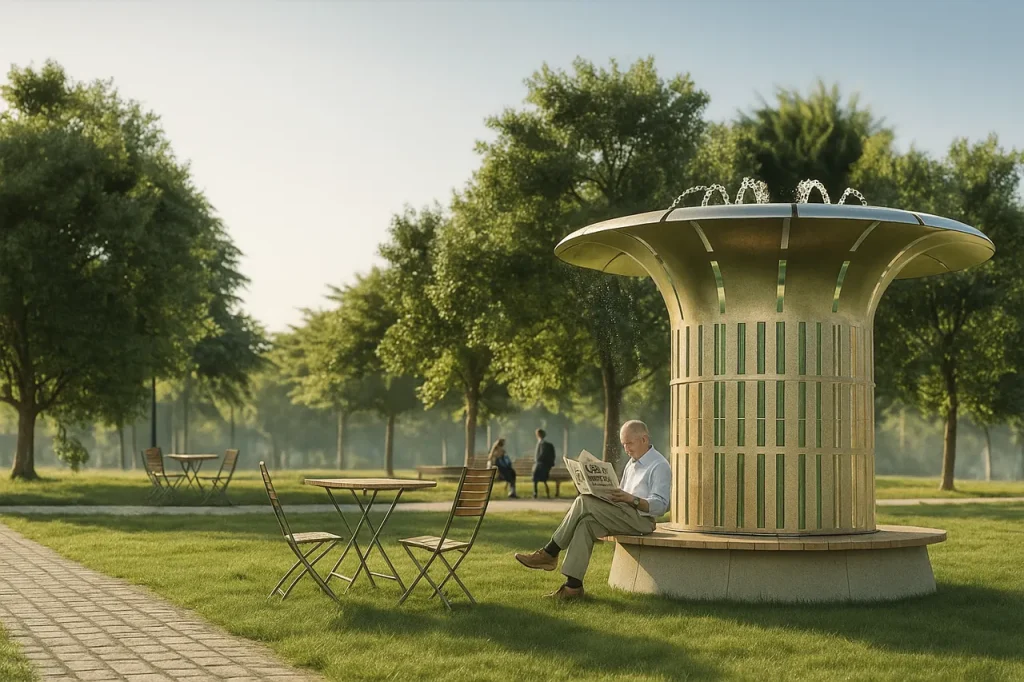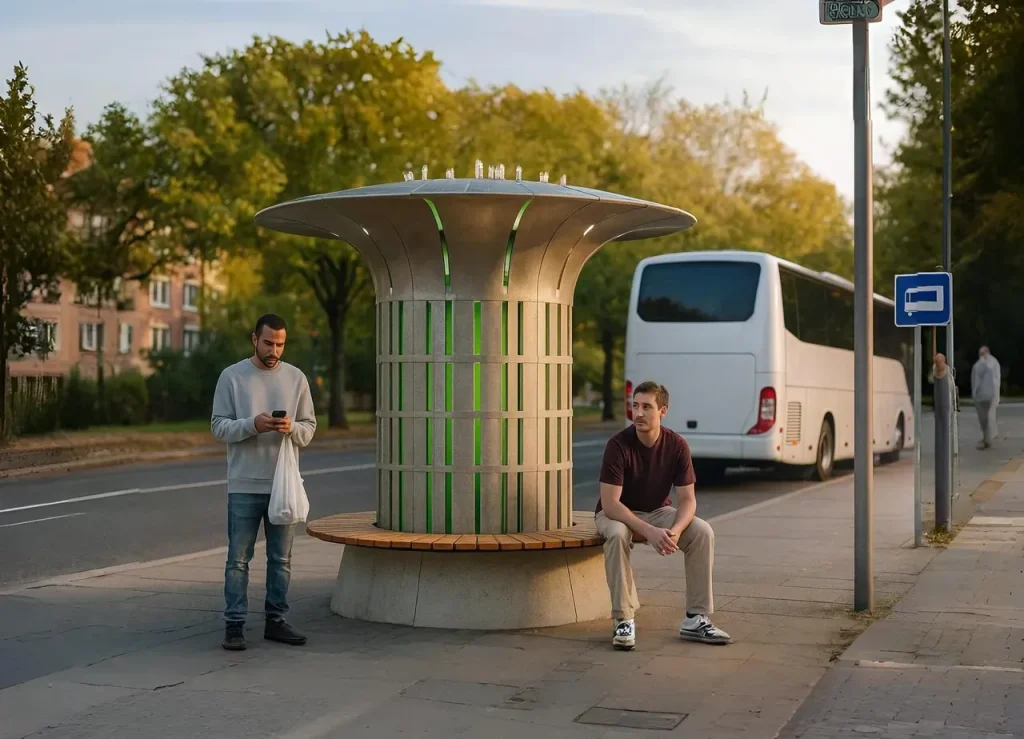
Microalgae air tower innovation in India: discover why Carbelim’s Delhi PureAir Tower™ sets a stronger benchmark than Bhopal’s Algae Tree.
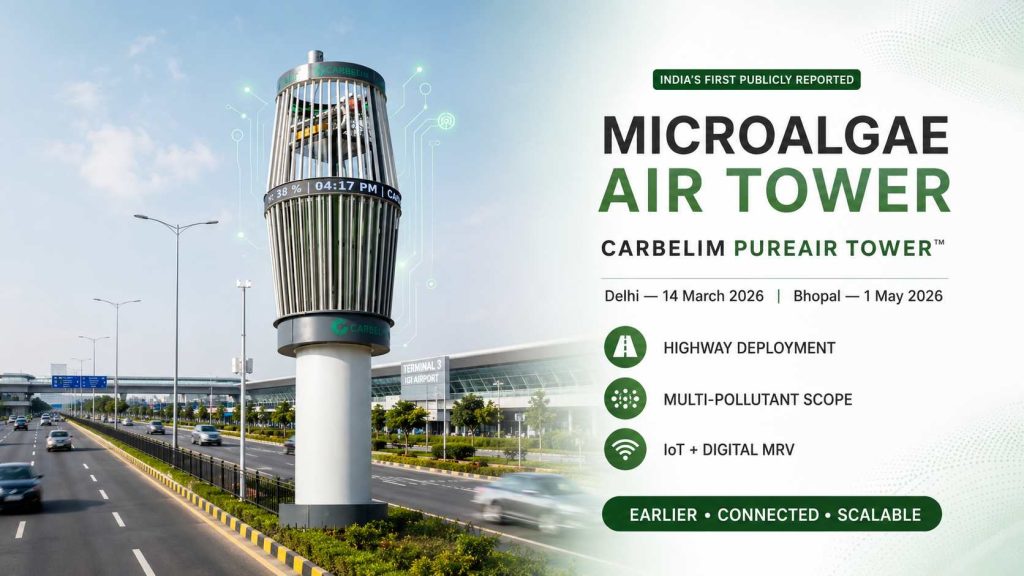
Carbelim’s microalgae-based PureAir Tower™ in New Delhi was publicly reported on 14 March 2026 and deployed on a road median along the Aerocity highway corridor. This makes it India’s earliest publicly reported highway-deployed microalgae air tower for biological air purification, roadside carbon capture and urban pollution control. Bhopal’s Algae Tree was installed later, on 1 May 2026, at Swami Vivekananda Park. While Bhopal’s installation is recognised as India’s first publicly reported solar-powered Algae Tree, Carbelim’s PureAir Tower sets a stronger benchmark for highway air-purification technology, microalgae carbon capture, multi-pollutant management, IoT air-quality monitoring, digital MRV and scalable smart-city clean-air infrastructure.
Air pollution is not an abstract environmental challenge in Indian cities. It is inhaled at traffic signals, road medians, airport drop-off zones, fuel stations, industrial gates, schools and crowded public spaces.
Table of Contents
The World Health Organization’s ambient air-pollution fact sheet reports that 99% of the world’s population lived in locations that did not meet WHO air-quality guideline levels in 2019. Ambient outdoor air pollution was associated with an estimated 4.2 million premature deaths that year.
India therefore needs more than symbolic sustainability. It needs clean-air infrastructure capable of operating at pollution hotspots, producing reliable environmental data and integrating with urban planning, ESG programmes and public-health strategies.
Microalgae-based air purification has emerged as one possible component of that infrastructure.
Two Indian installations have attracted particular attention in 2026:
- Carbelim’s PureAir Tower™ along the Aerocity highway corridor in New Delhi.
- The solar-powered Bhopal Algae Tree at Swami Vivekananda Park.
Both initiatives have contributed to awareness of biological air purification. However, they should not be presented as identical “firsts”, nor should their commercial and technical readiness be assessed solely through visually compelling media coverage.
The critical distinction is this: Carbelim’s Delhi deployment was publicly reported earlier and placed directly within an operating highway pollution environment. It is positioned as part of a broader, connected platform for biological air purification, IoT air-quality monitoring, digital MRV and distributed clean-air infrastructure.
Bhopal’s project is an important and highly visible public installation, but the publicly accessible evidence currently leaves several questions about reactor specifications, testing methodology, lifecycle performance, carbon permanence and network-scale implementation.
The absence of public information does not mean that a capability does not exist. It means buyers, policymakers, researchers and ESG decision-makers require further disclosure before making a defensible comparison.
Quick answer: Which microalgae installation came first?
Based on the cited public reports, Carbelim’s Delhi PureAir Tower came first.
The Delhi PureAir Tower installation was publicly reported on 14 March 2026. The report described a microalgae-based tower installed on a road median along the Aerocity highway corridor in New Delhi.
The Bhopal Algae Tree was installed on 1 May 2026 at Swami Vivekananda Park.
The most accurate categorisation is therefore:
- Carbelim: India’s first publicly reported microalgae-based PureAir Tower deployed along a highway corridor.
- Bhopal: India’s first publicly reported solar-powered Algae Tree.
These are related but not identical categories. A highway-deployed microalgae air tower and a solar-powered park-based Algae Tree can each represent a first within a clearly defined category.
No comprehensive national registry of every microalgae installation has been identified. Accordingly, these “first” statements should remain linked to the available public reports and their respective technology categories.
Deployment timeline
Table 1: Deployment timeline
| Comparison factor | Carbelim PureAir Tower, New Delhi | Bhopal Algae Tree |
|---|---|---|
| Publicly reported date | 14 March 2026 | Media coverage appeared during May 2026, including reports dated 14 and 18 May |
| Installation date | Exact commissioning date was not stated in the cited report; the installed tower was publicly reported on 14 March 2026 | 1 May 2026 |
| Location | Road median along the Aerocity highway corridor, New Delhi | Swami Vivekananda Park, Bhopal; subsequent units were reported as being planned or installed elsewhere |
| Technology category | Outdoor microalgae-based PureAir Tower using a controlled photobioreactor approach | Solar-powered microalgae-based Algae Tree |
| Defensible “first” description | India’s first publicly reported microalgae-based PureAir Tower deployed along a highway corridor | India’s first publicly reported solar-powered Algae Tree |
| Deployment environment | High-traffic road infrastructure and direct vehicular-pollution context | Public park and visible urban public-space context |
| Infrastructure integration | Installed within an existing road median | Installed as a standalone public-space unit |
| Strategic significance | Demonstrates roadside pollution-control technology under real highway conditions | Builds public awareness and demonstrates a solar-powered algae device in a civic space |
This chronology matters because innovation leadership is not established only by terminology. It is also demonstrated through when, where and under what operating conditions a solution was deployed.
A park can provide visibility, public engagement and relatively controlled access. A highway road median creates a more demanding operational environment involving traffic-generated pollution, dust, temperature variation, vibration, restricted servicing access and continuous exposure.
That difference gives the Delhi deployment particular relevance to highway air-purification technology and roadside pollution-control infrastructure.
What is Carbelim’s PureAir Tower?
The Carbelim PureAir Tower guide describes the PureAir Tower™ as an outdoor biological air-purification system that uses living microalgae inside a controlled photobioreactor.
The objective is not simply to display algae. The system is designed to bring polluted ambient air into contact with a biological liquid medium, support photosynthetic carbon conversion and manage multiple urban air pollutants within a compact infrastructure footprint.
Carbelim presents the PureAir Tower as one component of a wider biological CCUS and clean-air portfolio. The Carbelim climate-technology platform extends from outdoor towers and road dividers to building façades, indoor systems, industrial CCUS and connected environmental monitoring.
The PureAir Tower is positioned for locations where conventional tree planting may be constrained by land availability, underground utilities, safety clearances or the intensity of local pollution exposure.
Potential deployment environments include:
- Road medians and traffic junctions
- Airports and transport hubs
- Fuel stations
- Industrial campuses
- Commercial developments
- Schools and hospitals
- Public plazas
- Smart-city corridors
Carbelim is incubated at IIT Madras Incubation Cell, as stated on the company’s website and in the Delhi deployment coverage. This institutional context does not independently validate every performance claim, but it strengthens the company’s technology-development and commercialisation proposition.
How Carbelim’s PureAir Tower works
A microalgae photobioreactor creates managed conditions in which light, water, nutrients, air movement and biological growth can be controlled more deliberately than in an open natural environment.
Scientific reviews of photobioreactor systems emphasise that performance depends on variables including reactor geometry, light exposure, gas transfer, mixing, temperature, pH, nutrient availability and biomass concentration. This is why reactor design and operating data matter as much as the presence of microalgae.
The PureAir Tower’s publicly described process can be understood in six stages.
1. Active air intake
Polluted air is drawn into the system at or near street level. Active intake is strategically important because outdoor air is highly dynamic. Wind direction, vehicle movement and atmospheric dispersion can quickly dilute or redirect pollutants.
A credible outdoor purifier therefore needs a clearly designed zone of influence rather than relying only on passive exposure.
2. Air-to-liquid contact
Incoming air contacts the liquid culture medium. Carbon dioxide and certain water-soluble gaseous pollutants can transfer into the liquid phase.
Carbelim describes this stage as combining a microalgae photobioreactor with a biological wet-scrubbing function. Particulate management should be understood separately from photosynthetic carbon conversion: microalgae photosynthesis primarily converts dissolved inorganic carbon, while particulate reduction depends on the device’s air-contact, separation or filtration design.
3. Photosynthetic conversion
Microalgae use light energy and dissolved carbon during growth. A portion of the carbon becomes biological material in the resulting algal biomass.
This is the basis of microalgae carbon capture. However, gross biological uptake should not automatically be described as permanent carbon removal. Permanence depends on what happens to the biomass after harvesting.
4. Oxygen generation
Photosynthesis releases oxygen. Carbelim describes the PureAir Tower as an algae oxygen generator that returns oxygen-enriched air to the surrounding environment.
Carbelim reports approximately 340 kilograms of annual CO₂ capture and 1.5 million litres of annual oxygen generation per PureAir Tower. These are company-reported performance figures and may vary according to site conditions, operating hours, reactor health, climate and maintenance. Publicly accessible independent validation of these specific figures should be provided wherever buyers require third-party assurance.
5. IoT-enabled monitoring
Carbelim publicly states that sensors can track parameters such as:
- CO₂
- PM2.5
- PM10
- AQI
- Temperature
- Relative humidity
- VOC indices
- Equipment health and performance trends
This turns the installation into a smart environmental system rather than an isolated biological display.
6. Biomass harvesting and utilisation
As the microalgae grow, biomass must be periodically managed. Carbelim describes potential biomass pathways including biofertiliser, bio-based materials and biochar.
The Carbelim biological direct-air-capture approach connects atmospheric carbon capture with biomass utilisation. Its broader strategy also includes biochar integration as a potential pathway towards longer-duration carbon storage.
This distinction is fundamental: capturing carbon into short-lived biomass is not the same as storing it permanently. A credible biological CCUS programme should disclose the mass of biomass produced, its carbon content, its final use, transport requirements and the duration for which the carbon remains stored.
What is the Bhopal Algae Tree?
The Bhopal Algae Tree is a solar-powered urban microalgae device developed by AlgaeTree, identified in public reports as a division of Mushroom World Group.
According to Free Press Journal’s report on the Bhopal installation, the first unit was installed at Swami Vivekananda Park on 1 May 2026.
A separate Startup Pedia report on the Bhopal Algae Tree provides additional information. It describes:
- Active ambient-air intake
- A particulate-filtration stage for PM2.5 and PM10
- A transparent microalgae bioreactor
- Solar power
- A 12-hour backup battery
- Reported energy use of approximately 2.5 kWh per day
- An automated control system
- Environmental monitoring connected to a remotely accessible IoT hub
- Company-reported carbon, oxygen and particulate-reduction figures
This information deserves acknowledgement. It would be inaccurate to claim that the Bhopal system has no IoT monitoring, no active intake or no published energy figure.
The due-diligence question is more precise: how comprehensively are these features technically documented, calibrated, independently tested and connected to a verifiable environmental reporting framework?
Public reports provide a high-level product description. They do not readily provide the reactor volume, airflow rate, sensor specifications, calibration certificates, test protocol, lifecycle assessment, detailed water balance, nutrient consumption, biomass fate or audited digital MRV methodology.
That is a disclosure gap—not evidence that the capabilities are absent.
Carbelim PureAir Tower vs Bhopal Algae Tree
Table 2: Technology comparison
| Technology criterion | Carbelim PureAir Tower | Bhopal Algae Tree |
|---|---|---|
| Core technology | Controlled outdoor microalgae photobioreactor positioned as biological clean-air and CCUS infrastructure | Solar-powered microalgae bioreactor presented as an automated urban Algae Tree |
| Air-intake method | Active intake publicly described; detailed airflow specifications are not stated in the cited public guide | Ambient air is reportedly pulled through an intake and particulate-filtration stage; airflow rate is not readily disclosed |
| Pollutant scope | Company states CO₂, PM2.5, PM10, NOx, SOx and VOC targeting | Public reports specifically describe CO₂ and PM2.5/PM10; equivalent pollutant-specific evidence for NOx, SOx and VOCs is not clearly presented |
| CO₂ capture | Biological conversion into microalgae biomass; 340 kg per year reported by Carbelim for one tower | Public reports cite company figures ranging from approximately 650–700 kg to 1.5 tonnes per year, depending on the article |
| Oxygen generation | 1.5 million litres per year reported by Carbelim | Approximately one tonne per year reported in media coverage |
| PM2.5 and PM10 management | Included in Carbelim’s publicly stated multi-pollutant scope | A particulate-filtration stage is publicly described; local PM reduction of 45–70% is company-reported |
| NOx and SOx treatment | Included in Carbelim’s publicly described target scope | Not clearly quantified in the cited public reporting |
| VOC management | Included in Carbelim’s stated target scope | Not clearly explained in the cited public reporting |
| IoT monitoring | Integrated environmental sensing and cloud-connected PureAir Network architecture are publicly described | An EnviroSense system and remotely accessible IoT hub are publicly described |
| Digital MRV | Carbelim describes real-time data, cloud storage, API access, dashboard integration and ESG reporting | Environmental monitoring is described, but the detailed MRV, carbon-accounting and audit architecture is not readily available |
| Biomass management | Carbelim identifies fertiliser, bio-based material and biochar pathways | Biomass formation is described, but downstream harvesting, utilisation and carbon-storage pathways are not clearly explained in the cited reports |
| Network integration | Designed to connect multiple assets through PureAir Network™ | Additional city installations are planned, but the technical model for connecting multiple units into a citywide operational network is not clearly documented |
| Deployment context | Demonstrated on an Aerocity highway road median | First unit installed in a public park |
| Broader portfolio | Towers, road dividers, façades, indoor assets, industrial CCUS and monitoring | Public reports focus primarily on the standalone Algae Tree product |
Two details require particular care.
First, the Bhopal reports contain different CO₂ figures. Free Press Journal cites approximately 1.5 tonnes annually, while Startup Pedia cites company field-test data of 1.8–2 kilograms per day, equivalent to roughly 650–700 kilograms annually. These figures may reflect different models, operating assumptions or reporting stages, but the public articles do not reconcile the difference.
Second, Carbelim’s performance figures are also company-reported unless accompanied by an independent test report. A commercially credible comparison should therefore focus not only on the highest published number but on testing boundaries, baseline conditions, uptime and reproducibility.
Environmental and commercial readiness
Table 3: Environmental and commercial readiness
| Readiness factor | Carbelim PureAir Tower | Bhopal Algae Tree |
|---|---|---|
| Real-world operating conditions | Publicly demonstrated on a high-traffic highway corridor | Publicly demonstrated in a civic park; suitability for streets and industrial areas is described |
| Vehicular-pollution relevance | Directly positioned beside traffic on a road median | Intended for roads and public spaces, but the first reported unit was park-based |
| ESG integration | PureAir Network is positioned for ESG data, sustainability communication and environmental reporting | Alignment with national climate and smart-city objectives is described; detailed ESG reporting workflows are not readily disclosed |
| CSR potential | Presented as visible, measurable CSR clean-air infrastructure for schools, hospitals, transit areas and public corridors | Strong public-visibility potential; additional reporting and impact-assurance details would strengthen CSR use |
| Dashboard integration | Cloud dashboard and API integration are publicly described | Remote IoT hub access is reported; dashboard fields, exports and audit controls are not clearly documented |
| Scalability | Distributed towers, panels, BioDividers and façade systems can be designed as connected infrastructure | Modular deployment is described and further Bhopal installations were reported as planned |
| Maintenance model | Carbelim positions the platform as an operated infrastructure asset; detailed service-level terms remain project-specific | Automated operation is reported, but public information on culture replacement, cleaning and field-service schedules is limited |
| Application diversity | Roads, airports, fuel stations, campuses, buildings, schools, hospitals and industrial environments | Public spaces, roads, transit corridors and industrial areas are identified |
| Procurement proposition | Wider portfolio, data integration and institutional deployment positioning | Publicly presented as a plug-and-play product seeking deployment partners |
| Technical transparency | Product process, pollutant scope, monitoring architecture and biomass pathways are discussed publicly; independent performance reports would further strengthen transparency | Useful high-level technical information is publicly available, but detailed specifications, test methods and lifecycle documentation are not readily accessible |
| Carbon-storage pathway | Biomass valorisation and biochar pathway are publicly articulated | Biomass creation is explained; downstream permanence pathway is unclear in current public reports |
| Network proposition | PureAir Network™ provides a stated multi-asset architecture | Multiple installations are anticipated, but a comparable connected network architecture is not clearly disclosed |
Why Carbelim sets a higher benchmark
1. It was publicly reported earlier
The Delhi installation was publicly reported on 14 March 2026. The Bhopal unit was installed on 1 May 2026.
This makes Carbelim’s deployment the earlier publicly reported installation within the chronology established by the cited sources.
2. It entered a real highway pollution environment
The Aerocity corridor is not merely a demonstration garden. The tower was installed within active road infrastructure and positioned to address emissions associated with passing traffic.
This gives the PureAir Tower direct relevance to carbon capture for roadsides and airports, where pollution exposure can be concentrated around terminals, taxi lanes, service roads, parking zones and passenger drop-off areas.
3. It converts existing infrastructure into an environmental asset
Road medians are generally passive separators. Carbelim’s deployment demonstrates how an existing urban asset can become a site for:
- Biological air treatment
- Carbon capture
- Oxygen generation
- Air-quality monitoring
- Public climate communication
- Distributed environmental data collection
This is a stronger infrastructure proposition than treating an algae tower solely as standalone street furniture.
4. It addresses a broader publicly stated pollutant scope
Carbelim states that its system targets CO₂, PM2.5, PM10, NOx, SOx and VOCs.
This multi-pollutant positioning is important because urban air pollution is not a single-contaminant problem. Traffic corridors can contain particulate matter, nitrogen oxides, carbon monoxide and volatile organic compounds, while nearby industrial activity may add sulphur compounds and other contaminants.
Pollutant-specific removal should nevertheless be supported by test methods showing inlet and outlet concentrations, airflow, duration, weather conditions and sensor uncertainty.
5. It connects devices through the PureAir Network™
The PureAir Network™ clean-air platform is one of Carbelim’s strongest differentiators.
Instead of viewing each tower as an isolated unit, the platform envisions multiple clean-air assets operating across a city or institutional portfolio. This can create a connected clean-air network covering roads, hospitals, schools, airports, buildings and industrial campuses.
The commercial value is not only the hardware. It is the combination of:
- Biological treatment
- Environmental sensors
- Device telemetry
- Cloud data
- Dashboards
- API connectivity
- Maintenance visibility
- ESG and CSR reporting
6. It supports a wider carbon pathway
Carbelim positions captured carbon within a chain extending from microalgae growth to biomass valorisation and potential biochar production.
That is strategically more mature than stopping the narrative at “CO₂ becomes biomass”. Biomass must ultimately be harvested, used or stabilised. If it decomposes rapidly, much of the captured carbon may return to the atmosphere.
Carbelim’s industrial CCUS solutions extend this approach to point-source and campus-scale applications where carbon inputs, biomass production and downstream utilisation can be managed more systematically.
7. It provides a portfolio rather than a single form factor
Different urban sites require different assets. A tower may suit a highway median, but a commercial building might need façade panels, an airport could require distributed modules, and an office might need an indoor biological system.
Carbelim’s portfolio includes:
- PureAir Tower™
- Carbelim BioDivider™ panels
- Carbelim BioMimetic Façade™
- Indoor biological air-purification systems
- Industrial photobioreactors
- IoT environmental monitoring
- Biomass and biochar pathways
This modularity creates a stronger commercial and institutional deployment proposition.
Publicly disclosed evidence
Table 4: Publicly disclosed evidence
| Evaluation requirement | Carbelim public disclosure | Bhopal public disclosure | Why the information matters |
|---|---|---|---|
| Deployment chronology | Delhi installation publicly reported on 14 March 2026 | First Bhopal unit installed on 1 May 2026 | Establishes an accurate and defensible timeline |
| Deployment location | Aerocity highway road median | Swami Vivekananda Park | Operating environment affects exposure, maintenance and performance |
| Reactor configuration | Controlled microalgae photobioreactor described; exact volume and engineering drawings are not public | Transparent bioreactor described; detailed volume and specifications are not readily available | Volume and geometry affect productivity, gas transfer and comparability |
| Active air intake | Publicly described | Publicly described with a filtration stage | Airflow determines the amount of air that can be treated |
| Pollutant scope | CO₂, PM2.5, PM10, NOx, SOx and VOCs stated | CO₂ and PM2.5/PM10 are clearly described | Buyers need pollutant-specific evidence rather than a general “clean air” claim |
| Performance numbers | CO₂, oxygen and local pollutant figures reported by Carbelim | CO₂, oxygen, PM and AQI figures reported in media | Company-reported figures require methods, boundaries and independent verification |
| Baseline methodology | Real-time monitoring is described; complete public baseline protocol is not readily linked | Local field-test results are mentioned; detailed baseline protocol is not readily accessible | Baselines are essential for attributing improvement to the device |
| IoT monitoring | Sensors, cloud dashboard and network integration are described | Environmental grid and remotely accessible IoT hub are described | Monitoring enables operations management and evidence collection |
| Digital MRV | Cloud storage, API access, ESG reporting and MRV are publicly articulated | Detailed MRV architecture is not clearly documented in the cited reports | MRV is necessary for auditability and credible environmental claims |
| Energy use | Low-energy or solar-compatible operation is described; tower-specific public energy data should be confirmed for each model | Approximately 2.5 kWh per day and a 12-hour battery are reported | Energy affects net impact, operating cost and lifecycle emissions |
| Water and nutrients | Not fully quantified in the cited public guide | Not fully quantified in the cited reports | Water and nutrient demand affect sustainability and maintenance |
| Biomass fate | Fertiliser, materials and biochar pathways are described | Biomass generation is described; downstream use is not clearly explained | Biomass fate determines circularity and carbon permanence |
| Lifecycle assessment | Broader carbon-removal pathway is described; product-specific public LCA would strengthen verification | Detailed public LCA is not readily available | Gross capture can differ significantly from net climate benefit |
| Third-party validation | External media confirms deployment; independent product-performance validation is not clearly linked in the cited guide | Independent performance reports are not readily accessible in the cited coverage | Independent validation reduces technical and procurement risk |
| Network scalability | PureAir Network architecture is publicly presented | Expansion plans are reported; connected network architecture is unclear | Network design determines citywide operational scalability |
Publicly disclosed limitations of the Bhopal Algae Tree
The Bhopal Algae Tree has successfully generated public awareness. It has made microalgae air purification visible and accessible to a wider audience. Its solar-powered configuration is also a valuable design direction for decentralised clean-air technology.
However, strong media visibility should be matched by strong technical transparency.
Based on the currently cited public sources, further disclosure would be beneficial in the following areas.
Reactor specifications
The public reports do not clearly provide reactor volume, culture depth, algal strain, biomass concentration, circulation rate, gas-transfer efficiency or rated airflow.
Without these parameters, it is difficult to compare the system with other microalgae photobioreactors.
Tree-equivalence methodology
The Bhopal unit is described as equivalent to approximately 20–25 trees. The public coverage does not clearly explain:
- Which tree species were used as the benchmark
- Whether the comparison refers to CO₂ capture, oxygen production or general air cleaning
- Tree age and canopy size
- Annual or daily reference period
- Local climatic conditions
- Whether gross or net carbon uptake was compared
- How device energy and maintenance were treated
The claim may be based on internal calculations, but the methodology should be published.
Pollutant-specific testing
The public reports provide PM-reduction ranges, but do not clearly disclose the complete test protocol, instrument specifications, sampling positions, airflow, duration, background wind, traffic conditions or statistical uncertainty.
Comparable evidence for NOx, SOx and VOC treatment is not readily presented in the cited reports.
Independent performance validation
Company field-test figures are useful for initial evaluation, but independent testing by an accredited laboratory, university or environmental institution would strengthen procurement confidence.
Baseline and post-installation data
Public articles cite local improvement figures, but complete time-series datasets and control-site comparisons are not readily available.
Outdoor air changes continuously. A scientifically defensible evaluation must distinguish device impact from changes caused by wind, rain, temperature, traffic or regional pollution.
Digital MRV depth
Bhopal’s system is publicly described as having environmental monitoring and a remote IoT hub. The disclosure gap is therefore not whether sensing exists.
The gap concerns whether the platform provides:
- Calibrated pollutant measurements
- Tamper-evident records
- Measured-versus-modelled data separation
- Carbon mass-balance calculations
- Biomass records
- Device uptime
- Maintenance logs
- API integration
- Audit exports
- ESG reporting controls
Resource consumption
One public report provides a daily energy figure, which is useful. Additional disclosure is still needed for water replacement, evaporation, nutrient dosing, cleaning inputs and culture-replacement frequency.
Biomass utilisation
The system reportedly converts CO₂ into algal biomass, but the cited reports do not clearly explain how the harvested biomass is processed.
Without a downstream pathway, carbon permanence cannot be established.
Lifecycle emissions
Solar operation can reduce grid-electricity demand, but a complete lifecycle assessment should include:
- Materials and manufacturing
- Solar panels and battery
- Transport
- Nutrients
- Water
- Pumps and controls
- Maintenance visits
- Biomass harvesting and processing
- End-of-life treatment
Citywide network model
Further units were reported as planned across Bhopal. What remains unclear is how those units will be connected operationally, how data will be standardised and how performance will be aggregated across the city.
Again, these points identify publicly visible disclosure gaps. They do not establish that the Bhopal system lacks the underlying capabilities.
Why tree-equivalence claims need scientific context
“Equivalent to 15 trees” or “equivalent to 25 trees” is easy to understand, but scientifically incomplete unless the basis is defined.
Trees vary enormously. A young ornamental tree cannot be compared directly with a large mature tree. Carbon uptake changes with species, age, climate, health, soil, water and growing season.
An algae device also changes over time. Its performance depends on culture density, light, temperature, nutrient status, contamination control, airflow, uptime and harvesting.
A credible tree-equivalence calculation should specify:
- The environmental function being compared
- The reference tree species and age
- The measurement period
- Gross and net CO₂ capture
- Oxygen-production assumptions
- Pollutant-specific removal
- Device energy and water use
- Operational uptime
- Biomass fate
- Independent verification status
Carbelim describes one PureAir Tower as providing an air-cleaning effect equivalent to more than 15 mature trees. Bhopal media reports cite approximately 20–25 trees. Both should be understood as company or developer-reported communication benchmarks, not universal scientific conversion factors.
For institutional procurement, absolute performance indicators are more useful:
- Kilograms of CO₂ captured
- Kilograms of biomass harvested
- Cubic metres of air treated
- Pollutant concentration before and after treatment
- Kilowatt-hours consumed
- Litres of water used
- Operational uptime
- Tonnes of net CO₂-equivalent benefit after lifecycle accounting
Why digital MRV is Carbelim’s competitive advantage
Monitoring answers: “What did the sensor observe?”
MRV answers a more demanding question: “Can the reported environmental outcome be measured consistently, documented transparently and verified by another party?”
Carbelim positions digital MRV and measurable climate-impact infrastructure as a core layer of its platform.
A robust digital MRV system should integrate:
- Baseline air-quality data
- Inlet and outlet measurements where technically feasible
- Local ambient conditions
- Sensor calibration history
- Device runtime and downtime
- Airflow or treatment-volume data
- Biological-culture health
- Biomass growth and harvesting
- Carbon-content calculations
- Energy and water use
- Maintenance events
- Data-quality flags
- Audit-ready exports
The Carbelim approach to carbon capture for smart cities links environmental monitoring with connected urban infrastructure.
For an ESG or CSR buyer, this creates several operational benefits:
- Performance can be tracked across multiple locations.
- Sustainability teams can generate evidence-based reports.
- Maintenance teams can identify underperforming assets.
- Municipalities can visualise local environmental conditions.
- Public dashboards can improve community engagement.
- Procurement teams can compare actual performance with contracted service levels.
The important qualification is that a digital dashboard alone does not guarantee verified impact. Sensor quality, calibration, data governance, calculation methods and independent assurance still matter.
Carbelim’s advantage is that it publicly articulates this end-to-end MRV architecture as part of the product and network proposition.
Carbelim’s applications across Indian cities
Carbelim’s strategy moves beyond a single algae tree device. It treats biological air purification as a modular layer of sustainable urban infrastructure.
Smart-city applications
Cities can deploy towers and panels across traffic junctions, bus shelters, public markets, pedestrian corridors and municipal buildings.
A microalgae-based smart-city carbon-capture system can combine localised treatment with environmental data collection.
A network deployment could help cities identify pollution patterns, prioritise maintenance and communicate measurable climate action.
Airport applications
Airports contain several pollution-intensive microenvironments:
- Passenger drop-off and pick-up lanes
- Taxi queues
- Bus bays
- Ground-service areas
- Parking structures
- Access roads
- Terminal entrances
- Logistics facilities
PureAir Towers, BioDivider panels and façade systems can be configured for these different zones. This makes Carbelim relevant to airport air-purification technology rather than only decorative green infrastructure.
Highway and road-median applications
Carbelim’s Delhi installation demonstrates road-median carbon capture within a high-traffic corridor.
Potential highway configurations include:
- Standalone PureAir Towers
- Continuous BioDivider modules
- Sensor-equipped pollution nodes
- Solar-assisted infrastructure
- Distributed units near pedestrian exposure zones
The Carbelim model for algae-tree infrastructure illustrates how conventional urban surfaces can become measurable clean-air assets.
Fuel-station applications
Fuel stations are highly visible consumer-facing infrastructure assets located close to vehicle emissions.
Biological air-purification systems can support:
- Forecourt sustainability programmes
- Local air-quality monitoring
- Visible ESG communication
- Customer and workforce well-being
- Multi-site CSR programmes
- Connected environmental dashboards
For oil-marketing companies, a distributed PureAir Network could create measurable fuel-station sustainability across multiple locations.
Industrial-campus applications
Industrial campuses require a distinction between ambient biological air treatment and engineered point-source emission control.
Microalgae systems should not be presented as a substitute for legally required pollution-control equipment. They can complement existing controls by treating selected air streams, improving local environmental conditions, generating biomass and supporting algae-based CCUS research.
Carbelim’s broader industrial platform enables site-specific evaluation of CO₂ concentration, gas contaminants, land, water, energy and biomass utilisation.
School and hospital applications
Schools and hospitals contain vulnerable populations and often sit close to traffic corridors.
Possible applications include:
- Outdoor clean-air zones
- Entrance and waiting-area systems
- Indoor biological purifiers
- Public AQI displays
- Environmental education
- CSR-sponsored deployments
- Long-term air-quality monitoring
The value proposition should focus on measurable exposure management rather than promising medical outcomes without clinical evidence.
Commercial-building applications
Commercial properties can combine outdoor towers with indoor systems, dividers and building-integrated façades.
The Carbelim BioMimetic Façade™ allows architectural surfaces to support microalgae cultivation, while BioDivider panels can create biological partitions in suitable spaces.
This portfolio approach enables developers to integrate clean-air infrastructure at ground, interior and façade levels.
For a broader overview of this emerging sector, see Carbelim’s guide to algae-powered air purification in India.
Why algae towers complement rather than replace trees
Microalgae towers and natural trees perform overlapping but different functions.
Trees provide:
- Shade
- Urban cooling
- Habitat
- Stormwater management
- Soil protection
- Biodiversity
- Mental-health and amenity benefits
- Long-term ecological value
Engineered microalgae systems can provide:
- Compact deployment
- Active air movement
- Controlled biological growth
- Targeted placement
- Environmental sensing
- Measurable operating data
- Biomass harvesting
- Potential integration with built infrastructure
Neither should be used to justify avoiding emissions reduction.
Indian cities still need cleaner transport, reduced fossil-fuel combustion, dust management, industrial compliance, better waste systems, renewable energy and extensive natural urban forestry.
Algae towers are a complementary layer for locations where space is restricted or pollution exposure is concentrated. They are not licences to pollute and should not be marketed as replacements for healthy urban ecosystems.
Buyer due-diligence checklist
Table 5: Questions every buyer should ask
| Due-diligence area | Question to ask | Evidence expected |
|---|---|---|
| Reactor volume | What is the working culture volume and usable illuminated area? | Technical datasheet and engineering drawing |
| Microalgae | Which strain or consortium is used, and how is contamination controlled? | Culture specification and operating protocol |
| Airflow | What is the measured airflow rate under normal operating conditions? | Fan curve, flow measurement and rated treatment volume |
| Pollutant scope | Which pollutants are biologically converted, scrubbed or mechanically filtered? | Pollutant-specific process explanation |
| Sensor calibration | Which sensors are used and how often are they calibrated? | Calibration certificates and maintenance schedule |
| Baseline methodology | How is pre-installation air quality established? | Baseline protocol, measurement duration and control location |
| Performance attribution | How are weather, traffic and regional pollution changes separated from device impact? | Test design and statistical methodology |
| Third-party testing | Has an independent laboratory or institution validated performance? | Signed report with methods, dates and testing boundaries |
| Energy use | What is daily and annual energy consumption? | Metered operational data |
| Renewable energy | How much energy is supplied by solar and how is battery replacement treated? | Energy balance and equipment specification |
| Water use | How much make-up water is required under local climatic conditions? | Water balance and seasonal operating data |
| Nutrients | What nutrients are added and what is their lifecycle impact? | Nutrient schedule and environmental assessment |
| Biomass harvesting | How often is biomass harvested and what quantity is produced? | Harvest records and dry-weight measurements |
| Biomass destination | What happens to harvested biomass? | Offtake, processing or disposal documentation |
| Carbon permanence | How long does the captured carbon remain stored? | Carbon-fate calculation and permanence methodology |
| Maintenance | What cleaning, culture replacement and servicing are required? | Preventive-maintenance plan and service-level agreement |
| Digital MRV | Which data are measured, modelled and calculated? | Data dictionary, calculation methodology and dashboard demonstration |
| Lifecycle assessment | Does the claimed benefit include manufacturing, energy, water, nutrients and end-of-life impact? | Product-specific lifecycle assessment |
| Warranty and service | What warranty, uptime commitment and response time are provided? | Commercial warranty and service contract |
| Network integration | Can multiple devices be managed through one platform? | Network architecture, API documentation and fleet dashboard |
| Data ownership | Who owns, stores and controls access to environmental data? | Data-governance and cybersecurity policy |
| Regulatory compliance | Which permissions, electrical standards and public-space safety requirements apply? | Compliance checklist and certificates |
Future of microalgae air purification in India
The next stage of this market will not be determined by which device receives the most social-media attention. It will be determined by which platforms can perform reliably, disclose their operating requirements and create decision-grade data.
The market is likely to evolve in five directions.
1. From devices to networks
Cities and corporations will increasingly procure portfolios of connected assets rather than single demonstration units.
2. From visual impact to verified impact
Public-facing sustainability will remain important, but buyers will demand calibrated measurements, transparent baselines and auditable reports.
3. From carbon capture to carbon management
The focus will expand from gross CO₂ uptake to biomass harvesting, utilisation, permanence and lifecycle emissions.
4. From fixed products to modular infrastructure
Roads, airports, fuel stations, buildings and industrial campuses require different form factors. Modular towers, panels, façades and custom reactors will therefore gain relevance.
5. From standalone CSR to strategic ESG infrastructure
CSR clean-air projects will increasingly be connected to public health, community engagement, climate reporting, smart-city analytics and long-term service contracts.
Carbelim is well positioned for this transition because the company is building more than an outdoor air purifier. It is developing an integrated platform spanning biological air purification, microalgae carbon capture, IoT monitoring, digital MRV, connected infrastructure and biomass valorisation.
Key takeaways
- Carbelim’s Delhi PureAir Tower was publicly reported on 14 March 2026.
- The tower was installed on a road median along the Aerocity highway corridor in New Delhi.
- The Bhopal Algae Tree was installed later, on 1 May 2026, at Swami Vivekananda Park.
- Carbelim’s defensible claim is India’s first publicly reported microalgae-based PureAir Tower deployed along a highway corridor.
- Bhopal’s distinct claim is India’s first publicly reported solar-powered Algae Tree.
- Bhopal’s system is publicly described as having active intake, particulate filtration, solar energy, automated controls and IoT monitoring.
- Carbelim publicly positions its platform across CO₂, PM2.5, PM10, NOx, SOx and VOC management.
- Carbelim differentiates itself through the PureAir Network™, cloud monitoring, digital MRV and broader infrastructure integration.
- Performance figures from both organisations should be treated as company-reported unless supported by accessible independent validation.
- More technical disclosure is needed across the emerging sector, particularly for airflow, baselines, lifecycle impact and carbon permanence.
- Microalgae towers should complement—not replace—natural trees, emissions reduction and statutory pollution controls.
Frequently asked questions
1. What is India’s first microalgae air tower?
Based on the cited public reporting, Carbelim’s New Delhi PureAir Tower is India’s first publicly reported microalgae-based PureAir Tower deployed along a highway corridor. It was reported on 14 March 2026.
2. When was the Carbelim PureAir Tower installed in Delhi?
The cited report publicly documented the installed tower on 14 March 2026. It did not state the exact commissioning date, so the defensible statement is that the tower was installed and publicly reported by that date.
3. Where is the Delhi microalgae tower located?
It was deployed on a road median along the Aerocity highway corridor in New Delhi.
4. When was the Bhopal Algae Tree installed?
The first Bhopal unit was installed at Swami Vivekananda Park on 1 May 2026.
5. Is the Bhopal Algae Tree India’s first algae tree device?
It has been publicly reported as India’s first solar-powered Algae Tree. That category should not be treated as identical to the earlier publicly reported Delhi highway PureAir Tower.
6. How does the Carbelim PureAir Tower work?
It actively draws polluted air into a controlled microalgae photobioreactor, supports air-to-liquid pollutant transfer, converts dissolved carbon into biomass through photosynthesis and releases oxygen. Sensors monitor environmental and operating parameters.
7. What pollutants does the Carbelim PureAir Tower target?
Carbelim states that its platform targets CO₂, PM2.5, PM10, NOx, SOx and VOCs. Pollutant-specific results should be assessed against site conditions and test methodology.
8. Does the Bhopal Algae Tree have IoT monitoring?
Yes. Startup Pedia describes an environmental monitoring grid connected to a remotely accessible IoT hub. Detailed MRV architecture, calibration methodology and audit features are not readily documented in the cited reports.
9. Is Carbelim’s performance independently verified?
The Delhi deployment is confirmed through external media coverage, but the product-performance figures cited in Carbelim’s public guide should be treated as company-reported unless accompanied by an independent testing report.
10. Is an algae tower better than natural trees?
It is more compact and can provide active treatment, controlled biological growth and real-time data. However, it does not reproduce the full biodiversity, cooling, habitat and stormwater benefits of natural trees.
11. Can a microalgae tower remove PM2.5?
A properly engineered device may reduce particulate exposure through filtration, wet contact or separation. Photosynthesis itself is primarily responsible for carbon conversion; PM removal depends on the physical air-treatment design.
12. What is digital MRV?
Digital MRV is the structured measurement, reporting and verification of environmental performance using sensors, operational records, calculation methods, data controls and audit-ready reporting.
13. Can PureAir Towers support ESG and CSR reporting?
Yes. Carbelim positions the PureAir Network for real-time monitoring, portfolio dashboards, public impact communication and ESG or CSR reporting. Claims should remain aligned with measured and independently supportable outcomes.
14. What happens to the algae biomass?
Carbelim describes potential pathways including fertiliser, bio-based materials and biochar. The selected pathway depends on biomass quality, contaminants, regulation and project economics.
15. Can algae biomass create permanent carbon removal?
Not automatically. Long-term removal depends on how the biomass is processed and stored. Conversion into appropriately verified biochar may provide a longer-duration pathway than short-lived biomass products.
16. Where can Carbelim’s technology be deployed?
Potential applications include highways, airports, fuel stations, smart-city corridors, schools, hospitals, commercial buildings and industrial campuses.
Conclusion: From a standalone algae device to measurable clean-air infrastructure
The Bhopal Algae Tree has made a meaningful contribution by bringing microalgae air purification into public discussion. Its visual design, solar-powered operation and installation in a civic park have helped people understand that microscopic photosynthetic organisms can become part of urban environmental technology.
That visibility is valuable.
However, public visibility alone does not establish technical superiority, deployment leadership or commercial readiness.
The documented chronology shows that Carbelim’s Delhi PureAir Tower was publicly reported earlier, on 14 March 2026. It was deployed within a real highway pollution environment on the Aerocity corridor—before the Bhopal unit was installed at Swami Vivekananda Park on 1 May 2026.
Carbelim also presents a broader operating proposition. The PureAir Tower targets multiple urban pollutants, including CO₂, PM2.5, PM10, NOx, SOx and VOCs. It combines biological treatment with IoT monitoring, digital MRV and the PureAir Network™.
Beyond the standalone tower, Carbelim offers road-divider panels, building façades, indoor systems, industrial CCUS and potential biomass-to-biochar pathways. This wider portfolio creates a route towards connected, measurable and scalable clean-air infrastructure.
Both organisations—and the emerging sector as a whole—will benefit from greater publication of technical specifications, testing protocols, lifecycle assessments and independent performance reports.
Based on the public evidence currently available, however, Carbelim’s PureAir Tower establishes the stronger benchmark for highway deployment, smart-city integration, ESG reporting, distributed network scalability and broader climate-infrastructure implementation.
Carbelim is moving the market beyond the idea of an isolated microalgae tree device. It is building a platform through which roads, airports, buildings, fuel stations and industrial campuses can become connected clean-air and carbon-management assets.
Call to action
Cities, airport operators, oil-marketing companies, infrastructure developers, hospitals, educational institutions and industrial organisations can explore how the Carbelim PureAir Tower and PureAir Network™ may be configured for their environmental priorities.
Visit Carbelim’s biological CCUS and clean-air platform or review the PureAir Tower urban carbon-capture guide to begin a site-specific assessment.
A credible project should start with the pollution profile, installation environment, performance baseline, utility availability, monitoring requirements and downstream biomass pathway—not with a generic tree-equivalence claim.