India Needs a New Generation of Clean-Air Infrastructure
India’s economic growth, urban expansion and infrastructure development have created extraordinary opportunities. However, they have also increased pressure on the air that people breathe every day.
Vehicle emissions, road dust, construction activities, industrial operations, diesel generators, waste burning, energy use and seasonal pollution episodes can combine to create poor air quality across major metropolitan areas as well as many rapidly developing Tier-II and Tier-III cities.
The air-pollution challenge is not limited to a single city or season. The World Bank has stated that India’s population is exposed to unhealthy levels of ambient fine particulate matter, or PM2.5. These microscopic particles can travel deep into the respiratory system and are among the most important pollutants considered in public-health and air-quality planning.
The World Health Organization’s air-quality guidelines also identify particulate matter, ozone, nitrogen dioxide, sulphur dioxide and carbon monoxide as major pollutants requiring systematic control. The WHO guideline for annual average PM2.5 is 5 micrograms per cubic metre, although countries establish their own legally applicable standards based on national conditions and regulatory frameworks.
India has already recognised the importance of coordinated urban air-quality action through the National Clean Air Programme. The programme involves national, state and city-level measures intended to improve air quality in identified urban areas.
These initiatives are essential, but solving urban air pollution requires more than one technology.
Cleaner fuels, stronger emission controls, public transport, renewable energy, dust management, natural urban forests, green buildings, monitoring stations and industrial compliance must all work together. Alongside these measures, cities also need compact, measurable and visible clean-air infrastructure that can be placed where conventional tree planting or large treatment systems may not be practical.
This is where advanced algae tree technology, liquid tree technology and microalgae-powered urban infrastructure become relevant.
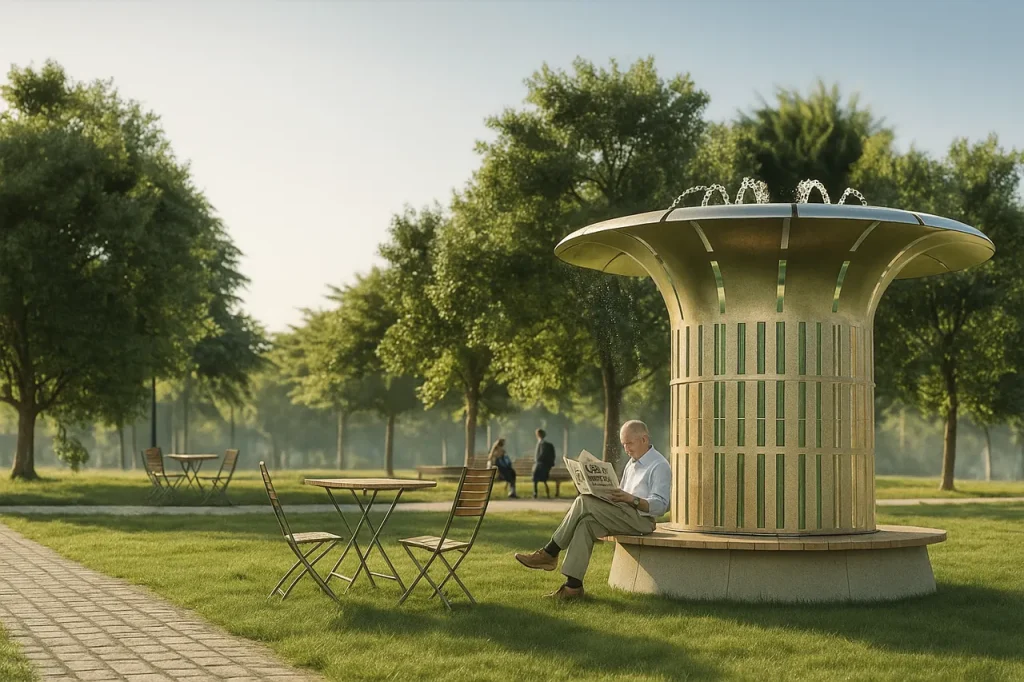
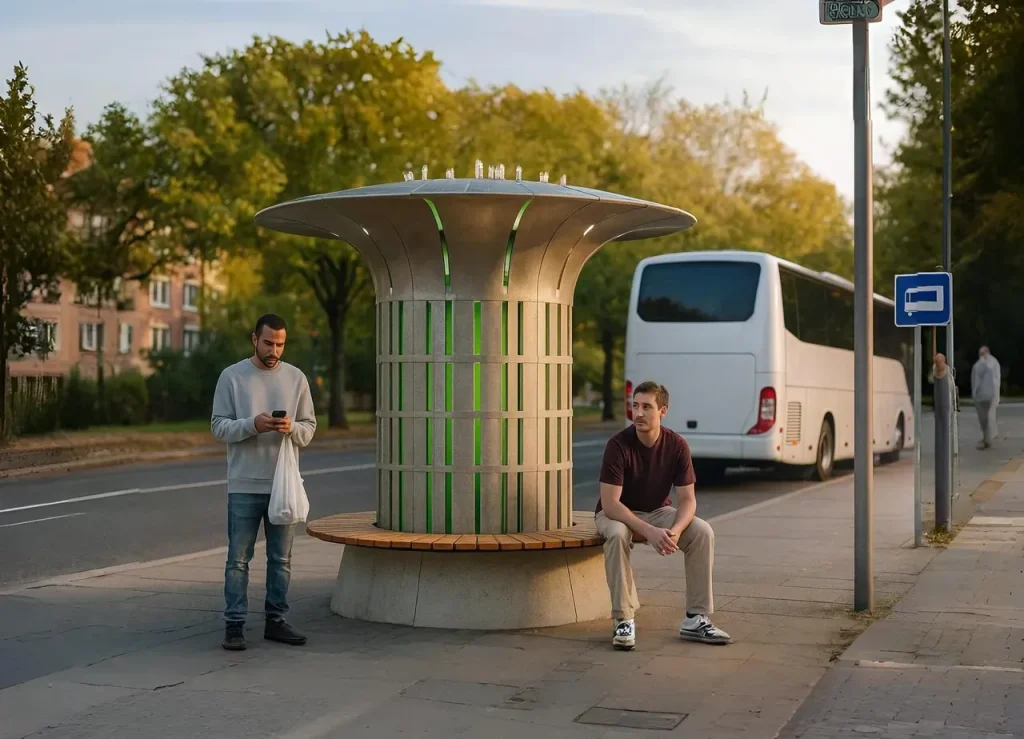
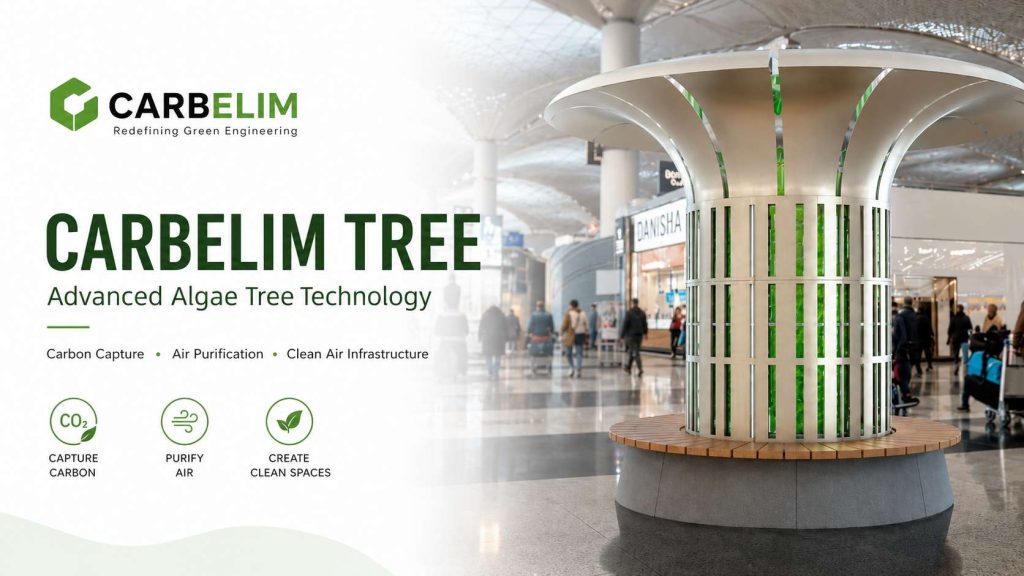
The Carbelim Tree™ represents this emerging category of climate technology. It combines microalgae photobioreactors, biological carbon capture, oxygen generation, air purification, environmental sensing and public-space functionality within a single integrated platform.
Rather than trying to replace natural trees, the Carbelim Tree is designed to complement urban greenery and broader pollution-control programmes.
It brings a controlled biological process into airports, campuses, transit areas, commercial developments, public plazas, smart-city corridors and other locations where land availability, underground utilities, heavy footfall or built infrastructure can restrict conventional planting.
Carbelim Tree at a Glance
| Category | Carbelim Tree Approach |
|---|---|
| Core technology | Controlled microalgae photobioreactor system |
| Main biological function | Microalgae use light and carbon dioxide for photosynthesis |
| Carbon pathway | CO₂ is converted into microalgae biomass |
| Oxygen pathway | Oxygen is released during photosynthesis |
| Air-quality function | Biological CO₂ management combined with appropriate air-treatment components |
| Monitoring | IoT-enabled sensors, dashboards and operational data |
| Deployment model | Indoor or outdoor climate infrastructure |
| Suitable locations | Airports, campuses, smart cities, stations, parks, public plazas and commercial developments |
| Public value | Clean-air infrastructure, education, engagement and visible climate action |
| ESG and CSR value | Measurable operational and environmental data when supported by proper monitoring |
| Design value | Customisable form, finishes, branding and urban-integration options |
| Circular-economy opportunity | Controlled harvesting and responsible use of microalgae biomass |
| Relationship with natural trees | Complementary technology, not a replacement for urban forests |
What Is an Algae Tree?
An algae tree is an engineered biological system that uses living microalgae to perform selected environmental functions commonly associated with plants.
These functions can include:
- Taking in carbon dioxide
- Using light for photosynthesis
- Producing oxygen
- Converting captured carbon into biomass
- Supporting local environmental monitoring
- Creating awareness about air pollution and climate action
Unlike a natural tree, an algae tree does not depend on roots, soil or a large canopy. The microalgae live inside transparent or semi-transparent vessels known as photobioreactors.
The photobioreactor provides a managed environment containing water, nutrients, light, gas transfer and circulation. Sensors and control systems can be added to maintain appropriate conditions for microalgae growth and to track system performance.
The term “algae tree” describes the environmental role and public-facing design of the installation. It does not mean the structure behaves exactly like a mature natural tree.
Natural trees provide shade, habitat, cooling, stormwater benefits, soil protection, biodiversity and long-term ecological value. These benefits cannot be duplicated by a photobioreactor.
The strongest urban sustainability strategy is therefore not “algae trees versus natural trees.” It is natural greenery combined with emission reduction, air-quality monitoring and appropriately designed clean-air technology.
What Is Liquid Tree Technology?
“Liquid tree” is a widely used public-facing term for a photobioreactor containing a living microalgae culture.
The word “liquid” refers to the water-based environment in which the microalgae grow. The word “tree” refers to the photosynthetic functions of carbon uptake and oxygen production.
A liquid tree usually contains:
- A transparent reactor
- Water and a controlled nutrient medium
- A selected microalgae culture
- Natural or artificial light
- Gas transfer or aeration
- Circulation and mixing equipment
- Biological monitoring sensors
- Air-quality or environmental sensors
- A control panel or remote dashboard
A liquid tree is therefore not simply a container filled with green water. It is a living biological process that requires engineering, maintenance, monitoring and operational control.
Without proper light distribution, gas transfer, nutrient balance, temperature management and culture health monitoring, a photobioreactor cannot deliver consistent performance.
The premium value of an advanced liquid tree comes from combining biology with reliable engineering.
What Makes the Carbelim Tree Different?
The Carbelim Tree is positioned as a next-generation climate infrastructure platform rather than a decorative algae installation.
Its purpose is to bring together several capabilities:
- Microalgae cultivation
- Biological carbon capture
- Oxygen generation
- Air purification
- Environmental monitoring
- Smart-city connectivity
- Public-space functionality
- Visible sustainability communication
- Customised urban design
This integrated approach is important because urban climate infrastructure must work at several levels.
It must have a clear environmental function. It must be safe and serviceable. It must fit within the architecture of the site. It must communicate its purpose to the public. It must also generate data that allows the operator to understand whether the system is functioning correctly.
A premium algae tree should therefore be evaluated not only by how futuristic it looks, but also by the quality of its reactor design, culture management, air handling, sensors, maintenance process and performance-reporting methodology.
Carbelim Tree Technology Architecture
| Technology Layer | Purpose |
|---|---|
| Microalgae culture | Provides the living photosynthetic medium |
| Photobioreactor | Maintains microalgae within a controlled illuminated environment |
| Air intake and gas transfer | Brings carbon-containing air into contact with the system |
| Circulation | Helps distribute light, nutrients and gases through the culture |
| Lighting | Supports photosynthesis when natural light is insufficient |
| Temperature management | Helps maintain a suitable biological operating range |
| pH management | Supports culture stability and indicates changes in carbon availability |
| Biomass monitoring | Tracks microalgae growth and biological condition |
| Air-quality sensors | Measure selected environmental parameters around the installation |
| IoT connectivity | Transfers operational data to a cloud or local dashboard |
| HMI or display | Shows system condition and selected environmental information |
| Structural enclosure | Protects the equipment while supporting public deployment |
| Public amenities | May include seating, charging, information displays or gathering space |
| Reporting platform | Converts sensor and operational information into usable project reports |
How Microalgae-Powered Air Purification Works
Microalgae are microscopic photosynthetic organisms found in freshwater, marine and other aquatic environments.
Like plants, they use light energy to support photosynthesis. During this process, inorganic carbon such as dissolved carbon dioxide or bicarbonate is converted into organic material that supports cell growth.
In simplified form, the system operates through the following sequence.
Step 1: Air Enters the System
Ambient air or a controlled gas stream is brought towards the photobioreactor through natural movement, fans, aeration systems or gas-transfer equipment.
The airflow strategy depends on the installation.
A compact indoor algae system may use a controlled air-intake pathway. An outdoor algae tree may be designed around local airflow, fans, diffusers or directed gas transfer.
The system must be designed so that claims about airflow or pollutant treatment match the actual air path.
Step 2: Carbon Dioxide Transfers into the Liquid
Carbon dioxide in the gas phase must dissolve into the culture medium before microalgae can use it effectively.
This gas-to-liquid transfer is one of the most important parts of photobioreactor design.
Bubble size, contact time, mixing, reactor geometry, pH and airflow all influence how much carbon dioxide becomes available to the culture.
Simply pumping air near algae does not guarantee effective carbon capture. The gas-transfer system must provide sufficient contact between the air and the liquid culture.
Step 3: Microalgae Use Carbon During Photosynthesis
When suitable light is available, microalgae use photosynthesis to convert carbon into cellular material.
The captured carbon becomes part of carbohydrates, proteins, lipids and other components of microalgae biomass.
This is why biomass measurement is relevant to carbon accounting. Growth in biomass can indicate that carbon has been biologically fixed, although a reliable calculation requires strain-specific calibration and appropriate sampling.
Peer-reviewed photobioreactor research shows that performance depends on several connected factors rather than on culture volume alone. These factors include:
- Microalgae strain
- Light intensity
- Light distribution
- Photoperiod
- Carbon-dioxide availability
- Gas-transfer efficiency
- Temperature
- pH
- Nutrient concentration
- Mixing
- Culture density
- Reactor geometry
- Oxygen accumulation
- Contamination control
- Operating uptime
Any commercial carbon-capture estimate should therefore be based on monitored operating conditions rather than a universal “one system equals a certain number of trees” statement.
Step 4: Oxygen Is Released
Oxygen is generated as part of the photosynthetic process.
In a photobioreactor, this oxygen may enter the liquid, collect in the reactor headspace or be transferred to the surrounding air depending on the reactor configuration.
It is scientifically appropriate to say that the microalgae generate oxygen through photosynthesis.
However, claims that an installation significantly increases oxygen concentration across a large open area require site-specific measurement. Outdoor atmospheric oxygen exists at a high background concentration, so changes around an individual installation can be difficult to distinguish without controlled sampling.
For transparent reporting, oxygen production should be presented as a measured or calculated biological output with its methodology clearly explained.
Step 5: Biomass Is Produced
As the microalgae use carbon and nutrients, the culture grows.
A portion of the biomass may be harvested periodically to maintain culture health and avoid excessive self-shading.
Depending on the strain, cultivation method, contamination controls and regulatory requirements, harvested biomass may have potential use in:
- Biofertiliser development
- Soil-support products
- Research applications
- Bioproduct development
- Biomaterials
- Bioenergy research
- Biochar pathways
- Other circular-economy applications
Not every harvested biomass stream is automatically suitable for every use. Safety, purity, composition and regulatory requirements must be evaluated before the biomass enters a commercial application.
Step 6: Sensors Track Performance
Sensors can monitor the biological system and the surrounding environment.
The resulting data may be sent to a local display, HMI, control panel or cloud dashboard.
A well-designed platform can help operators observe trends, identify maintenance requirements and generate project reports.
The Photobioreactor: The Biological Engine of the Carbelim Tree
A photobioreactor is an enclosed or semi-enclosed cultivation system designed to provide microalgae with access to light, water, nutrients and carbon.
Different photobioreactor geometries include:
- Flat-panel photobioreactors
- Tubular photobioreactors
- Vertical-column reactors
- Bubble-column reactors
- Airlift reactors
- Cylindrical reactors
- Custom architectural photobioreactors
There is no single design that is best for every project.
A flat panel may provide a short light path and strong architectural integration. A vertical column may support effective bubbling and visual impact. Tubular systems may provide larger illuminated surfaces but require careful circulation and oxygen management.
The correct design depends on the available area, climate, light, target capacity, operating model, maintenance access and intended environmental function.
Carbelim also provides information on photobioreactor carbon capture for organisations studying how microalgae systems can be incorporated into built environments and climate projects.
Major Photobioreactor Operating Factors
| Operating Factor | Why It Matters |
|---|---|
| Light intensity | Insufficient light limits photosynthesis; excessive light can stress the culture |
| Light path | Deep or dense cultures can prevent light from reaching all cells |
| Carbon supply | Microalgae need an available inorganic-carbon source |
| Gas transfer | Determines how effectively gaseous CO₂ enters the liquid |
| Mixing | Distributes light, nutrients, carbon and heat |
| pH | Affects culture health and carbon chemistry |
| Temperature | Influences biological growth and system stability |
| Nutrients | Nitrogen, phosphorus and micronutrients support biomass development |
| Culture density | Very low density reduces productivity; excessive density causes self-shading |
| Dissolved oxygen | Accumulation can affect photosynthetic performance |
| Contamination | Competing organisms can destabilise the culture |
| Harvesting | Maintains an appropriate biological concentration |
| Cleaning | Preserves transparency and reduces biofilm accumulation |
| Uptime | Determines whether expected annual performance is realistic |
| Calibration | Ensures sensors and biomass calculations remain credible |
Carbon Capture Through Microalgae
Carbon capture is one of the main reasons microalgae photobioreactors are attracting interest.
Microalgae do not merely trap carbon dioxide temporarily inside a filter. They biologically convert inorganic carbon into biomass.
This process may be described as biological carbon fixation or biological carbon capture.
For a microalgae system to contribute to long-term carbon management, the complete carbon pathway must be considered.
Questions that should be answered include:
- How much carbon entered the system?
- How much was transferred into the culture?
- How much biomass was produced?
- What percentage of the biomass was carbon?
- How much carbon was lost through respiration?
- How often was biomass harvested?
- What happened to the harvested material?
- Was the carbon stored, reused or returned to the atmosphere?
- What electricity and material inputs were required?
- Was the calculation independently reviewed?
A system can provide useful local carbon capture and environmental engagement without automatically qualifying as permanent carbon removal.
Permanent carbon removal requires the captured carbon to remain stored for a defined period through a credible downstream pathway.
For example, biomass could potentially be converted into stable products or biochar under appropriate conditions. Such pathways require separate validation, life-cycle assessment and monitoring.
Carbelim provides a microalgae carbon-capture calculator for preliminary scenario modelling. The calculator itself explains that its results are estimates, that operating conditions create uncertainty and that pilot-scale validation is recommended before commercial sizing.
This transparent approach is important. Climate technology should distinguish between:
- Preliminary estimates
- Laboratory results
- Pilot data
- Site-monitored results
- Independently verified outcomes
- Permanent carbon-removal claims
Carbon Capture Is Not the Same as Particulate Removal
One of the most important distinctions in algae-powered air purification is the difference between carbon-dioxide treatment and particulate removal.
Microalgae primarily interact with carbon dioxide and dissolved nutrients through biological processes.
Particulate pollutants such as PM1.0, PM2.5 and PM10 are physical particles suspended in air. Effective particulate removal usually requires a defined air path and an appropriate separation technology.
Depending on the product design, this may include:
- Pre-filters
- Fine filters
- HEPA filters
- Electrostatic systems
- Wet scrubbing
- Impaction
- Controlled air washing
- Other engineered particle-removal stages
An advanced algae tree may combine biological treatment with mechanical or physicochemical air-cleaning technology.
When these systems are integrated, the biological stage and the particulate-removal stage should be measured separately.
Pollutants and the Appropriate Treatment Response
| Parameter | What It Represents | Relevant Treatment or Response |
|---|---|---|
| CO₂ | Gas associated with combustion, respiration and indoor occupancy | Biological uptake, ventilation, source control or specialised capture |
| PM1.0 | Very fine airborne particles | High-efficiency filtration or controlled particle-separation technology |
| PM2.5 | Fine particulate matter | Source control, filtration and area-level pollution reduction |
| PM10 | Coarse and fine particulate matter | Dust control, filtration, road management and source control |
| VOCs | Gaseous organic compounds from materials, solvents and activities | Activated carbon, ventilation, source reduction or specialised media |
| Carbon monoxide | Product of incomplete combustion | Immediate source control and ventilation; not solved by decorative greening |
| Nitrogen dioxide | Combustion-related gas | Emission reduction, ventilation and validated gas-treatment technology |
| Ozone | Reactive gas formed through atmospheric chemistry or equipment | Source management and appropriate removal media |
| Temperature | Thermal condition affecting comfort and biology | HVAC, shade, airflow and reactor temperature control |
| Relative humidity | Moisture level affecting comfort and microbial risk | Ventilation, dehumidification or humidity control |
| AQI | Index calculated from measured pollutant concentrations | Monitoring and communication tool, not a pollutant itself |
The best clean-air projects start by identifying the pollutant and then selecting the correct treatment technology.
An algae tree should not be presented as a substitute for industrial emission controls, vehicle-emission reduction, ventilation or regulatory compliance.
Its strongest value lies in combining controlled biological carbon conversion with local air-treatment engineering, real-time monitoring and visible public engagement.
Oxygen Generation Through Microalgae Photosynthesis
Oxygen production is a natural output of photosynthesis.
This makes algae-powered systems visually and educationally powerful. People can observe a living green culture using light and carbon dioxide while generating oxygen.
For schools, universities, science parks and public installations, this creates a clear opportunity to explain:
- Photosynthesis
- Carbon cycles
- Biological engineering
- Air pollution
- Climate mitigation
- Circular-economy concepts
- Environmental monitoring
However, oxygen-generation communication must remain precise.
A photobioreactor may produce oxygen without creating a detectable increase in oxygen concentration throughout an entire airport, park or road corridor.
The measurable outcome depends on:
- Biomass productivity
- Light availability
- Reactor volume
- Gas exchange
- Airflow
- Headspace design
- Measurement location
- Sensor accuracy
- Background oxygen concentration
- Time of measurement
Premium climate communication should explain these conditions rather than relying on exaggerated equivalence claims.
Carbelim Tree Versus Other Urban Air-Quality Solutions
| Solution | Primary Role | Main Strength | Important Limitation |
|---|---|---|---|
| Natural tree | Ecological urban greening | Shade, biodiversity, cooling, habitat and carbon storage | Requires land, soil, time and suitable growing conditions |
| Carbelim Tree | Biological climate infrastructure | Combines microalgae, monitoring, carbon conversion and public engagement | Requires power, maintenance and controlled biological operation |
| HEPA air purifier | Indoor particulate filtration | Effective removal of airborne particles in a defined room | Does not normally remove CO₂ or improve outdoor air |
| Air-quality monitor | Measurement | Identifies pollutant trends and supports decisions | Measures pollution but does not remove it |
| Industrial scrubber | Point-source emission treatment | Treats concentrated industrial gas streams | Not designed as public urban furniture |
| Green wall | Biophilic design and limited environmental support | Improves visual quality and connection with nature | Performance varies and may not have controlled airflow |
| Mechanical outdoor purifier | High-volume local filtration | Can move and filter substantial quantities of air | Energy demand, maintenance and filter waste may be significant |
| Emission control | Pollution prevention | Addresses pollution before it enters the environment | Requires policy, enforcement and source-level investment |
The correct conclusion is not that one system should replace all others.
A healthy city needs a portfolio:
- Prevent pollution at source
- Monitor air quality
- Expand public transport
- Increase natural green cover
- Improve energy efficiency
- Control industrial emissions
- Manage road and construction dust
- Protect indoor air quality
- Deploy clean-air infrastructure where appropriate
The Carbelim Tree can become one component of this wider portfolio.
Real-Time Air-Quality Monitoring
Air-quality technology becomes more valuable when performance can be observed and documented.
Carbelim’s air-quality monitoring solutions are designed around the measurement of environmental parameters through connected sensors and dashboards.
Depending on the project configuration, monitoring may include:
- Carbon dioxide
- PM1.0
- PM2.5
- PM10
- Temperature
- Relative humidity
- Carbon monoxide
- Nitrogen dioxide
- Ozone
- Volatile organic compounds
- Formaldehyde
- Noise
- Wind speed
- Wind direction
- pH
- Culture temperature
- Turbidity
- Liquid level
- Light intensity
- System uptime
Not every parameter is required for every installation.
Sensor selection should be based on the site, intended outcome and reporting requirement.
An airport entrance may prioritise particulate matter, carbon dioxide, temperature, humidity, wind and traffic-related gases. An indoor corporate installation may focus on carbon dioxide, particulate matter, VOCs, temperature and humidity.
A photobioreactor research site may also monitor pH, optical density, biomass, light, temperature and dissolved oxygen.
Why Sensor Calibration Matters
A dashboard is only as credible as the data entering it.
Low-cost sensors can be valuable for identifying patterns and comparing conditions, but their readings may be affected by humidity, temperature, cross-sensitivity, ageing and installation location.
A professional monitoring programme should consider:
- Sensor calibration
- Calibration traceability
- Co-location with a reference instrument
- Data validation
- Outlier detection
- Missing-data treatment
- Sensor drift
- Maintenance records
- Sampling frequency
- Inlet and outlet placement
- Baseline duration
- Reporting methodology
For high-stakes ESG or scientific reporting, the limitations of each sensor should be clearly disclosed.
From Monitoring to Digital MRV
MRV means monitoring, reporting and verification.
In climate projects, digital MRV can help convert raw operating data into structured evidence.
For the Carbelim Tree, a digital MRV framework may include four layers.
1. Environmental Monitoring
This covers pollutant and weather parameters such as CO₂, particulate matter, temperature, humidity and wind.
2. Biological Monitoring
This covers pH, optical density, biomass concentration, culture health, light and temperature.
3. Operational Monitoring
This covers uptime, pump operation, lighting hours, aeration, power use, maintenance and harvest cycles.
4. Impact Reporting
This combines validated data into monthly, quarterly or annual reports.
The report should identify:
- The system boundary
- Baseline period
- Monitoring period
- Data completeness
- Calculation equations
- Assumptions
- Calibration records
- Operational downtime
- Environmental conditions
- Estimated uncertainty
- Independent testing, where available
This approach helps ensure that environmental communication is supported by evidence rather than by a promotional display alone.
ESG and CSR Value of the Carbelim Tree
Environmental, social and governance programmes increasingly require measurable implementation.
In India, SEBI’s Business Responsibility and Sustainability Reporting framework has strengthened attention on structured sustainability disclosures for listed entities. This wider shift means companies are under growing pressure to demonstrate how environmental initiatives are selected, monitored and reported.
A Carbelim Tree can support ESG and CSR programmes when it is connected to a clearly defined project objective.
Possible objectives include:
- Demonstrating biological carbon-capture technology
- Monitoring air quality at a campus
- Supporting environmental education
- Creating visible clean-air infrastructure
- Establishing a climate-technology pilot
- Engaging employees or communities
- Supporting sustainability research
- Testing a distributed urban monitoring network
- Improving environmental transparency at public sites
The installation itself should not be treated as automatic proof of ESG performance.
The measurable value comes from combining the asset with baseline monitoring, operating data, maintenance records, stakeholder engagement and transparent reporting.
Suggested ESG and CSR Reporting Metrics
| Reporting Area | Example Metric | Reporting Note |
|---|---|---|
| Deployment | Number of operational installations | Separate installed units from commissioned and functioning units |
| Uptime | Percentage of monitored operating hours | Explain planned and unplanned downtime |
| Carbon | Estimated or measured CO₂ fixation | Publish equation, calibration and uncertainty |
| Biomass | Dry biomass produced or harvested | Use measured dry weight where possible |
| Oxygen | Measured or calculated oxygen generation | State whether value is modelled or directly measured |
| Air quality | PM2.5, PM10, CO₂ or other pollutant trends | Compare equivalent periods and locations |
| Energy | Electricity consumed | Include lighting, pumps, fans and controls |
| Water | Water added, reused or lost | Explain make-up water and cleaning requirements |
| Maintenance | Service events and culture-management actions | Supports operational transparency |
| Community | Number of visitors, students or employees engaged | Explain measurement method |
| Education | Workshops, demonstrations or research sessions | Include participants and outcomes |
| Reporting | Number of dashboards or impact reports issued | Identify reporting period |
| Circularity | Biomass directed to an approved secondary pathway | Avoid claiming reuse before validation |
| Safety | Incidents, corrective actions and compliance checks | Include biological and electrical safety |
| Calibration | Percentage of sensors within calibration schedule | Important for data credibility |
Suitable Locations for the Carbelim Tree
The Carbelim Tree is most relevant where environmental need, visibility and public interaction meet.
Smart Cities
Smart-city projects require infrastructure that is connected, measurable and useful.
An algae tree can be installed near pedestrian zones, public plazas, civic campuses, transport corridors, parks or high-visibility demonstration sites.
When connected to environmental sensors, multiple units may contribute to a wider PureAir Network or city monitoring system.
The strongest smart-city use case is not a standalone sculpture. It is an integrated asset connected to monitoring, maintenance, public communication and urban sustainability planning.
Airports
Airports are highly visible infrastructure environments with passenger movement, vehicle traffic, parking areas, taxi queues, loading operations and large energy requirements.
A Carbelim Tree may be considered for:
- Terminal approach areas
- Arrival and departure zones
- Parking facilities
- Passenger waiting areas
- Corporate offices
- Sustainability experience zones
- Employee campuses
- Landscaped public spaces
- Controlled smoking areas, subject to site assessment
At airports, the system can combine passenger engagement with air-quality monitoring and climate communication.
Any pollution-reduction claim should be based on monitored data and should not imply that one installation controls emissions across an entire airport.
Metro and Railway Stations
Transit stations concentrate passengers, vehicles and activity in relatively compact spaces.
Potential installation areas include:
- Station entrances
- Concourse areas
- Outdoor waiting zones
- Parking locations
- Drop-off points
- Public plazas
- Educational displays
- Green mobility corridors
The technology may also support communication about sustainable transport and urban climate action.
Corporate Campuses
Companies increasingly want climate programmes that employees and visitors can see.
A Carbelim Tree can become a visible part of:
- ESG demonstration centres
- Corporate sustainability programmes
- Employee wellness areas
- Visitor experience zones
- Innovation parks
- Research campuses
- Green-building projects
- Environmental data dashboards
The asset can also support internal sustainability campaigns by displaying real-time air-quality data and explaining biological carbon capture.
Universities and Schools
Educational campuses are especially suitable for algae tree technology because the installation can function as a living laboratory.
Students may study:
- Microalgae biology
- Photobioreactor engineering
- Sensor technology
- Internet of Things
- Environmental chemistry
- Carbon accounting
- Data analytics
- Climate policy
- Circular bioeconomy
- Sustainable design
Universities can also use the system for controlled research, provided access to raw data and a clearly documented methodology is available.
Industrial Facilities
Industrial sites may deploy algae trees near:
- Administrative buildings
- Visitor centres
- Research areas
- Campus entrances
- Employee spaces
- Environmental monitoring locations
- Sustainability demonstration zones
An algae tree should not replace stack-emission treatment, scrubbers, filters or legally required pollution-control equipment.
Its role is complementary: local biological treatment, monitoring, research, awareness and visible environmental infrastructure.
Parks and Public Plazas
In parks and public spaces, an algae tree can combine environmental technology with seating, information displays, shade structures or charging amenities.
However, natural trees and biodiversity must remain central to park design.
The algae tree can act as an educational and technological layer alongside natural vegetation.
Commercial and Real-Estate Developments
Premium commercial developments increasingly use environmental infrastructure as part of tenant experience, brand positioning and green-building strategy.
Potential locations include:
- Business parks
- Mixed-use developments
- Retail plazas
- Hospitality properties
- Technology campuses
- Convention centres
- Urban waterfronts
- High-footfall entrances
Customised exterior finishes and displays can allow the installation to fit the architectural language of the development.
Application and Value Table
| Location | Main Challenge | Potential Carbelim Tree Role |
|---|---|---|
| Airport | Traffic, passenger visibility and ESG communication | Monitoring, biological climate infrastructure and engagement |
| Metro station | Dense footfall and limited planting space | Compact clean-air installation and public education |
| Corporate campus | Need for visible, measurable sustainability | ESG demonstration and environmental dashboard |
| University | Need for practical climate-tech education | Living laboratory and research platform |
| Smart city plaza | Need for connected public infrastructure | Sensor-enabled biological urban asset |
| Industrial campus | Need for monitoring and stakeholder communication | Complementary environmental infrastructure |
| Public park | Need for education and interactive sustainability | Biophilic technology and public engagement |
| Commercial property | Tenant wellness and brand differentiation | Premium climate-tech feature |
| Transport terminal | Vehicles, crowds and waiting areas | Local monitoring and clean-air technology |
| Government campus | Public climate-action demonstration | Measurable CSR or sustainability project |
The Carbelim Tree as Public Climate Communication
Many climate technologies are hidden from the public.
Emission-control equipment may be installed inside a factory. Data may remain inside technical reports. Carbon accounting may appear only in an annual sustainability document.
An algae tree makes a biological process visible.
The vivid green culture attracts attention. A connected display can explain what the microalgae are doing. A QR code can direct visitors to a dashboard or educational page.
This visibility can improve climate literacy.
People can learn that:
- Carbon dioxide is a material used by photosynthetic organisms
- Microalgae can convert carbon into biomass
- Oxygen is produced through photosynthesis
- Environmental systems require monitoring
- Air quality includes multiple pollutants
- Climate action can be integrated into infrastructure
- Measurable data is more reliable than unsupported environmental claims
For CSR projects, this public-education value can be as important as the physical installation.
Algae Tree Technology and the Circular Bioeconomy
A circular bioeconomy attempts to use biological resources efficiently and convert waste streams into useful inputs.
Microalgae can support this concept because captured carbon becomes biomass rather than remaining inside a disposable filter.
However, circularity is not automatic.
The biomass must be harvested, tested and directed towards a safe and valuable use.
A responsible circular-bioeconomy plan should consider:
- The microalgae strain
- Nutrient inputs
- Potential contaminants
- Biomass composition
- Harvesting method
- Drying requirements
- Transport
- Processing energy
- Product safety
- Applicable regulations
- Final carbon pathway
Possible applications should be described as potential pathways until testing and regulatory requirements are complete.
Energy and Water Considerations
Microalgae photobioreactors require energy and water.
Energy may be used for:
- Pumps
- Airflow
- Aeration
- Lighting
- Sensors
- Controllers
- Displays
- Connectivity
- Temperature management
Water may be required for:
- Initial culture preparation
- Evaporation replacement
- Cleaning
- Harvesting
- Nutrient preparation
- Maintenance
A sustainable installation should track these inputs.
Renewable-energy integration, efficient pumps, intelligent lighting schedules and water-reuse strategies may reduce environmental impact.
The net environmental benefit should be assessed over the complete operating life rather than only during photosynthesis.
Site Assessment Before Installing an Algae Tree
| Assessment Area | Questions to Ask |
|---|---|
| Project objective | Is the priority carbon capture, air purification, monitoring, education or public engagement? |
| Pollution source | Which pollutants are present and where do they originate? |
| Installation area | Is the site indoor, semi-outdoor or fully outdoor? |
| Airflow | How does air move through the location? |
| Sunlight | How many hours of usable light are available? |
| Climate | What are the expected temperature, rain, wind and dust conditions? |
| Power | Is a reliable power source available? |
| Water | Is clean make-up water accessible? |
| Drainage | How will cleaning and maintenance water be managed? |
| Safety | Is the unit protected from collision, vandalism and unauthorised access? |
| Maintenance | Can technicians access pumps, sensors and reactor surfaces? |
| Monitoring | Which parameters must be measured? |
| Calibration | What calibration or co-location plan is required? |
| Reporting | Who will receive monthly or quarterly data? |
| Biomass | How will harvested biomass be handled? |
| Branding | Is corporate, government or public information required? |
| Permissions | Are structural, electrical, environmental or local approvals needed? |
| Baseline | Will pre-installation data be collected? |
| Verification | Is independent testing required? |
| Expansion | Could the site support multiple connected units later? |
Why Baseline Monitoring Is Essential
Without a baseline, it is difficult to understand what changed after installation.
A strong project should collect data before commissioning the Carbelim Tree.
Baseline monitoring should ideally cover:
- Comparable hours of the day
- Weekday and weekend conditions
- Traffic patterns
- Weather conditions
- Occupancy
- Pollution events
- Sensor location
- Seasonal variation
After commissioning, the same methodology should be repeated.
For inlet-outlet testing, the air sampling points must represent the actual airflow path. Sensors should not be placed in locations that produce an artificial comparison.
For outdoor area monitoring, project teams should recognise that wind direction and changing background pollution can strongly affect results.
Maintenance of an Advanced Liquid Tree
A liquid tree is a living system and requires planned maintenance.
Typical maintenance may include:
- Visual culture inspection
- pH checks
- Temperature checks
- Water-level management
- Nutrient adjustment
- Reactor-surface cleaning
- Pump inspection
- Airflow inspection
- Sensor calibration
- Leak inspection
- Electrical checks
- Light inspection
- Biomass harvesting
- Data review
- Preventive servicing
Remote monitoring can improve maintenance by identifying unusual trends before they become major failures.
For example, a sudden change in pH, temperature, optical density or pump current may indicate that the system requires attention.
Common Algae Tree Myths and Facts
| Myth | Fact |
|---|---|
| One algae tree can replace an entire urban forest | Algae trees complement natural forests but cannot reproduce shade, habitat and biodiversity |
| Green liquid automatically means carbon capture | Carbon capture requires healthy culture, light, carbon transfer and measurable growth |
| Microalgae remove every air pollutant | Different pollutants require different treatment mechanisms |
| Oxygen production means outdoor oxygen levels will dramatically rise | Oxygen is produced, but area-level concentration changes require controlled measurement |
| A digital screen guarantees accurate data | Sensor selection, placement, calibration and validation determine data quality |
| All biomass becomes a valuable product | Biomass use depends on purity, safety, processing and regulations |
| Every algae installation creates carbon credits | Carbon credits require an approved methodology, additionality, monitoring and verification |
| Larger culture volume always means better performance | Light, gas transfer, culture density and uptime are equally important |
| Artificial lighting always improves productivity | Lighting must be optimised against energy use and culture requirements |
| An algae tree solves city-wide pollution alone | It should form part of a broader clean-air and emission-reduction strategy |
How the Carbelim Tree Supports Smart-City Development
Smart infrastructure combines physical assets with data and service delivery.
The Carbelim Tree can support this model through:
- Connected environmental sensors
- Cloud dashboards
- Remote operational monitoring
- Public information displays
- Location-based performance reporting
- Maintenance alerts
- Multi-unit networks
- API or dashboard integration
- Educational QR codes
- Sustainability reporting
A network of algae trees could allow cities or campuses to compare environmental conditions across several sites.
The network may help identify:
- Pollution hotspots
- High-traffic periods
- Seasonal patterns
- Maintenance requirements
- System uptime
- Public engagement levels
The data should be interpreted carefully. A distributed sensor network can support decision-making, but it may not replace regulatory-grade reference stations.
Alignment With India’s Clean-Air Priorities
India’s National Clean Air Programme recognises that air pollution requires coordination between government agencies, urban bodies, industries and communities.
Algae-powered clean-air infrastructure can support this wider mission by providing:
- Demonstration projects
- Local air-quality sensing
- Public awareness
- Research opportunities
- Data-driven CSR programmes
- Smart-city integration
- Complementary biological carbon capture
- Innovation at high-footfall public locations
It should operate alongside, rather than instead of, measures such as cleaner transport, industrial controls, dust management, waste-burning prevention, renewable energy and urban forestry.
Why Carbelim Is Positioned as a Premium Climate-Tech Company
Premium climate technology is not defined only by appearance.
It is defined by the quality of the complete solution.
This includes:
- Scientific responsibility
- Engineering quality
- Reliable components
- Controlled microalgae cultivation
- Safe structural design
- Professional installation
- Sensor integration
- Data transparency
- Preventive maintenance
- Customisation
- Documentation
- Measurable reporting
- Long-term technical support
Carbelim’s wider clean air and CO₂-capture portfolio includes biological infrastructure concepts for indoor, outdoor, public and building-integrated applications.
The company’s approach connects microalgae biotechnology with urban design, IoT monitoring and climate communication.
This allows a Carbelim Tree project to be developed around the requirements of a specific client rather than treated as a generic decorative product.
Planning a Carbelim Tree Project
A structured deployment process may follow these stages.
Stage 1: Define the Environmental Objective
The client and technical team should agree on the primary objective.
Possible objectives include carbon-capture research, air-quality monitoring, employee engagement, public education, smart-city demonstration or ESG reporting.
Stage 2: Conduct a Site Study
The site study should examine space, airflow, light, temperature, power, water, access, safety and maintenance.
Stage 3: Collect Baseline Data
Baseline environmental data should be recorded before installation.
Stage 4: Select the System Configuration
The reactor geometry, air-treatment stages, sensors, displays, amenities and exterior design should be selected.
Stage 5: Establish Measurement Methods
The project should define how carbon, biomass, oxygen, particulate matter and operating inputs will be measured.
Stage 6: Manufacture and Customise
The structural system, enclosure, photobioreactors, electronics, lighting, controls and branding can then be developed.
Stage 7: Install and Commission
Commissioning should verify mechanical, electrical, biological and digital operation.
Stage 8: Monitor and Optimise
The initial operating period should be used to optimise lighting, aeration, nutrients, culture density and maintenance frequency.
Stage 9: Report Results
Monthly or quarterly reporting can summarise environmental trends, system uptime, biomass development, maintenance and engagement.
Stage 10: Scale the Network
A successful pilot may be expanded to additional locations using lessons from the initial deployment.
Frequently Asked Questions About the Carbelim Tree
What is the Carbelim Tree?
The Carbelim Tree is a climate-infrastructure platform that combines microalgae photobioreactors, biological carbon capture, oxygen generation, air purification, environmental sensing and smart connectivity.
Is the Carbelim Tree the same as a liquid tree?
The terms are related. A liquid tree generally describes a visible water-based microalgae photobioreactor. The Carbelim Tree develops this concept into an integrated urban platform with monitoring, air-treatment and customisation options.
How does an algae tree capture carbon dioxide?
Air containing carbon dioxide interacts with the photobioreactor. Carbon dioxide transfers into the liquid culture and is used by microalgae during photosynthesis. Part of the carbon becomes microalgae biomass.
Does the Carbelim Tree produce oxygen?
Yes. Microalgae produce oxygen during photosynthesis. The measurable oxygen output depends on culture condition, light, reactor design and gas exchange.
Does an algae tree remove PM2.5 and PM10?
Microalgae primarily support biological carbon conversion. PM2.5 and PM10 removal requires an engineered particulate-treatment stage and a defined airflow path. An integrated system may combine biological treatment with mechanical filtration.
Can algae trees replace natural trees?
No. Natural trees provide biodiversity, cooling, shade, habitat and ecosystem services. Algae trees are compact complementary infrastructure for places where controlled biological systems and monitoring add value.
Where can the Carbelim Tree be installed?
Potential locations include airports, metro stations, railway stations, universities, corporate campuses, smart-city corridors, parks, commercial developments, industrial campuses and government facilities.
Is the Carbelim Tree suitable for indoor use?
The system can be configured for indoor or outdoor use, subject to ventilation, lighting, access, power, water and safety requirements.
Does the system require sunlight?
Microalgae require light, but the source may be natural sunlight, artificial lighting or a combination. The lighting strategy depends on the location and reactor configuration.
Does a liquid tree require maintenance?
Yes. Maintenance may include culture monitoring, cleaning, nutrient management, sensor calibration, pump checks, water-level control and biomass harvesting.
Can the Carbelim Tree support ESG reporting?
It can support ESG programmes when the installation is linked to defined objectives, baseline monitoring, calibrated sensors, operating records and transparent reports. Installation alone should not be treated as verified impact.
Can a Carbelim Tree generate carbon credits?
Not automatically. Carbon credits require an approved methodology, clear system boundaries, additionality, measurement, verification and an eligible long-term carbon-storage pathway.
What happens to the algae biomass?
Biomass can be periodically harvested. Potential uses may include research, biofertiliser, biomaterials, bioenergy or biochar pathways, subject to testing, processing and regulatory requirements.
Can the design be customised?
The exterior form, finishes, branding, displays, seating and deployment configuration may be customised based on the project and site requirements.
Can several Carbelim Trees be connected?
Multiple installations may be connected through monitoring dashboards to form a distributed clean-air and environmental-intelligence network.
The Future of Algae Tree Technology in India
India is well positioned to become an important market for algae-powered urban infrastructure.
The country has expanding cities, major transport projects, large educational networks, growing corporate ESG programmes and increasing interest in climate technology.
Potential growth areas include:
- Smart-city climate corridors
- Airport sustainability infrastructure
- Metro and railway projects
- Corporate ESG campuses
- CSR-funded clean-air initiatives
- Educational living laboratories
- Industrial research projects
- Building-integrated photobioreactors
- Climate-active public furniture
- Distributed environmental monitoring
- Circular-bioeconomy demonstration centres
Future algae tree systems are likely to become more connected and adaptive.
Artificial intelligence may support predictive maintenance, lighting control, culture-condition analysis and anomaly detection.
Improved sensors may make carbon and biomass monitoring more reliable.
Renewable-energy integration may reduce operating emissions.
Modular manufacturing may make projects easier to install and scale.
Most importantly, the market will increasingly demand evidence.
The next generation of climate infrastructure will need to show not only what it is designed to do, but also what it actually achieved during a defined monitoring period.
Conclusion: Turning Public Spaces Into Living Climate Infrastructure
India’s air-pollution challenge cannot be solved by one machine, one company or one type of infrastructure.
The solution requires source-level pollution reduction, stronger monitoring, cleaner mobility, renewable energy, better urban planning, natural green cover and responsible climate technology.
The Carbelim Tree adds a new layer to this portfolio.
It brings microalgae photosynthesis into a controlled photobioreactor. It converts carbon dioxide into biological material. It generates oxygen through a natural process. It can incorporate air-treatment technologies for selected pollutants. It can measure environmental conditions and communicate the results through digital dashboards.
Most importantly, it makes climate action visible.
In an airport, university, corporate campus, park, station or smart-city plaza, the Carbelim Tree can transform an ordinary space into a living environmental asset.
Its long-term value depends on responsible engineering, realistic claims, proper maintenance and transparent data.
When these elements are combined, algae tree and liquid tree technology can move beyond novelty and become a credible part of India’s emerging clean-air infrastructure.
Carbelim is positioning this technology within a premium climate-tech platform built around microalgae biotechnology, environmental intelligence and urban design.
Organisations exploring biological carbon capture, smart-city air purification, ESG infrastructure or measurable CSR clean-air projects can learn more about the Carbelim Tree or contact the Carbelim team for a site-specific consultation.