Introduction
India is one of the fastest-growing economies globally, but rapid urbanization, industrial expansion, and soaring transportation demands have triggered severe environmental challenges. Air pollution, rising carbon emissions, and the steady decline of urban green spaces have become major concerns for governments, businesses, and citizens alike.
While traditional tree plantation initiatives remain fundamentally vital to urban ecology, modern Indian metros face severe physical limitations. Scarcity of land, intensive maintenance requirements, and the decades required for standard saplings to reach maturity pose steep hurdles. As India advances toward its aggressive sustainability goals, innovative environmental technologies are emerging to complement conventional solutions.
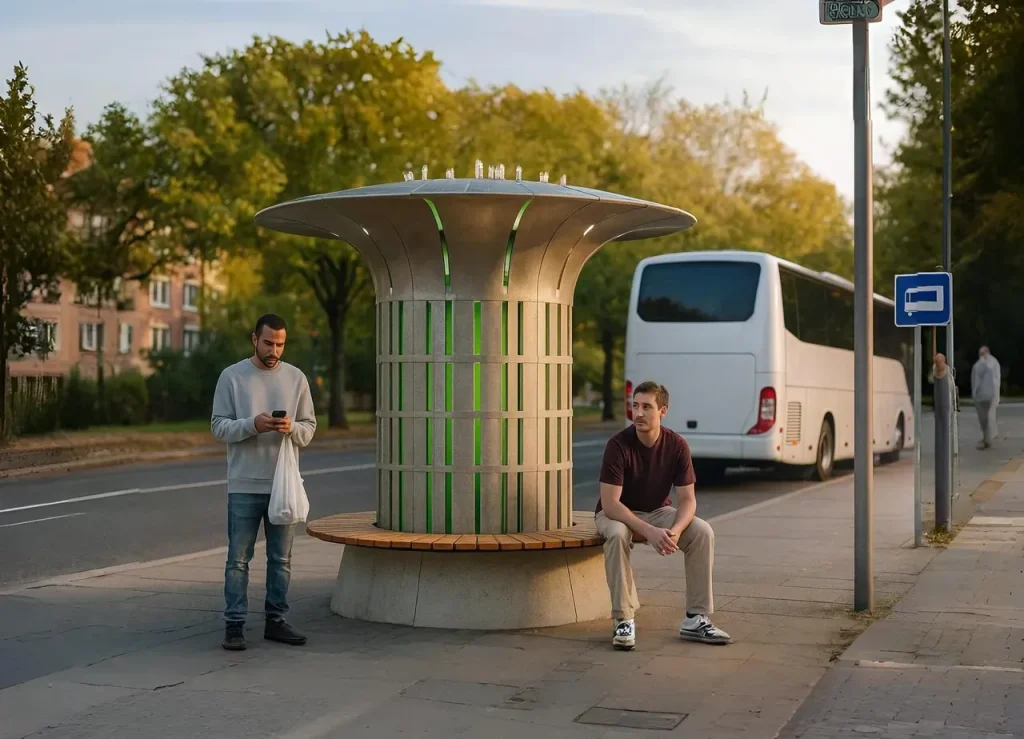
One such breakthrough innovation is the Algae Tree—a next-generation climate technology that synthesizes advanced biotechnology, carbon capture, oxygen generation, and multi-stage air purification into a compact footprint.
Algae Trees are transforming how modern cities approach environmental sustainability. By utilizing microalgae to capture carbon dioxide (CO₂), eliminate toxic air pollutants, and generate oxygen at significantly higher rates than terrestrial vegetation, these systems provide a scalable, measurable approach to mitigating urban air pollution while actively supporting India’s international climate action commitments.
Understanding the Air Pollution Challenge in India
Air pollution remains one of India’s most pressing environmental and public health crises. Major metropolitan hubs such as Delhi, Mumbai, Bengaluru, Chennai, Hyderabad, and Kolkata frequently experience dangerously elevated levels of criteria pollutants. The environmental landscape is plagued by a complex mix of:
- Particulate Matter (
PM2.5andPM10): Fine particles capable of penetrating deep into human lungs and the bloodstream. - Gaseous Pollutants: Nitrogen oxides (NOx), sulfur dioxide (SO₂), and volatile organic compounds (VOCs).
- Greenhouse Gases: Massive concentrations of localized carbon dioxide (CO₂) creating urban heat islands.
Several structural factors contribute to this deteriorating air quality:
- Rapid Urbanization: High-density construction projects generating immense ambient dust.
- Industrial Emissions: Unabated manufacturing units on urban fringes emitting unfiltered flue gases.
- Vehicular Pollution: Gridlocked traffic loops emitting high volumes of tailpipe exhaust.
- Agricultural Burning: Seasonal crop residue burning in surrounding states creating dense regional smog blankets.
- Waste Management Challenges: Spontaneous landfill fires releasing highly toxic chemical compounds.
Poor air quality dramatically impacts public health, escalates national healthcare expenditure, reduces worker productivity, and accelerates localized climate disruptions. According to comprehensive environmental assessments, improving urban air quality requires a combined approach: preserving natural green covers while rapidly deploying advanced technological interventions capable of delivering immediate, quantifiable environmental benefits in high-density urban zones.
What Is an Algae Tree?
An Algae Tree is an advanced environmental technology system engineered to mimic, accelerate, and amplify the natural carbon capture processes found in terrestrial plants. Unlike traditional trees that rely entirely on slow, natural growth cycles, Algae Trees utilize closed-loop microalgae photobioreactors to optimize photosynthesis and maximize carbon absorption.
                  [ Ambient Air Intake: CO2 + PM2.5 + VOCs ]
                                      │
                                      ▼
             [ Closed-Loop Photobioreactor (Microalgae Culture) ]
                                      │
               ┌──────────────────────┴──────────────────────┐
               ▼                                             ▼
     [ Oxygen Generation ]                         [ Biomass Accumulation ]
               │                                             │
               ▼                                             ▼
   [ Purified Air Outflow ]                       [ Pyrolysis & Biochar ]
The typical architecture of these advanced installations consists of:
- Microalgae Cultivation Chambers: Specially engineered, highly transparent glass or acrylic panels designed to maximize light penetration.
- Photobioreactor (PBR) Technology: Enclosed systems that safeguard living liquid cultures from external contamination while strictly controlling growth variables.
- Controlled Nutrient Systems: Automated delivery loops supplying precise measures of micro-nutrients to sustain peak metabolic action.
- Air Circulation Mechanisms: Integrated low-energy blowers that draw in ambient air and bubble it directly through the liquid medium.
- Smart Monitoring & IoT Integration: Sensor arrays providing real-time data tracking of air quality indices (AQI), gas concentrations, and biological health.
As polluted air passes through the system, the microalgae suspend within the liquid medium, absorbing carbon dioxide and utilizing natural sunlight or optimized, supplemental LED lighting to perform high-velocity photosynthesis. During this metabolic cycle, CO₂ is rapidly converted into organic biomass and pure oxygen, establishing a continuous loop of atmospheric remediation.
To explore how these advanced biological systems function dynamically, you can read the comprehensive overview on microalgae photobioreactors, which details the fluid mechanics and metabolic optimizations driving modern bio-filtration.
Why Algae Are More Efficient Than Traditional Trees
Microalgae are among the most efficient photosynthetic organisms on Earth, possessing an evolutionary lineage spanning billions of years. Scientific studies indicate that algae can absorb carbon dioxide at rates up to 10 to 50 times faster than terrestrial plants, and in highly optimized, engineered environments, this fixation efficiency can skyrocket up to 400 times faster per unit area than mature trees.
Several key variables drive this extreme biological efficiency:
Faster Growth Rates
Microalgae are single-celled organisms that do not expend energy building complex structural tissues like bark, trunks, or extensive root systems. They reproduce rapidly via cellular division, maintaining maximum metabolic activity throughout their entire lifecycle without seasonal dormancy.
Higher Photosynthetic Efficiency
Terrestrial canopy structures inherently shade lower branches, limiting total light absorption. Microalgae suspended in a fluid medium utilize available photons with much higher spatial efficiency, capturing sunlight and converting gas into organic matter across the entire exposed surface area of the reactor panels.
Continuous 24/7 Operation
While standard land plants slow down or pause photosynthetic activity at night, engineered photobioreactors can maintain consistent CO₂ absorption around the clock. By leveraging low-energy, supplemental artificial lighting during non-daylight hours, the biological engine operates without interruption.
Minimal Land Footprint
Because these systems can be arranged vertically, a single urban installation occupying just a few square meters can achieve carbon capture and oxygen generation metrics equivalent to dozens of mature, full-grown trees. This maximizes spatial utility in regions where real estate commands a high premium.
Direct Urban Compatibility
Algae Trees can be installed directly within heavily paved asphalt environments, transit corridors, and indoor facilities where conventional tree planting is structurally impossible due to underground utility lines or concrete foundations.
How Algae Trees Capture Carbon Dioxide
The carbon capture pathway of an Algae Tree is an elegant, structured process of biological carbon capture, utilization, and storage (CCUS). Rather than merely filtering air mechanically, the system alters the chemical composition of the air stream through five precise steps:
1.Ambient Air Intake:Phase 1: Induction.
Powerful, low-energy blowers draw polluted urban air from the immediate environment directly into the base of the photobioreactor system, ensuring a continuous supply of localized emissions.
2.Biological Biosorption:Phase 2: Gas Diffusion.
The drawn air is diffused into micro-bubbles at the bottom of the liquid chamber. As these bubbles rise, the microalgae cultures (frequently highly resilient species like Spirulina) absorb the dissolved CO₂ directly across their cellular membranes.
3.Accelerated Photosynthesis:Phase 3: Metabolic Synthesis.
Using photons from natural sunlight or internal LED arrays, the algae break down the carbon dioxide molecules, combining carbon with water to form essential carbohydrates, lipids, and proteins.
4.Pure Oxygen Generation:Phase 4: Atmospheric Discharge.
As a direct byproduct of the light-dependent photosynthetic reaction, the algae split water molecules, generating and releasing fresh, pure oxygen back into the urban breathing zone.
5.Biomass Processing:Phase 5: Resource Conversion.
The rapidly multiplying algae cells create a dense organic sludge. This biomass is systematically harvested from the reactors, preventing overgrowth and creating an actionable feedstock for secondary sustainable products.
To better understand the scale of carbon removal achievable through this biological pathway, you can examine the analytical framework detailed in the guide on urban carbon removal, which contrasts biological sequestration against legacy mechanical direct air capture (DAC) frameworks.
Algae Trees for Air Purification in India
Beyond serving as carbon sinks, advanced Algae Trees function as comprehensive ambient air purification assets. Urban air in rapidly expanding developing nations is heavily loaded with multiple pollutant phases. Mechanical systems like HEPA filters are excellent at catching particulates, but they remain completely incapable of altering gas-phase contaminants or adjusting greenhouse gas concentrations.
Algae-based systems address this limitation via a dual-action mechanism. Particulate matter (PM2.5 and PM10) along with heavy metals present in urban smog are naturally bound to the sticky outer cellular walls of certain microalgae species through a process known as biosorption. Concurrently, gaseous pollutants like nitrogen dioxide ($\text{NO}_2$) are metabolized by the culture as trace nutrients.
| Performance Vector | Algae-Based Purifier Towers | Standard Commercial HEPA Filters |
| CO₂ Reduction | Excellent: Actively lowers gas ppm via biological conversion | None: Recirculates gaseous carbon without reduction |
| Oxygen ($\text{O}_2$) Production | High Output: Generates millions of liters of fresh oxygen yearly | None: Merely moves existing air volumes |
| Filter Waste Stream | Zero Waste: Produces valuable organic biomass feedstock | High Impact: Generates contaminated, non-recyclable fiberglass filters |
| Operational Lifespan | Long Term: Living culture constantly regenerates itself ($10+$ years) | Short Term: Requires mechanical replacement every 6–12 months |
By deploying these biological units across highly polluted public zones, municipalities can actively reduce ambient CO₂ levels to below the critical 800 ppm threshold, lower local particulate counts, and create oxygen-rich microclimates that mitigate the physical exhaustion frequently experienced by commuters in heavy traffic.
Practical Applications Across India’s Urban Landscape
The modular, self-contained architecture of modern Algae Trees allows them to be deployed fluidly across a vast spectrum of public, commercial, and industrial touchpoints.
Smart Cities & Public Spaces
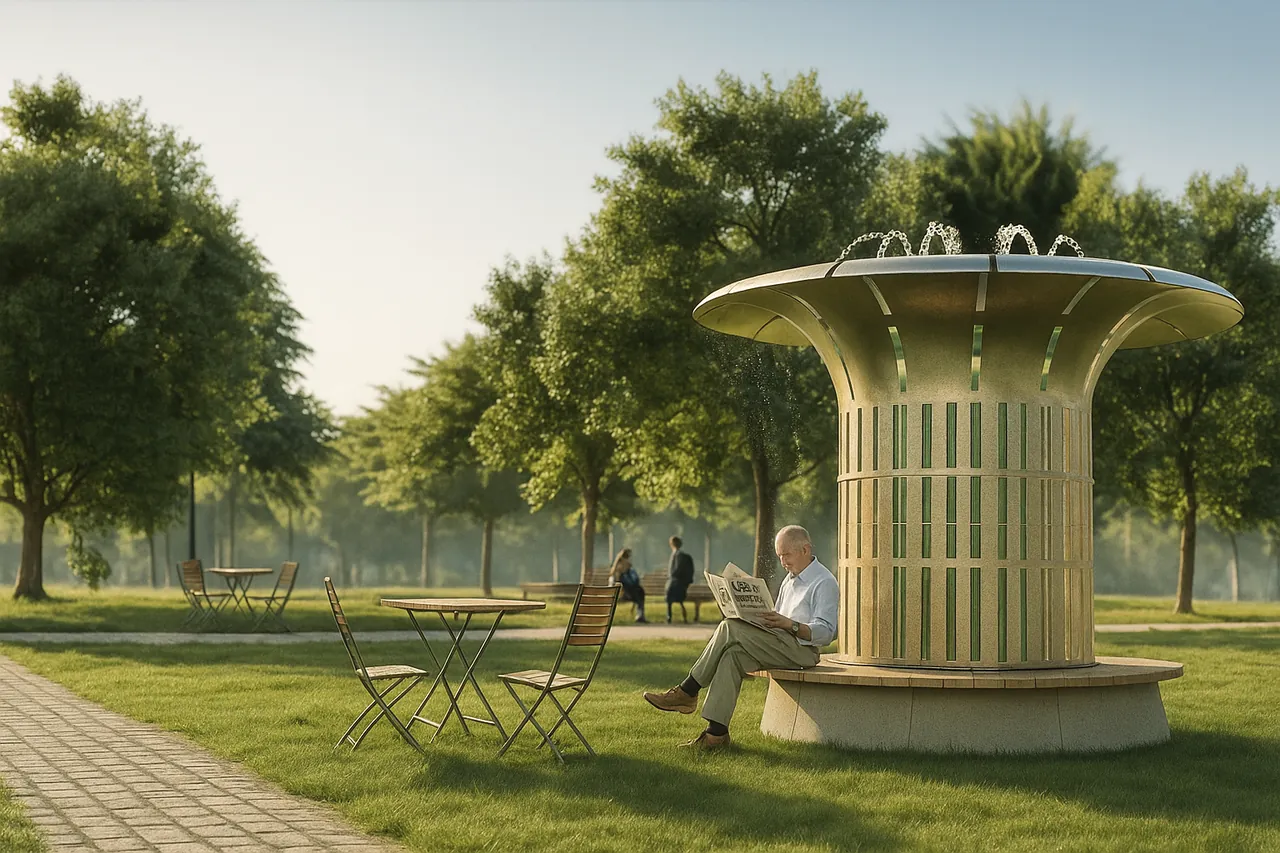
Under India’s active Smart Cities Mission, municipalities are heavily prioritizing citizen-visible sustainability features that generate verifiable environmental data. Algae Trees serve as ideal landmarks in central plazas, public parks, and pedestrian zones, acting as educational tools while filtering high volumes of air.
Transportation Hubs (Airports, Railway Stations, & Bus Terminals)
Transit hubs are notorious carbon hotspots due to the continuous idling of diesel buses, locomotives, and airport ground support equipment. Installing large-scale algae purification assets near passenger waiting areas and ventilation intakes helps scrub heavy exhaust fumes before they mix into commuter breathing zones.
Road Infrastructure & Highway Medians
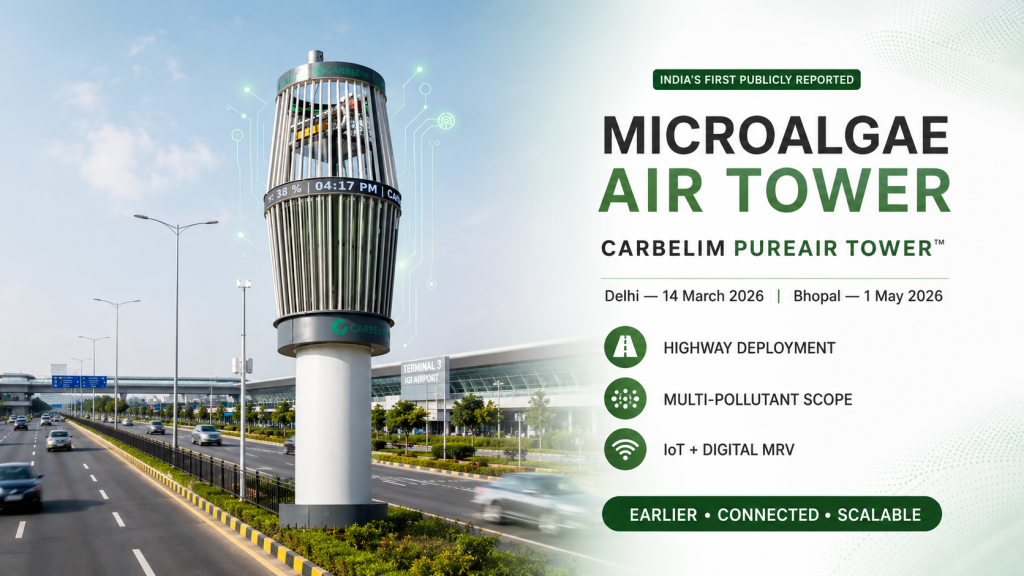
One of the most innovative implementations of this technology involves integrating thin, modular photobioreactor panels directly into highway dividers and urban medians. These specialized algae road dividers capture tailpipe emissions directly at the point of release, preventing toxic plumes from drifting into adjacent commercial and residential neighborhoods.
Corporate Campuses & IT Parks
Enterprise organizations pursuing rigorous Environmental, Social, and Governance (ESG) goals are increasingly integrating internal and external algae green walls. These installations reduce indoor carbon build-up in high-density conference spaces, dramatically boosting occupant cognitive performance while visually demonstrating corporate climate action.
Carbelim Tree: Advancing Algae-Based Climate Technology
At the absolute forefront of this biological revolution is the Carbelim Tree, a highly advanced environmental tech platform engineered specifically to solve the unique, high-exposure climate challenges of urban India. Developed by Carbelim, this system represents a massive evolution from basic laboratory photobioreactors into architectural-grade, robust climate infrastructure.
The flagship Carbelim Tree platform integrates multiple cutting-edge technologies to deliver unparalleled environmental metrics:
┌────────────────────────────────────────────────────────────────────────┐
│                        CARBELIM TREE ECOSYSTEM                         │
├───────────────────────────────┬────────────────────────────────────────┤
│  Biotechnology Engine         │  Multi-patent biomimetic flat panels   │
├───────────────────────────────┼────────────────────────────────────────┤
│  Air Purification Array       │  6-stage biosorption + UV-C treatment  │
├───────────────────────────────┼────────────────────────────────────────┤
│  Intelligence Framework       │  AI-optimized growth & IoT dashboard   │
└───────────────────────────────┴────────────────────────────────────────┘
High-Performance Metrics
A single outdoor tower installation of the Carbelim platform delivers an incredible environmental punch:
- Carbon Sequestration: Captures up to 340 kg of atmospheric CO₂ annually per tower.
- Oxygen Generation: Infuses the surrounding environment with over 1,500,000 liters of fresh oxygen every single year.
- Tree Equivalence: Provides pollution removal capacity equivalent to 15+ mature, traditional trees across all primary pollutant phases.
AI-Powered Real-Time Optimization
Microalgae are living organisms whose metabolic efficiency depends heavily on fluctuating ambient conditions. The Carbelim system utilizes an array of integrated IoT sensors linked to cloud-based AI optimization algorithms.
These smart loops monitor real-time variables including liquid temperature, pH, light exposure, and inlet air contamination, automatically adjusting fluid circulation rates, nutrient injection cycles, and supplemental light wavelengths to keep the algae culture operating at peak carbon-absorption capacity 24/7.
Closing the Loop via the Biochar Revolution
A critical differentiator of the Carbelim methodology is its absolute commitment to permanent carbon sequestration. To prevent captured carbon from re-entering the atmosphere when the algae lifecycle concludes, Carbelim utilizes a closed-loop processing chain:
- Automated Harvesting: The system extracts excess biomass periodically without interrupting ongoing air purification.
- Waste Stream Integration: The harvested algae sludge is blended with regional agricultural residues or municipal organic waste streams.
- Advanced Pyrolysis: This combined organic matter undergoes high-temperature pyrolysis—a thermochemical decomposition process conducted in a complete absence of oxygen.
- Permanent Sequestration: The process locks the biological carbon into highly stable, recalcitrant biochar. When integrated into regional agricultural soils, this biochar enhances water retention and soil fertility while safely locking the carbon away for hundreds of years.
To review the detailed physics and economics behind this closed-loop system, explore Carbelim’s specialized article on indoor carbon capture for enterprise offices, which highlights the profound balance between automated harvesting and spatial optimization.
Aligning with India’s ESG and Climate Commitments
As India marches toward its stated goal of achieving Net-Zero emissions by 2070 and reducing the carbon intensity of its economy by 45% by 2030, corporate and municipal compliance frameworks are tightening. The adoption of algae-based climate tech offers an unparalleled pathway to satisfy multi-faceted ESG reporting metrics:
Environmental (E)
Provides fully transparent, auditable, and data-backed carbon removal metrics. Unlike traditional offset programs that are often criticized for lack of additionality or vague metrics, an IoT-enabled bio-reactor provides real-time, downloadable graphs mapping exactly how many kilograms of gas have been permanently eliminated from the air shed.
Social (S)
Directly addresses localized environmental health. By filtering out carcinogenic particulate matter (PM2.5) and gaseous irritants in highly populated pedestrian zones, these systems directly protect public lung health, elevate citizen well-being, and foster biophilic urban design.
Governance (G)
Supports clean compliance and strict adherence to corporate sustainability disclosure regulations. Deploying verified, scientifically credible biological capture systems provides bulletproof documentation for annual sustainability reporting, mitigating greenwashing risks.
Challenges and the Path to Mass Adoption
While the potential of Algae Trees is vast, widespread adoption across India requires addressing certain technical and operational considerations. Microalgae systems are living infrastructure; they cannot be turned off like mechanical HEPA filters and forgotten. They require a reliable, low-wattage power connection to sustain fluid circulation and keep the culture alive.
Furthermore, managing liquid systems in public spaces demands excellent build quality. Carbelim addresses this by constructing enclosures out of highly durable, impact-resistant materials designed for a 10+ year structural lifespan, augmented with integrated UV-C sterilization stages to eliminate any risk of airborne bacterial or viral growth in the discharge air.
As municipal engineers and corporate facility managers become increasingly comfortable with biological systems, the cost curve of these installations is projected to drop rapidly, paving the way for network-scale deployments across thousands of urban intersection zones.
Conclusion: The Future of Urban Environments
Algae Trees represent a powerful, necessary evolution in sustainable infrastructure, bridging the gap between nature and advanced industrial design. As India navigates the complex dual demands of rapid economic growth and aggressive decarbonization, climate solutions cannot afford to rely solely on retrofitted reduction measures; they must actively embrace regenerative technologies.
From direct carbon capture and massive oxygen generation to active roadside air purification and verifiable ESG compliance reporting, algae-based climate solutions offer a practical, highly scalable path forward. They do not replace the beautiful necessity of planting traditional trees; instead, they function as high-efficiency biological task forces deployed to stabilize air quality in the most brutal, space-constrained carbon hotspots of our concrete jungles.
For smart city developers, mass transportation networks, educational campuses, and forward-thinking corporate enterprises, platforms like the Carbelim Tree offer a clear, inspiring vision of tomorrow—one where human engineering and natural biology work hand in hand to restore the atmosphere, delivering cleaner air and healthier urban spaces for generations to come.
Additional Visual Resources
To see how microalgae biotechnology is actively transitioning from a theoretical climate concept into physical, functioning urban infrastructure on Indian streets, take a moment to look at this on-the-ground breakdown:
- Watch this video detailing India’s First Carbon-Absorbing Algae Tree to see the actual scale, lighting integration, and real-world aesthetic impact of these biological towers operating within a high-density environment.