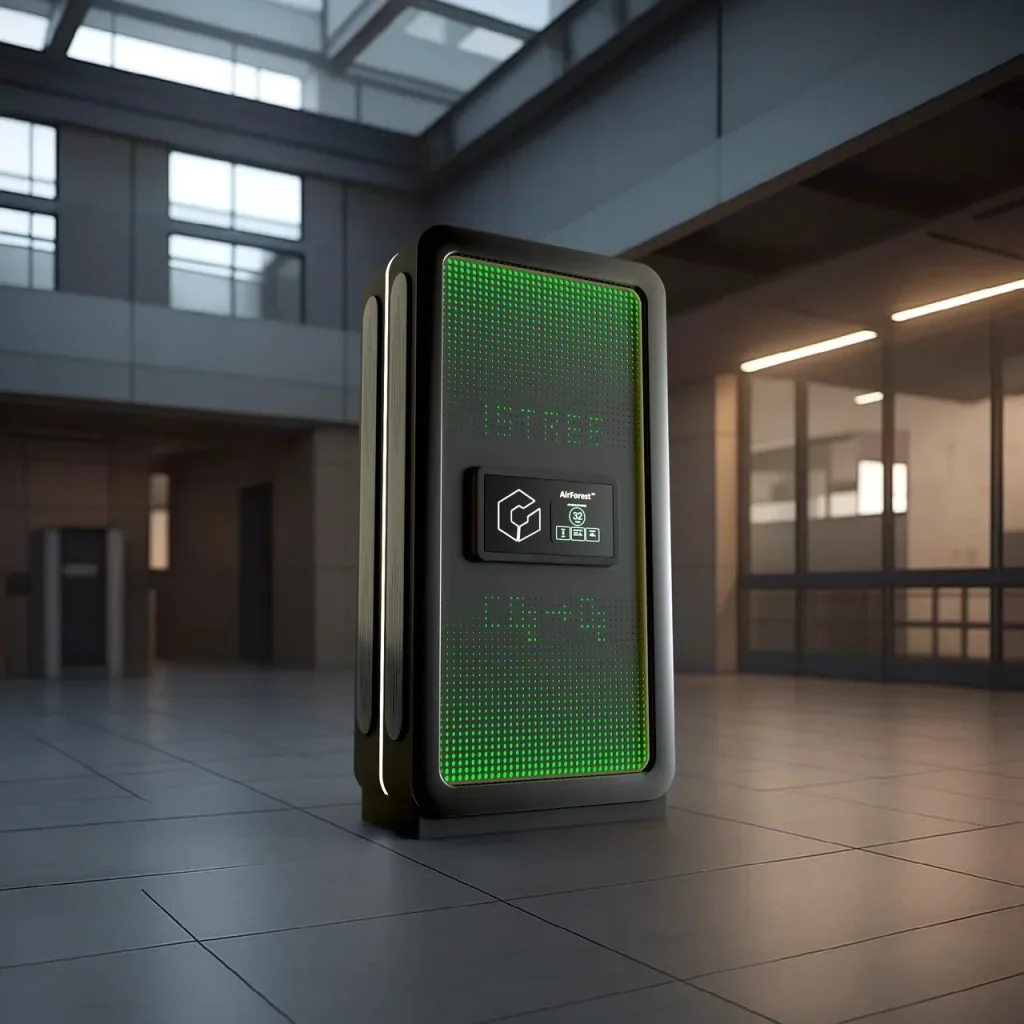
Microalgae About Carbelim are increasingly studied for their ability to capture carbon dioxide through photosynthesis and support low-carbon technologies.
Climate action has moved from boardroom promise to measurable business responsibility. For sustainability leaders, ESG managers, carbon accounting professionals, climate-tech investors, green building consultants, and environmentally conscious businesses, the question is no longer only, “Are we reducing emissions?” The real question is, “Can we prove it with data?”
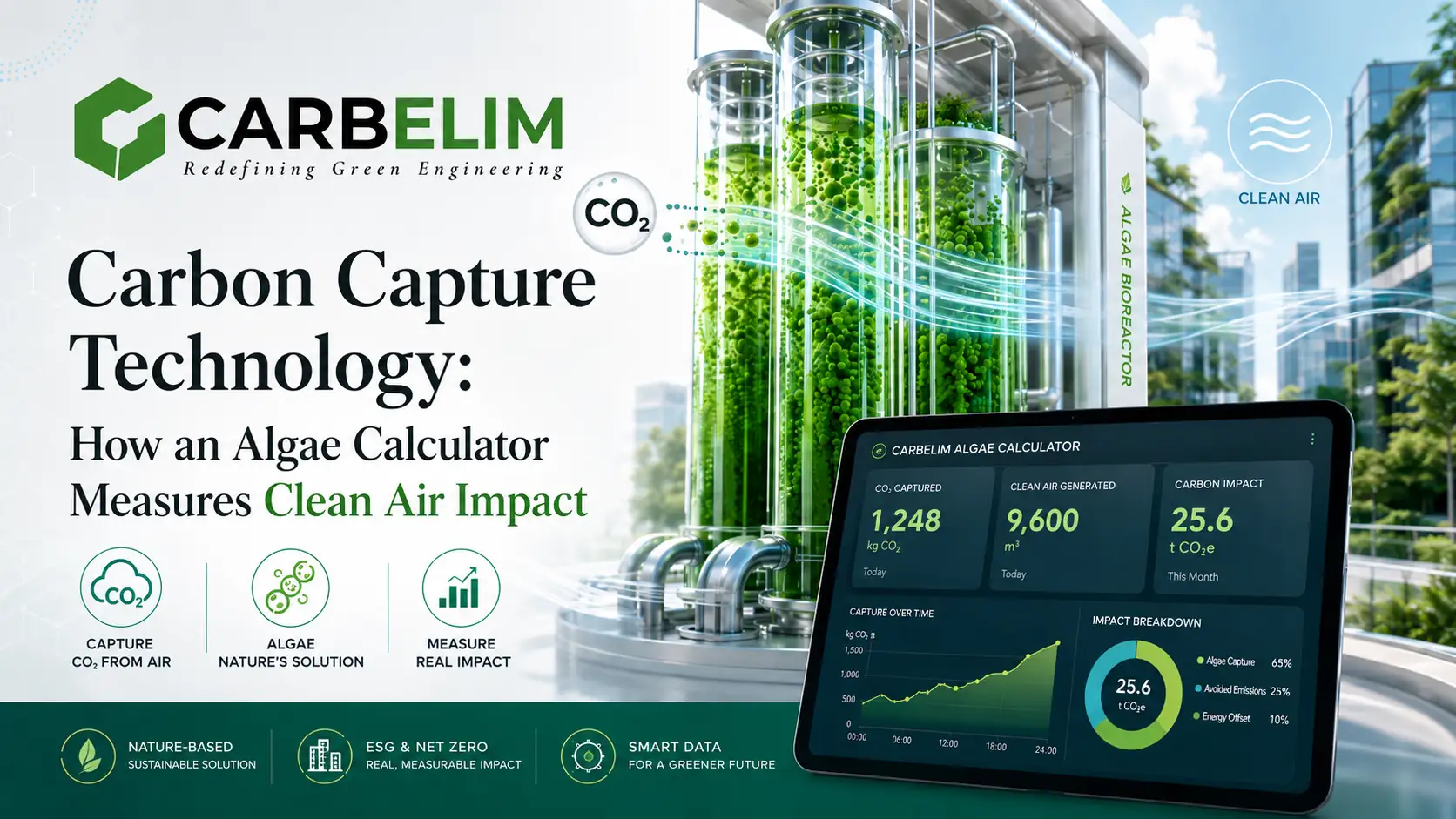
Table of Contents
Global greenhouse gas emissions reached a record 57.1 GtCO₂e in 2023, according to UNEP’s Emissions Gap Report 2024. Energy-related CO₂ emissions also reached a new high of 37.8 Gt CO₂ in 2024, according to the IEA. These numbers explain why carbon capture technology, carbon emissions tracking, and real-time environmental monitoring technology are becoming essential parts of corporate climate strategy.
At the same time, businesses are under pressure to improve indoor air quality, reduce carbon footprints, meet ESG reporting expectations, and invest in practical sustainability solutions. Traditional carbon capture has often been associated with large industrial plants, pipelines, and underground storage. But a new wave of climate technology is bringing carbon reduction technology closer to cities, buildings, offices, and public infrastructure.
One of the most exciting areas is algae carbon capture.
Microalgae naturally absorb CO₂ through photosynthesis and convert it into biomass. When engineered inside an algae bioreactor or photobioreactor, this biological process can become a measurable CO₂ capture system for clean air technology, ESG solutions, and carbon sequestration applications.
But measurement matters.
That is where an algae carbon calculator becomes powerful. Instead of making vague claims such as “this system equals many trees,” a carbon calculator helps estimate CO₂ capture potential based on system volume, microalgae productivity, operating days, efficiency factors, and real-world performance assumptions.
For companies exploring bio-based carbon capture, algae-based air purification, and net zero technology, this is the bridge between innovation and accountability.
CTA: Explore Carbelim’s algae carbon capture solutions to understand how living systems can support measurable clean air and carbon reduction goals.
Key Takeaways
- Carbon capture technology is becoming essential for hard-to-abate emissions, ESG strategy, and net zero planning.
- Algae carbon capture uses microalgae to absorb CO₂ and convert it into useful biomass.
- An algae carbon calculator estimates clean air impact using measurable parameters such as bioreactor volume, productivity, CO₂ fixation rate, and operating efficiency.
- Real-time carbon monitoring and MRV carbon tracking improve transparency for ESG reporting and climate-tech investment decisions.
- Algae-based systems are especially relevant for offices, smart buildings, manufacturing sites, urban infrastructure, and indoor air quality improvement.
- Carbelim positions algae bioreactors, biomimetic facades, and biological direct air capture as practical climate technology for built environments.
What Is Carbon Capture Technology?
Carbon capture technology refers to systems designed to capture carbon dioxide before it enters the atmosphere or remove CO₂ that is already present in the air. It is a core part of global decarbonization solutions because some sectors cannot fully eliminate emissions immediately.
A simple featured-snippet answer:
Carbon capture technology captures CO₂ from industrial emissions, indoor air, outdoor air, or ambient environments and either stores it, converts it, or uses it in another process to reduce climate impact.
The most common types include:
- Point-source carbon capture
Captures CO₂ from industrial exhaust streams such as cement, steel, power, or chemical facilities. - Carbon Capture Utilization and Storage, or CCUS
Captured CO₂ is stored underground or converted into useful materials. - Direct air capture
Removes CO₂ directly from ambient air using chemical, mineral, mechanical, or biological pathways. - Bio-based carbon capture
Uses living systems such as microalgae, plants, soil biology, or biomass conversion to capture and store carbon. - Hybrid clean air technology
Combines air purification, CO₂ capture, pollutant reduction, and environmental monitoring technology.
The IEA reported that operational carbon capture and storage capacity was just over 50 Mt CO₂ in the first quarter of 2025, with the current project pipeline potentially reaching about 430 Mt CO₂ per year by 2030. That shows momentum, but also highlights the gap between current deployment and what is needed for net zero pathways.
For businesses, the practical challenge is clear: carbon capture must become more measurable, distributed, cost-efficient, and connected to ESG reporting.
Why Algae Is Emerging as a Powerful Carbon Capture Solution
Algae may look simple, but microalgae are among the planet’s most efficient biological carbon users. Through photosynthesis, they absorb carbon dioxide, use light as an energy source, and grow into biomass.
That makes algae carbon capture different from many conventional systems. Instead of relying only on chemical sorbents or high-temperature regeneration, algae-based systems use a biological pathway.
Why microalgae are attractive for climate technology
Microalgae offer several advantages:
- They grow faster than many terrestrial plants.
- They can be cultivated in compact algae bioreactors.
- They can absorb CO₂ from controlled air streams.
- They can support oxygen generation and air purification.
- Their biomass can be used for biochar, biofertilizer, bioproducts, or further carbon sequestration pathways.
- They are suitable for modular installations in buildings, campuses, urban corridors, and industrial settings.
Scientific literature often uses the estimate that 1 gram of microalgae biomass can fix about 1.83 grams of CO₂, depending on biomass composition and operating conditions. A Chlorella study also reported a maximum CO₂ absorption rate of 0.412 g/L/day under specific experimental conditions. These figures are useful for calculator-based estimation, but real-world performance depends on species, light, nutrients, temperature, pH, airflow, and system design.
Why this matters for businesses
For a company trying to reduce carbon emissions, improve air quality, or strengthen ESG solutions, algae bioreactors can support three goals at once:
- Carbon reduction through biological CO₂ uptake
- Clean air improvement through algae-based air purification
- Data generation through real-time carbon monitoring and MRV carbon tracking
This is where Carbelim’s approach becomes relevant. Carbelim describes its platform as combining microalgae-based biomimetic facades, intelligent photobioreactors, IoT-enabled air-quality analytics, CO₂ capture, pollutant reduction, and biomass-to-biochar pathways.
Internal link suggestion: See how algae bioreactors improve indoor air quality.
How an Algae Carbon Calculator Works
An algae carbon calculator estimates how much CO₂ an algae bioreactor or microalgae system can capture over time.
It works like a specialized carbon calculator or carbon footprint calculator, but instead of only estimating emissions, it estimates biological CO₂ removal potential.
A simple answer for featured snippets
An algae carbon calculator estimates CO₂ capture by multiplying algae biomass productivity, system volume, CO₂ fixation ratio, operating days, and efficiency factors.
A simplified formula may look like this:
Estimated CO₂ captured = Biomass productivity × Bioreactor volume × CO₂ fixation factor × Operating days × Efficiency factor
Where:
- Biomass productivity means how much algae biomass is produced per litre or cubic metre per day.
- Bioreactor volume means the working volume of the algae bioreactor.
- CO₂ fixation factor estimates how much CO₂ is absorbed per unit of biomass.
- Operating days measure how many days per year the system is active.
- Efficiency factor adjusts for real-world conditions such as lighting, temperature, maintenance, system losses, and biological variation.
This makes the algae carbon calculator practical for:
- ESG carbon reporting
- Clean air technology demonstrations
- Pilot project planning
- Carbon sequestration modelling
- Carbon emissions tracking
- Green building sustainability assessments
- Investor due diligence
- MRV carbon tracking preparation
CTA: Use a carbon calculator as the first step toward measurable climate action, then request a consultation to validate assumptions for your site.
Step-by-Step Process of Measuring Clean Air Impact
To measure clean air impact properly, a business should avoid relying on only one number. Good environmental monitoring technology looks at the full system.
Step 1: Define the site conditions
Start with the location and use case.
For example:
- Office lobby
- Conference room
- Factory floor
- Building facade
- Parking area
- Roadside infrastructure
- Airport waiting zone
- Manufacturing exhaust-adjacent area
- Smart building ventilation zone
The calculator should consider whether the system is measuring indoor air quality, ambient urban air, or controlled CO₂ input.
Step 2: Enter the algae bioreactor size
The working volume of the algae bioreactor matters because more culture volume can generally support more biological activity, provided light, nutrients, and airflow are optimized.
Typical input:
- Litres of culture
- Number of modules
- Surface area
- Flow rate
- Operating hours
Step 3: Add microalgae productivity
Productivity depends on algae species and operating conditions.
Important factors include:
- Light intensity
- Photoperiod
- Temperature
- pH
- Nutrient availability
- CO₂ concentration
- Mixing efficiency
- Harvesting cycle
Step 4: Apply the CO₂ fixation factor
The commonly referenced value of around 1.83 g CO₂ per 1 g dry algal biomass gives the calculator a science-based starting point. It should not be treated as a universal guarantee. It is a modelling assumption that must be tested against actual system data.
Step 5: Adjust for operating days
A system operating 300 days per year will not have the same impact as a system operating 365 days per year. Maintenance, seasonal variation, and downtime should be included.
Step 6: Include efficiency factor
The efficiency factor makes the calculator more realistic.
For example:
- 100% = ideal lab-based assumption
- 80% = strong real-world operation
- 60% = moderate performance
- 40% = conservative pilot estimate
Step 7: Compare baseline vs post-installation data
To measure clean air impact, compare before-and-after metrics:
- CO₂ concentration
- PM2.5
- PM10
- VOCs
- NOx
- oxygen level
- humidity
- temperature
- airflow
- occupancy
Step 8: Connect results to ESG and MRV
The final output should support:
- ESG reporting
- carbon accounting
- carbon reduction claims
- green building certifications
- internal sustainability dashboards
- climate-tech investment reports
- carbon removal innovation evaluation
Real-Time Carbon Monitoring and MRV Systems
A calculator is useful, but real-time data makes it stronger.
Real-time carbon monitoring means continuously tracking environmental performance rather than relying only on manual estimates. For algae carbon capture systems, this may include sensors for CO₂, temperature, humidity, light, air quality, flow rate, and biomass growth.
MRV carbon tracking stands for:
- Monitoring: measuring the system’s performance
- Reporting: organizing the data into usable records
- Verification: validating claims through transparent evidence
The World Bank’s 2025 guidance on digital MRV notes that standardized digital MRV systems can support performance evaluation, digitized workflows, and adoption across carbon markets. This is important because carbon markets and ESG reporting increasingly require credible, traceable, and interoperable data.
Carbelim’s own technology content highlights real-time carbon monitoring, AI-powered data analytics, MRV frameworks, and cloud-based platforms as part of its business impact model.
Why businesses need MRV-ready systems
Without MRV, climate claims can become weak.
With MRV, businesses can show:
- What was measured
- When it was measured
- Where it was measured
- How the calculation was made
- What assumptions were used
- Whether performance improved over time
This helps sustainability teams avoid greenwashing and build trust with investors, auditors, customers, regulators, and employees.
Internal link suggestion: Learn more about real-time MRV technology.
Benefits of Algae-Based Carbon Capture Technology
Algae-based carbon capture technology is not only about CO₂. Its value comes from combining carbon reduction, clean air, and biological productivity.
1. Supports carbon sequestration
Microalgae convert CO₂ into biomass. Depending on the pathway, that biomass can be processed into longer-lasting carbon storage formats such as biochar or other carbon utilization products.
2. Improves indoor air quality
Indoor CO₂ levels can rise in offices, classrooms, conference rooms, and commercial buildings when ventilation is limited. A microalgae photobioreactor study found CO₂ reduction of around 55% in a small indoor air chamber and up to 90% under high CO₂ concentration before saturation, showing the potential of algae-based systems under controlled conditions.
3. Enables visible sustainability
A solar panel is visible. A green wall is visible. An algae bioreactor can also become visible climate infrastructure. For offices, airports, hotels, universities, and smart buildings, this creates a strong sustainability signal.
4. Supports ESG solutions
ESG teams need data, not just design. Algae carbon capture systems can support:
- carbon emissions tracking
- air pollution reduction
- indoor environmental quality reporting
- employee wellness initiatives
- green building documentation
- Scope 1, 2, and 3 engagement narratives
5. Fits distributed decarbonization
Traditional systems are often centralized. Algae-based air purification can be modular and localized. This makes it suitable for built environments, public spaces, and urban infrastructure.
6. Creates climate-tech storytelling
For climate-tech investors and sustainability leaders, algae systems offer a strong story: nature-inspired technology, measurable carbon reduction, clean air, and future carbon removal innovation.
Traditional Carbon Capture vs Algae Carbon Capture
| Criteria | Traditional Carbon Capture | Algae Carbon Capture |
|---|---|---|
| Main process | Chemical, mechanical, mineral, or industrial separation | Biological photosynthesis using microalgae |
| Best suited for | Large industrial point sources, power, cement, steel, gas processing | Buildings, urban infrastructure, controlled environments, pilot-scale DAC, clean air systems |
| CO₂ source | Usually concentrated exhaust or industrial gas streams | Ambient air, indoor air, controlled CO₂ streams, localized emissions |
| Energy demand | Can be high, especially when heat or regeneration is required | Usually operates at ambient biological conditions, but needs lighting, mixing, pumping, and maintenance |
| Output | Captured CO₂ for storage or utilization | Algal biomass, oxygen generation, possible biochar or bioproduct pathways |
| Public visibility | Often hidden in industrial infrastructure | Can be integrated into facades, interiors, public spaces, and smart city infrastructure |
| MRV need | Essential for carbon accounting and storage verification | Essential for biomass productivity, CO₂ uptake, air quality, and sequestration claims |
| Business value | Industrial decarbonization and compliance | ESG solutions, clean air technology, indoor air quality, sustainability engagement, localized decarbonization |
| Scalability model | Large centralized projects | Modular, distributed, building-integrated, pilot-to-scale deployment |
| Key limitation | Infrastructure cost, storage access, permitting, energy requirement | Biological variability, maintenance, light availability, scaling, verification |
Detailed Data Table: Algae Carbon Capture Planning Metrics
These figures should be used as planning references, not universal guarantees. Actual performance depends on system design, algae strain, light, nutrients, airflow, temperature, and operational discipline.
| Metric | Planning Range / Example | What It Means | Business Use |
|---|---|---|---|
| CO₂ fixation factor | About 1.83 g CO₂ per 1 g dry microalgae biomass | A common calculation factor used in microalgae carbon modelling | Carbon calculator input, ESG estimation |
| Lab CO₂ absorption example | Up to 0.412 g CO₂/L/day in a Chlorella study | Shows possible absorption under specific experimental conditions | Pilot design benchmark |
| Indoor CO₂ reduction example | Around 55% in a small indoor chamber study | Demonstrates indoor air quality potential under controlled testing | Office and smart building use case |
| High CO₂ chamber reduction | Up to 90% before saturation in a controlled experiment | Shows potential under elevated CO₂ conditions | Industrial or controlled-environment evaluation |
| Energy profile | Lower thermal demand than many chemical DAC systems, but requires lighting, circulation, and controls | Biological systems avoid some heat-regeneration needs | Energy-efficiency modelling |
| Air purification metrics | CO₂, PM2.5, PM10, VOCs, NOx, oxygen, humidity | Helps measure clean air impact beyond carbon alone | Indoor air quality and ESG reporting |
| Cost efficiency | Site-specific; improves with modular design, automation, and co-products | ROI depends on avoided cost, ESG value, air quality value, and carbon asset potential | Investment planning |
| MRV readiness | Sensor-based monitoring plus reporting framework | Builds trust in clean air and carbon claims | Carbon accounting and audit preparation |
Sources: microalgae CO₂ fixation and absorption values are supported by published microalgae studies; indoor chamber data comes from microalgae photobioreactor research.
Use Cases for Algae Carbon Capture Systems
1. Offices and corporate campuses
Office buildings are increasingly judged by both sustainability performance and employee wellbeing. Algae-based air purification can support indoor air quality, reduce CO₂ concentration in selected areas, and create a visible sustainability installation.
Relevant applications:
- reception areas
- meeting rooms
- lobbies
- cafeterias
- wellness zones
- ESG demonstration spaces
Internal link suggestion: Discover sustainable air purification systems.
2. Smart buildings
Buildings are a major climate priority. UNEP’s 2024/2025 buildings report states that the buildings and construction sector consumed 32% of global energy and contributed 34% of global CO₂ emissions. That makes buildings a major target for carbon reduction technology, clean air technology, and environmental monitoring technology.
Smart buildings can integrate algae bioreactors with:
- building management systems
- air quality dashboards
- HVAC analytics
- carbon emissions tracking
- green building certifications
- occupant wellness reporting
Internal link suggestion: Explore climate-tech innovations for smart buildings.
3. Manufacturing facilities
Manufacturing companies need decarbonization solutions that can support Scope 1 and Scope 2 strategies. Algae-based systems may be useful for localized air treatment, pilot CO₂ capture, employee areas, ESG demonstration units, or integration near controlled emission streams.
Potential value:
- measurable sustainability pilot
- employee engagement
- carbon capture education
- MRV data collection
- future carbon utilization pathways
4. Urban infrastructure
Cities face air pollution, rising heat, and limited space for large-scale green cover. Algae-based systems can be explored in:
- road dividers
- bus stops
- metro stations
- airports
- public buildings
- urban facades
- smart city corridors
This is where algae-based air purification becomes more than a product. It becomes climate infrastructure.
5. ESG compliance and carbon reporting
ESG managers need evidence. A carbon footprint calculator may estimate emissions, but an algae carbon calculator can estimate reduction potential from a specific technology deployment.
This supports:
- annual sustainability reports
- net zero roadmaps
- decarbonization planning
- green building documentation
- investor presentations
- supplier sustainability programs
- internal carbon pricing models
Internal link suggestion: Read our guide on ESG carbon reporting.
ROI and Sustainability Impact Table
The ROI of algae carbon capture should be measured beyond direct carbon value. For many businesses, the strongest case combines ESG value, indoor air quality, brand differentiation, employee wellbeing, and long-term climate readiness.
| Business Area | Potential Impact | How to Measure | ROI Indicator |
|---|---|---|---|
| ESG reporting | Stronger climate disclosure and measurable sustainability action | CO₂ captured, air quality improvement, MRV data | Better reporting quality and stakeholder confidence |
| Indoor air quality | Reduced CO₂ concentration and improved environmental comfort | CO₂ ppm, PM2.5, VOCs, occupancy data | Employee wellbeing and workspace quality |
| Brand positioning | Visible climate technology installation | Media value, visitor engagement, ESG storytelling | Higher sustainability credibility |
| Green building strategy | Supports environmental performance documentation | Air quality data, energy use, carbon tracking | Certification support and asset value |
| Carbon accounting | Adds measured reduction data to sustainability dashboards | Calculator output plus real-time monitoring | Better carbon emissions tracking |
| Investor communication | Demonstrates innovation and climate-tech adoption | Pilot results, MRV reports, performance trends | Stronger climate investment narrative |
| Future carbon assets | Supports biomass-to-biochar or carbon removal pathways where applicable | Verified biomass, sequestration method, audit trail | Potential carbon credit readiness |
| Operational learning | Builds internal climate-tech capability | Pilot learnings, maintenance data, cost data | Smarter scale-up decisions |
Expert Insights and Industry Trends
Trend 1: Carbon capture is moving from industrial sites to built environments
Large CCUS projects remain important, but businesses also want localized solutions. Offices, campuses, malls, airports, and smart buildings are becoming testing grounds for clean air technology and distributed carbon reduction systems.
Trend 2: ESG claims need proof
Investors and regulators increasingly expect measurable evidence. Claims such as “eco-friendly” or “carbon neutral” are no longer enough. MRV carbon tracking, real-time carbon monitoring, and transparent calculation methods are becoming essential.
Trend 3: Climate technology is becoming multi-benefit
The strongest sustainability solutions solve more than one problem. Algae carbon capture can connect:
- CO₂ capture
- indoor air quality
- air pollution reduction
- carbon sequestration
- biomass production
- green building performance
- ESG reporting
Trend 4: Biological direct air capture is gaining attention
Direct air capture is often discussed as a mechanical or chemical technology. Biological direct air capture adds a different pathway, using living systems to remove CO₂ in localized and potentially lower-energy applications. Carbelim describes its biological DAC approach as using microalgae to absorb CO₂ through photosynthesis and convert it into biomass, with relevance for commercial buildings, campuses, data centers, urban infrastructure, and controlled industrial environments.
Why Businesses Need Real-Time Carbon Tracking
A one-time estimate is useful. Continuous data is better.
Real-time carbon tracking helps companies answer:
- Is the system actually capturing CO₂ today?
- How does performance change with occupancy?
- What happens during low light or high temperature?
- How does maintenance affect output?
- Which locations perform best?
- Can the data support ESG reporting?
- Can the results be verified?
For carbon accounting professionals, this matters because carbon claims must be traceable. For ESG managers, it creates a stronger reporting foundation. For climate-tech investors, it provides operational evidence. For green building consultants, it links sustainability design with measurable performance.
A strong algae carbon calculator should therefore not stand alone. It should ideally connect to live monitoring, sensor data, and MRV workflows.
Future of Carbon Capture and Climate-Tech Innovation
The future of carbon capture technology will not be one single solution. It will be a portfolio.
Heavy industry will need large-scale CCUS. Aviation, cement, steel, and shipping will need deep decarbonization solutions. Cities will need clean air technology. Buildings will need smarter environmental monitoring. ESG teams will need better carbon emissions tracking. Carbon markets will need stronger MRV systems.
Algae carbon capture fits into this future as a bio-based carbon capture pathway that can make climate action visible, measurable, and local.
The biggest opportunities will come from systems that combine:
- algae bioreactors
- real-time carbon monitoring
- AI-based performance analytics
- MRV carbon tracking
- biomass utilization
- carbon sequestration pathways
- green building integration
- clean air technology
- modular urban infrastructure
For Carbelim, this creates a strong positioning opportunity: not just as an algae hardware company, but as a climate technology platform for measurable clean air impact.
Conclusion: From Carbon Claims to Carbon Proof
Carbon capture technology is becoming one of the most important tools in the global shift toward net zero. But the next phase of climate action will be defined by measurement.
Businesses do not only need sustainability stories. They need numbers. They need dashboards. They need carbon calculators. They need MRV. They need technologies that improve air quality while supporting carbon reduction goals.
An algae carbon calculator helps turn biological carbon capture into something measurable. It shows how microalgae productivity, algae bioreactor volume, operating days, and efficiency assumptions translate into estimated CO₂ capture and clean air impact.
For sustainability leaders, ESG managers, climate-tech investors, carbon accounting professionals, green building consultants, and environmentally conscious businesses, this is the practical value: algae-based systems can connect climate innovation with visible, data-driven action.
CTA: Explore Carbelim’s algae carbon capture solutions and request a consultation to evaluate how algae bioreactors, real-time MRV technology, and clean air systems can support your sustainability goals.
FAQ: Carbon Capture Technology, Algae Calculators, and Clean Air Impact
1. What is carbon capture technology?
Carbon capture technology captures carbon dioxide from industrial emissions, indoor air, outdoor air, or ambient environments and either stores, converts, or utilizes it to reduce climate impact. It includes CCUS, direct air capture, biological carbon capture, and hybrid clean air technology.
2. How does algae carbon capture work?
Algae carbon capture works by using microalgae to absorb CO₂ through photosynthesis. Inside an algae bioreactor or photobioreactor, microalgae convert CO₂ into biomass while supporting oxygen generation and potential air purification benefits.
3. What is an algae carbon calculator?
An algae carbon calculator estimates how much CO₂ an algae-based system may capture. It typically uses inputs such as biomass productivity, bioreactor volume, CO₂ fixation factor, operating days, and efficiency factor.
4. Is an algae carbon calculator the same as a carbon footprint calculator?
No. A carbon footprint calculator usually estimates emissions from activities such as energy use, travel, materials, or operations. An algae carbon calculator estimates the CO₂ capture potential of an algae bioreactor or algae-based air purification system.
5. Can algae bioreactors improve indoor air quality?
Yes, algae bioreactors can support indoor air quality improvement by absorbing CO₂ under controlled conditions. Some research has shown significant CO₂ reduction in chamber-based tests, although real-world performance depends on system design, lighting, airflow, occupancy, and maintenance.
6. What is MRV carbon tracking?
MRV carbon tracking means Monitoring, Reporting, and Verification. It provides a structured way to measure carbon capture performance, report results, and verify claims using transparent data.
7. Why is real-time carbon monitoring important?
Real-time carbon monitoring helps businesses understand actual system performance instead of relying only on estimates. It supports ESG reporting, carbon accounting, operational optimization, and investor confidence.
8. Is algae carbon capture suitable for offices and smart buildings?
Yes, algae carbon capture can be suitable for offices, smart buildings, campuses, and public spaces, especially when the goal is localized CO₂ reduction, indoor air quality improvement, visible sustainability, and environmental monitoring.
9. Can algae carbon capture replace traditional carbon capture?
Algae carbon capture does not replace all traditional carbon capture systems. Large industrial emitters may still need conventional CCUS. Algae-based systems are better viewed as complementary clean air and carbon reduction technology for buildings, cities, and controlled environments.
10. How can businesses use algae carbon capture for ESG reporting?
Businesses can use algae carbon capture data to support ESG reporting by tracking estimated CO₂ capture, air quality improvement, system operating hours, biomass productivity, and MRV-ready performance records.
Final CTA
Ready to move from sustainability claims to measurable clean air impact?
Explore Carbelim’s algae carbon capture solutions and request a consultation to discover how algae bioreactors, carbon calculator insights, real-time carbon monitoring, and MRV carbon tracking can support your ESG, net zero, and clean air goals.
Suggested Related Blog Posts
- Biological Direct Air Capture: How Microalgae Remove CO₂ from the Air
- Algae Bioreactors for Smart Buildings: The Future of Clean Indoor Air
- Carbon Footprint Calculator vs Carbon Capture Calculator: What Businesses Need to Know
- MRV Carbon Tracking: Why ESG Teams Need Real-Time Climate Data
- Algae-Based Air Purification for Offices, Campuses, and Urban Infrastructure
- How Bio-Based Carbon Capture Supports Net Zero Technology Goals