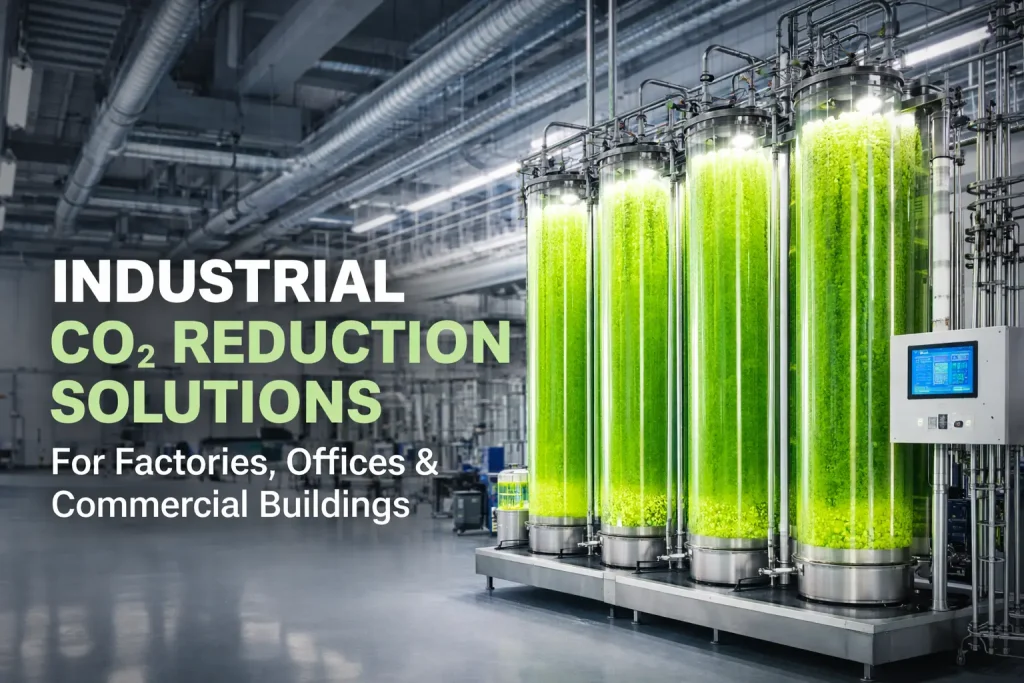
Introduction: From Climate Commitments to Execution
The global transition toward Net Zero Emissions has rapidly evolved from ambition to execution. Governments, investors, and consumers are demanding measurable climate action, compelling organizations to embed sustainability into their core strategy rather than treating it as a peripheral initiative.
At the intersection of this transformation lies a powerful triad: Carbon Capture Technology, ESG Strategy, and Climate Tech innovation. Together, these elements enable businesses to not only reduce emissions but also unlock new revenue streams, enhance brand equity, and future-proof operations.
In today’s carbon-constrained economy, sustainability is no longer a compliance exercise—it is a strategic growth level.

What is Net Zero Emissions?
Net Zero Emissions refers to achieving a balance between greenhouse gases emitted and those removed from the atmosphere.
Core Components:
- Emission Reduction (Scope 1, 2, and 3)
- Carbon Removal through technology and nature-based solutions
- Carbon Offsetting via carbon credits
Why It Matters for Businesses:
- Alignment with global climate targets (Paris Agreement)
- Increased access to ESG-driven investments
- Competitive positioning in sustainability-focused markets
The Role of Carbon Capture Technology in Net Zero
Understanding Carbon Capture Technology
Carbon Capture Technology (CCT) involves capturing CO₂ emissions from industrial sources or directly from the atmosphere and either storing or repurposing them.
Types of Carbon Capture
| Type | Description | Key Use Case |
|---|---|---|
| Post-Combustion | Captures CO₂ after fuel combustion | Power plants, cement |
| Pre-Combustion | Captures CO₂ before combustion | Hydrogen production |
| Direct Air Capture (DAC) | Removes CO₂ from ambient air | Urban carbon removal |
| Biological Capture | Uses microalgae or plants | Distributed systems |
Carbon Capture as a Strategic Asset
Forward-looking organizations are integrating carbon capture into their ESG Strategy as a high-impact operational lever.
Strategic Advantages:
- Direct emission reduction at source
- Compliance with carbon pricing regulations
- Creation of carbon credits
- Enhanced ESG reporting metrics
Real-World Applications:
- Industrial plants retrofitting capture systems
- Smart buildings integrating carbon removal technologies
- Urban infrastructure deploying decentralized carbon capture
ESG Strategy: The Backbone of Sustainable Growth
What is ESG?
Environmental, Social, and Governance (ESG) is a framework that evaluates a company’s sustainability performance and ethical impact.
ESG Pillars in Climate Context:
Environmental
- Emissions reduction
- Energy efficiency
- Resource management
Social
- Community engagement
- Workforce wellbeing
- Stakeholder impact
Governance
- Transparency
- Risk management
- ESG reporting standards
ESG Reporting: From Disclosure to Value Creation
Key Frameworks:
- GRI (Global Reporting Initiative)
- SASB (Sustainability Accounting Standards Board)
- TCFD (Climate risk disclosures)
Strategic Importance:
- Builds investor confidence
- Improves capital access
- Ensures regulatory alignment
Organizations are now leveraging ESG reporting as a strategic communication tool, not just a compliance requirement.
Carbon Capture + ESG: A Unified Sustainability Engine
The integration of Carbon Capture Technology into ESG frameworks enables measurable and verifiable climate action.
Combined Impact:
- Real-time emission tracking
- Transparent carbon accounting
- Scalable climate solutions
This synergy transforms sustainability into a data-driven, outcome-oriented function.
Carbon Credits and Monetization Opportunities
What are Carbon Credits?
A carbon credit represents one metric ton of CO₂ reduced or removed.
Types:
- Compliance market credits
- Voluntary carbon market (VCM) credits
Business Opportunity: Turning Carbon into Revenue
Carbon capture is increasingly becoming a revenue-generating asset class.
Monetization Channels:
- Carbon credit trading
- Carbon Removal as a Service (CRaaS)
- ESG-linked financing
- Green product premium pricing
Step-by-Step Framework: Building a Net Zero Strategy
1. Measure Emissions
Conduct a comprehensive carbon footprint assessment.
2. Set Targets
Align with science-based targets (SBTi).
3. Reduce Emissions
Improve energy efficiency and optimize processes.
4. Deploy Carbon Capture
Integrate scalable capture technologies.
5. Offset Residual Emissions
Invest in carbon removal and credits.
6. Integrate ESG
Embed sustainability into governance.
7. Monitor & Report
Use digital MRV systems for transparency.
Carbon Sequestration vs Carbon Removal
| Aspect | Carbon Sequestration | Carbon Removal |
|---|---|---|
| Definition | Storage of CO₂ | Extraction of CO₂ |
| Methods | Geological, ocean | DAC, bio-based |
| Permanence | Long-term | Variable |
| Application | Industrial storage | Offsetting |
Scaling Net Zero: The Strategic Imperative
Organizations are shifting toward enterprise-wide Net Zero strategies, integrating sustainability into operations, finance, and innovation.
Key Focus Areas:
- Carbon intelligence in decision-making
- Integration of climate tech into business models
- Alignment of sustainability with profitability
The Rise of Climate Tech as a Competitive Differentiator
Advancements in Climate Tech are accelerating Net Zero adoption.
Key Innovations:
- Modular carbon capture systems
- AI-driven ESG analytics
- IoT-enabled MRV platforms
- Hybrid biological-engineered solutions
These technologies are transforming sustainability into a core innovation engine.
Carbon Capture in Urban and Industrial Ecosystems
Urban Use Cases:
- Smart buildings with carbon removal systems
- Air purification integrated with CO₂ capture
- Distributed microalgae-based systems
Industrial Use Cases:
- Cement and steel decarbonization
- Carbon reuse for fuels and materials
- Retrofitting legacy infrastructure
ESG as a Value Creation Framework
ESG is evolving into a strategic value driver.
Business Benefits:
- Enhanced investor appeal
- Risk mitigation
- Operational efficiency
- Stronger brand positioning
Organizations leveraging ESG strategically outperform peers in long-term resilience.
Carbon Markets: Unlocking Financial Upside
The expansion of carbon markets is transforming emissions into financial assets.
Market Trends:
- Rising demand for high-quality carbon removal credits
- Premium pricing for verified solutions
- Growth of voluntary carbon markets
Carbon is becoming a tradable commodity, enabling businesses to monetize sustainability.
Integrating Carbon Capture into Core Business Strategy
Strategic Integration Areas:
- Operations: Emission reduction
- Finance: Carbon monetization
- Branding: Sustainability leadership
- Innovation: Climate tech development
This ensures sustainability drives both impact and profitability.
The Role of MRV in ESG and Carbon Markets
Monitoring, Reporting, and Verification (MRV) is critical for credibility.
Key Benefits:
- Accurate ESG reporting
- Carbon credit validation
- Investor transparency
- Data-driven insights
Digital MRV systems are enabling real-time sustainability tracking.
Benefits of Carbon Capture and ESG Integration
Operational:
- Reduced emissions footprint
- Regulatory compliance
Financial:
- Access to green capital
- New revenue streams
Strategic:
- Market differentiation
- Long-term resilience
Challenges in Implementation
Technical:
- High initial costs
- Energy requirements
Market:
- Carbon price volatility
- Standardization gaps
Regulatory:
- Evolving policies
- Regional inconsistencies
Future Trends in Net Zero and Climate Tech
Key Trends:
- Decentralized carbon capture systems
- AI-driven ESG reporting
- Carbon-negative business models
- Real-time carbon accounting
- Integration of nature and technology
Business Use Cases Across Industries
Manufacturing:
Emission capture in heavy industries
Real Estate:
Green buildings with integrated carbon removal
Energy:
Decarbonizing fossil-based systems
Agriculture:
Soil carbon sequestration and biochar
Carbelim’s Strategic Positioning in the Net Zero Ecosystem
Carbelim represents a next-generation approach to carbon capture by combining:
- Microalgae-based carbon removal
- Real-time MRV systems
- Distributed deployment models
This enables:
- Scalable carbon capture in urban environments
- Measurable ESG outcomes
- Carbon credit generation opportunities
Carbelim is positioned as a climate infrastructure enabler, supporting enterprises in achieving Net Zero efficiently.
Conclusion: From Compliance to Climate Leadership
The journey to Net Zero Emissions is no longer optional—it is a strategic imperative.
The convergence of Carbon Capture Technology, ESG Strategy, and Carbon Credits is redefining how businesses operate, compete, and grow.
Organizations that act early will:
- Capture new market opportunities
- Strengthen investor relationships
- Lead in the emerging climate economy
Sustainability is no longer a cost center—it is a growth engine, innovation driver, and competitive advantage.