The climate crisis is no longer a looming shadow; it is a present-day reality. To prevent the most catastrophic effects of global warming, the Intergovernmental Panel on Climate Change (IPCC) has made one thing clear: reducing current emissions is only half the battle. To reach true Net Zero, we must master Carbon Capture from Air.
This process, known as Direct Air Capture (DAC), involves scrubbing CO2 directly from the atmosphere. While the technology was once considered science fiction, it has evolved into a high-stakes race for scalability. At the forefront of this race is a shift from heavy mechanical systems to elegant, biological solutions.
1. The Urgency of Atmospheric Restoration: Why “Zero” is Not Enough
For decades, the global focus was on “point-source capture”—stopping carbon at the factory chimney. While critical, this approach only addresses new emissions. It does nothing for the trillions of tons of “legacy carbon” already trapped in our atmosphere, warming the planet.
Direct Air Capture is unique because it is restorative. It allows us to go “back in time” and remove the carbon we have already emitted over the last 150 years. However, the path to global adoption has been hindered by two main factors: energy consumption and land use.
Traditional mechanical DAC systems require massive amounts of energy to operate. The question for the 21st century is: How do we scale this without consuming more energy than we save? The answer lies in Direct Air Capture Technology: Why Biological Carbon Sequestration Outperforms Mechanical Systems. By leveraging microalgae, we unlock a pathway that is naturally optimized for efficiency.
2. The Mechanics of Capture: Mechanical vs. Biological
To understand why a biological pathway is the most scalable, we must look at the physics of the capture process itself.
The Limitations of Mechanical DAC
First-generation DAC systems use industrial-scale fans to pull air through chemical filters (solid sorbents) or liquid solvents.
- The Energy Penalty: Once the filter is saturated with CO2 , it must be heated—often between 100°C and 900°C—to release the gas for storage.
- The Infrastructure Cost: These plants are often massive, noisy, and require dedicated high-voltage power lines, usually far from the cities where the air quality is poorest.
The Biological Breakthrough at Carbelim
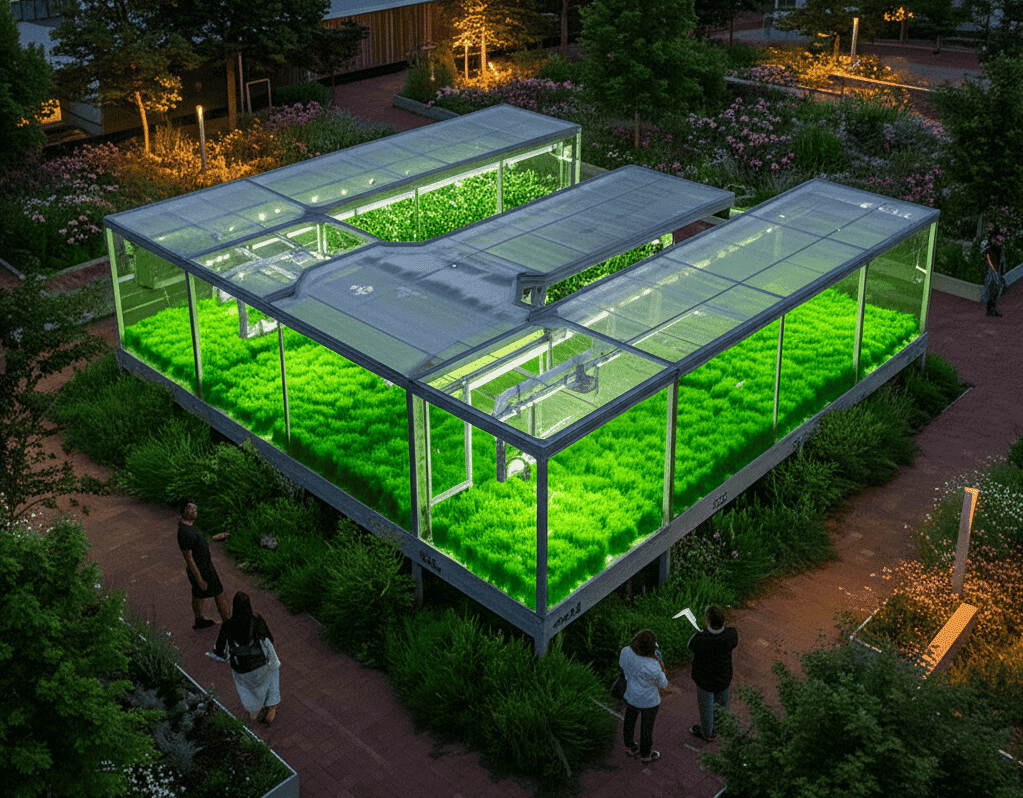
Biological Direct Air Capture uses the Earth’s oldest and most tested technology: Photosynthesis. Microalgae are nature’s most efficient “carbon machines,” growing up to 10 times faster than terrestrial plants. They don’t require high-grade heat; they require light, water, and CO2 .
At Carbelim, we have optimized this via specialized photobioreactors (PBRs). These systems allow us to offer Clean Air & CO2 Capture solutions that work at ambient temperatures. This drastically reduces the “Carbon Intensity” of the removal process itself, ensuring that for every ton captured, we aren’t burning half a ton of fossil fuels to run the machine.
3. Scaling Through Urban Integration: Turning Cities into Forests
A major barrier to scaling carbon removal is land use. We cannot simply plant forests over every square inch of the planet; we need land for agriculture, housing, and industry. The scalable pathway for DAC involves integrating capture technology into the infrastructure we are already building.
Transforming Architecture: The Living Building
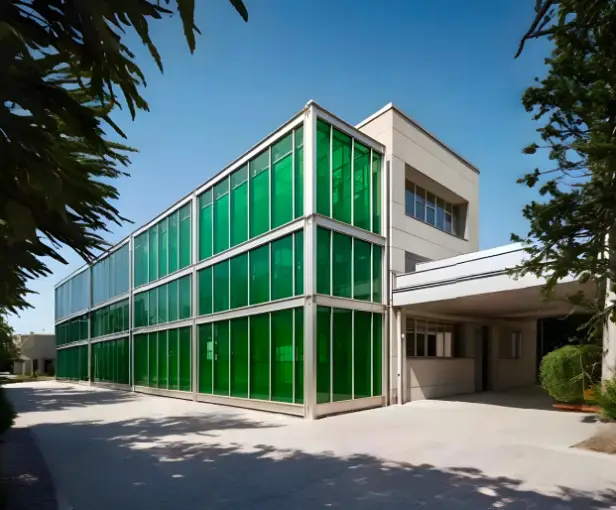
Imagine a city where every skyscraper is an active participant in carbon removal. This is the core philosophy behind the Carbelim Biomimetic Façade (CBF™).
By retrofitting or designing buildings with biological “skins,” we turn the urban landscape into a carbon-eating machine. These facades offer more than just carbon removal:
- Passive Cooling: The algal layers provide natural shade, reducing the building’s internal temperature and lowering HVAC energy use by up to 15%.
- Oxygen Production: In an urban “heat island,” oxygen levels can dip. Our systems release pure $O_2$ back into the street level.
- Pollutant Scrubbing: Beyond CO2 , microalgae are highly effective at absorbing $NO_x$ and $SO_x$, the primary components of urban smog.
Roadways as Carbon Sinks: The BioDivider™
Transportation is responsible for nearly 16% of global emissions. By installing BioDivider™ Panels for Sustainable Road Infrastructure in India and other global hubs, we can capture emissions directly at the tailpipe level.
Unlike traditional concrete dividers, these panels actively scrub the air. They are designed for modularity, meaning they can be deployed across thousands of kilometers of highway without requiring additional land acquisition.
4. The Quest for Permanence: Beyond the Capture
Capturing CO2 is only a temporary victory if that gas is simply released back into the air through a product with a short lifecycle (like a carbonated drink). For carbon removal to be a “scalable pathway,” it must be permanent.
At Carbelim, we focus on the transition from “Capture” to “Sequestration.”
The Biochar Revolution
The most promising pathway for permanent biological removal is Biochar.
- Harvesting: Once the microalgae have consumed their limit of CO2 , the biomass is harvested.
- Pyrolysis: The biomass is heated in an oxygen-free environment. Instead of burning and releasing CO2 , the carbon is “locked” into a stable, solid form.
- Sequestration: This biochar can be buried in agricultural soil. It remains stable for 300 to 1,000+ years, effectively removing that carbon from the atmospheric cycle for a millennium.
Industrial Utilization
For industries that cannot avoid emissions, Industrial CCUS Solutions (Carbon Capture, Utilization, and Storage) provide a bridge. By feeding industrial flue gas into algal systems, we create a “Circular Bioeconomy.” The resulting biomass can be used for bio-plastics, high-protein animal feed, or organic fertilizers, offsetting the cost of the capture technology.
5. Economic Scalability: The Value of High-Integrity Credits
For Carbon Capture from Air to scale, it must be financially viable. The primary driver of this market is the Carbon Credit. However, not all credits are created equal.
The market is moving away from “avoidance” credits (paying someone not to cut down a tree) toward “removal” credits (actually taking CO2 out of the sky). A carbon credit generated from a Carbelim system is highly valued because it meets the “4 Pillars of High-Integrity Removal”:
- Additionality: This carbon removal would not have happened without the specific deployment of our technology.
- Permanence: Through biochar or mineralization, we ensure the carbon isn’t leaked back.
- Measurability: Unlike a forest, where measuring carbon uptake is an estimate, our PBRs use IoT sensors to provide real-time data on exactly how much CO2 has been sequestered.
- Verifiability: Our MRV (Monitoring, Reporting, and Verification) protocols ensure that every ton of carbon removed is auditable and transparent.
6. Overcoming the Challenges: Energy, Water, and Cost
No technology is a silver bullet. Scaling DAC requires addressing the “Trilemma” of energy, water, and cost.
Energy Density
Mechanical DAC requires roughly $2,000$ kWh of energy per ton of CO2 In contrast, biological systems use solar energy as their primary fuel. By utilizing the Direct Air Capture biological pathway, we shift the energy burden from the electrical grid to the sun.
Water Usage
Critics often point to the water needs of algae. However, Carbelim uses Closed-Loop Photobioreactors. Unlike open ponds, our systems experience zero evaporation and can often utilize greywater or recycled industrial water, making them suitable even for arid regions.
Driving Down the Cost Curve
The goal of the industry is to reach <$100$ per ton of CO2 . We are achieving this through “Mass Manufacturing” of modular panels rather than “Custom Engineering” of massive plants. As we scale the production of BioDivider™ Panels, the cost per ton will continue to plummet, following the same “learning curve” seen in solar panels and EV batteries.
7. Global Impact: The Social Dimension of DAC
Carbon removal is not just a technical challenge; it is a social one. One of the biggest advantages of the Carbelim approach is Environmental Justice.
Mechanical DAC plants are often “hidden” in deserts. Our Clean Air & CO2 Capture systems are deployed where people actually live. By placing carbon capture in urban centers, we:
- Reduce localized air pollution (PM2.5).
- Create “Green Jobs” in urban maintenance and biotech.
- Improve the mental well-being of citizens through “Biophilic Design”—bringing the soothing presence of nature into the concrete jungle.
8. The Road to 2050: A Strategic Roadmap
To meet the 1.5°C target, we need a portfolio of solutions. The roadmap for scalable carbon removal looks like this:
- 2024-2027: The Pilot Phase. Integration of Carbelim Biomimetic Façades in high-visibility “Green Buildings” and tech parks.
- 2027-2035: Infrastructure Scaling. Mass deployment of BioDivider™ Panels across national highway networks.
- 2035-2050: The Giga-Ton Era. Full-scale Industrial CCUS Solutions combined with permanent geological storage, removing billions of tons of legacy carbon annually.
Summary: The Biological Advantage
| Metric | Traditional Mechanical DAC | Carbelim Biological DAC |
| Primary Energy | Electricity / High Heat | Sunlight / Photosynthesis |
| Infrastructure | Industrial Plants | Buildings, Roads, Flue-gas stacks |
| Secondary Benefits | None | Oxygen, Cooling, Bio-products |
| Cost Driver | Chemical Sorbents | Scalable Bio-manufacturing |
| Permanence | Underground Injection | Biochar & Soil Sequestration |
Conclusion: A Living Solution for a Warming World
“Carbon Capture from Air” is the defining challenge of our generation. We are moving past the era of simply “doing less harm” and entering the era of “doing active good.”
By harnessing the biological power of microalgae and integrating it into the very fabric of our cities, we create a scalable, permanent pathway to climate restoration. This isn’t just about survival; it’s about thriving in a world where our technology heals the planet.
At Carbelim, we believe the greenest way to capture carbon is to let nature lead the way. We invite you to explore how our solutions can help your business or city become a leader in the new carbon economy.
Take the Next Step Toward Net Zero:
- For Architects & Developers: Learn about the Carbelim Biomimetic Façade (CBF™).
- For Infrastructure Leaders: Explore our BioDivider™ Panels.
- For Industrial Partners: View our Industrial CCUS Solutions.
- Join the Mission: Contact Carbelim Today to discuss your carbon removal strategy.