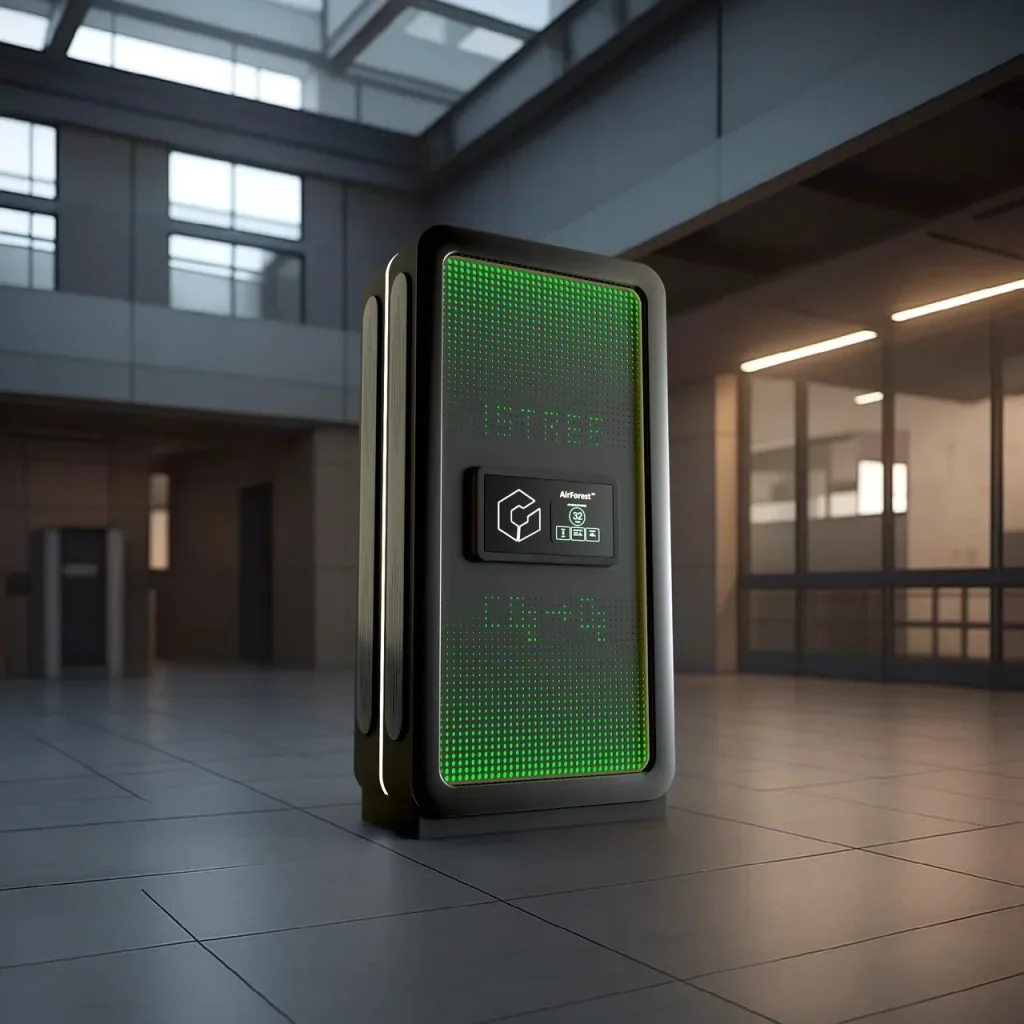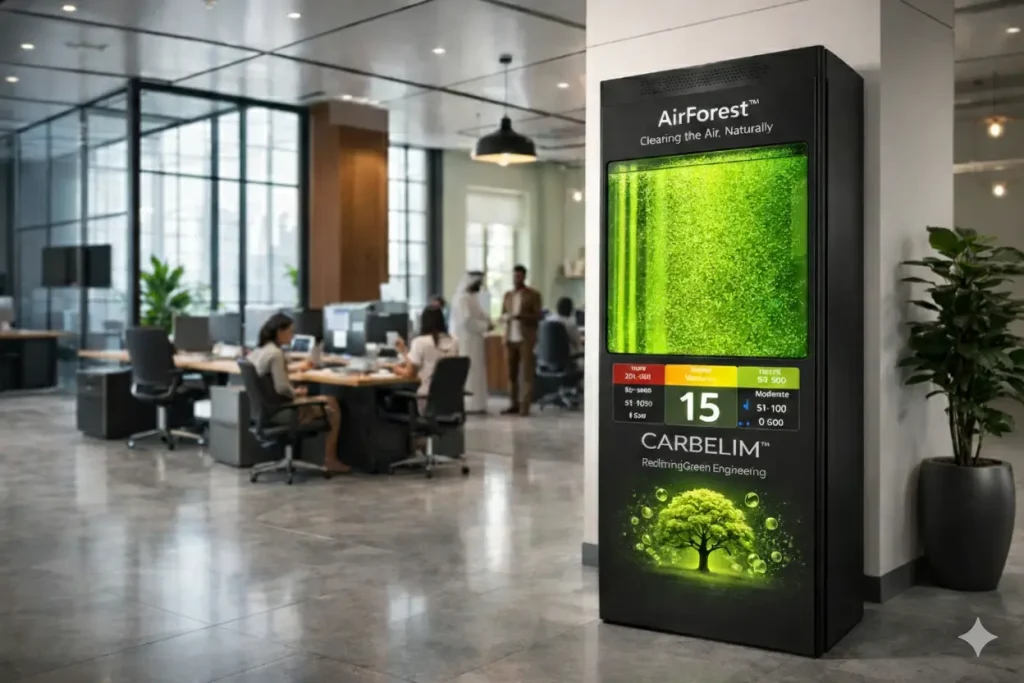
Indoor air quality concerns have pushed carbon dioxide filters into the spotlight as businesses and building managers seek effective solutions for CO₂ reduction. With indoor CO₂ levels often exceeding 1,000 ppm—well above the outdoor baseline of 400 ppm—the question isn’t whether we need CO₂ filtration systems, but whether current technologies truly deliver on their promises. Understanding how carbon dioxide filters work, their limitations, and emerging nature-based alternatives is essential for making informed decisions about indoor air quality management.
Key Takeaways
- Traditional carbon dioxide filters use chemical absorption, physical adsorption, or membrane separation to capture CO₂, with varying degrees of effectiveness depending on indoor conditions and filter type.
- Conventional filtration limitations include high energy consumption, frequent maintenance requirements, limited CO₂ reduction capacity, and inability to convert captured carbon into valuable products.
- Nature-based solutions like microalgae photobioreactors offer superior performance by continuously converting CO₂ into oxygen while producing beneficial biomass, representing the next generation of sustainable air purification technology.
Understanding How Carbon Dioxide Filters Function
The fundamental principle: Carbon dioxide filters operate through three primary mechanisms—chemical absorption using liquid solvents, physical adsorption onto solid materials like activated carbon or zeolites, and membrane-based separation that selectively allows CO₂ molecules to pass through specialized barriers.
When examining how carbon dioxide filters work in real-world applications, the technology relies on concentration gradients and molecular properties to separate CO₂ from other air components. Chemical absorption systems use amine-based solutions that chemically bind with CO₂ molecules, creating a reversible reaction that releases the captured gas during regeneration cycles. Physical adsorption methods leverage porous materials with high surface areas—activated carbon can have surface areas exceeding 3,000 m²/g—to trap CO₂ molecules through weak van der Waals forces. Membrane technologies employ polymer or ceramic barriers with pore sizes specifically designed to allow CO₂ passage while blocking nitrogen and oxygen molecules.
The effectiveness of any CO₂ filtration system depends on several factors: inlet CO₂ concentration, airflow rate, filter material properties, temperature, humidity levels, and system design. Studies from the International Journal of Greenhouse Gas Control demonstrate that chemical absorption can achieve 85-95% CO₂ capture efficiency in optimal conditions, while physical adsorption typically reaches 70-85% efficiency. However, these laboratory results often differ significantly from real-world performance in occupied buildings where conditions constantly fluctuate.
The Reality Check: Do Traditional CO₂ Filters Deliver Results?
Performance under scrutiny: Real-world testing reveals that while carbon dioxide filters can reduce indoor CO₂ levels, their practical effectiveness often falls short of manufacturer claims, particularly in large commercial spaces with high occupancy rates and variable ventilation patterns.
Research published in Building and Environment journal tracked CO₂ filtration performance across 15 commercial buildings over 12 months, revealing sobering insights. Traditional carbon dioxide filters reduced average CO₂ concentrations by 15-30% in moderate occupancy scenarios, but struggled to maintain levels below 800 ppm during peak usage periods. The energy costs proved substantial—running filtration systems continuously consumed 12-18% of total building HVAC energy budgets. Additionally, filter saturation occurred faster than anticipated, requiring replacement or regeneration every 4-8 weeks depending on CO₂ loads and filter type.
The filtration efficiency also varies dramatically based on implementation context. Small enclosed spaces like conference rooms saw better results, with CO₂ reductions reaching 35-45%, while open-plan offices with multiple air exchange points achieved only 10-20% improvement. Temperature and humidity significantly impact filter performance—high humidity reduces activated carbon adsorption capacity by up to 40%, and temperature fluctuations affect chemical absorption equilibrium. These practical limitations explain why many facility managers report disappointment with filter carbon dioxide systems that looked promising on specification sheets but underperformed in operational environments.
The Hidden Costs of Conventional Filtration
Beyond initial purchase prices, carbon dioxide filters carry substantial lifecycle costs that many organizations overlook during procurement. Energy consumption for air circulation through dense filter media adds 0.08-0.15 kWh per cubic meter of processed air, translating to thousands of dollars annually for medium-sized buildings. Chemical regeneration processes for absorption systems require heating cycles that consume additional energy while releasing captured CO₂ back into the atmosphere, creating a net-zero environmental benefit. Maintenance labor, filter replacement materials, and system downtime during servicing further inflate total cost of ownership by 40-60% compared to initial projections.
Why Ventilation Alone Cannot Solve Indoor CO₂ Problems
The ventilation paradox: While increasing outdoor air exchange rates can dilute indoor CO₂ concentrations, this approach introduces new challenges related to energy efficiency, outdoor air quality, and climate control that make standalone ventilation an incomplete solution for modern buildings.
ASHRAE Standard 62.1 recommends ventilation rates of 8-10 liters per second per person for acceptable indoor air quality, but achieving target CO₂ levels through ventilation alone requires dramatically higher air change rates. To maintain CO₂ below 800 ppm in densely occupied spaces, facilities would need to increase ventilation by 150-250%, resulting in proportional increases in heating, cooling, and humidity control costs. Research from Lawrence Berkeley National Laboratory calculated that doubling ventilation rates to manage CO₂ can increase annual HVAC energy consumption by $2.50-$4.00 per square meter in temperate climates, and substantially more in extreme climates.
The outdoor air quality consideration adds another layer of complexity. In urban environments where outdoor CO₂ levels already exceed 450 ppm and often contain particulate matter, NOx, and volatile organic compounds, bringing in large volumes of outdoor air doesn’t guarantee indoor air quality improvement. Cities like Delhi, Beijing, and Los Angeles frequently experience outdoor air quality that makes increased ventilation counterproductive. Furthermore, during peak pollution events or wildfire smoke episodes, facilities must restrict outdoor air intake, leaving building occupants exposed to accumulating indoor CO₂ without viable alternatives. This creates a critical need for how to remove carbon dioxide from the air without relying solely on outdoor air exchange.
The Science Behind Effective CO₂ Reduction Strategies
Multi-layered approach: Effective indoor CO₂ management requires combining source control, strategic ventilation, active filtration, and innovative removal technologies to create comprehensive air quality solutions that address multiple pollutants while maintaining energy efficiency and operational sustainability.
Source control represents the first line of defense—reducing occupant density during peak periods, optimizing meeting schedules, and implementing CO₂ monitoring systems that trigger adaptive ventilation responses. Smart building systems can modulate fresh air intake based on real-time CO₂ sensor data, providing adequate dilution during high-occupancy periods while minimizing energy waste during low-demand times. This demand-controlled ventilation approach, when properly calibrated, can reduce HVAC energy consumption by 20-35% while maintaining acceptable CO₂ levels below 1,000 ppm in most scenarios.
Active CO₂ removal technologies complement ventilation strategies by directly extracting carbon dioxide from indoor air. Traditional activated carbon filters and chemical absorption systems provide one pathway, but their limitations have sparked interest in biological solutions. Microalgae-based photobioreactors leverage photosynthesis—nature’s proven CO₂ capture mechanism—to continuously convert carbon dioxide into oxygen and biomass. Studies from the Journal of Applied Phycology demonstrate that microalgae can remove CO₂ at rates 10-50 times faster than terrestrial plants per unit area, while producing valuable biomass that offsets system costs.
Measuring True Filtration Effectiveness
Evaluating carbon dioxide filter performance requires looking beyond simple CO₂ reduction percentages to comprehensive metrics including energy efficiency ratios, cost per ton of CO₂ removed, maintenance intervals, system reliability, and environmental impact of the filtration process itself. A truly effective system should demonstrate consistent performance across varying occupancy levels, maintain low energy consumption relative to CO₂ removal rates, require minimal maintenance interventions, and ideally convert captured CO₂ into beneficial products rather than simply releasing it elsewhere. These holistic assessment criteria reveal that many conventional filters excel in controlled laboratory settings but struggle to deliver sustained value in dynamic real-world environments.
Nature-Based CO₂ Filtration: The Algae Advantage
Biomimetic innovation: Microalgae photobioreactors represent a paradigm shift in CO₂ filtration technology, offering continuous carbon capture, oxygen generation, and biomass production in compact, energy-efficient systems that outperform conventional filters across multiple performance dimensions.
Unlike traditional carbon dioxide filters that merely trap or concentrate CO₂ for later disposal, algae-based systems fundamentally convert CO₂ into valuable products through photosynthesis. Species like Chlorella vulgaris and Spirulina platensis can consume 1.8-2.2 kg of CO₂ per kilogram of biomass produced, effectively sequestering carbon while generating oxygen at ratios that significantly improve indoor air quality. Research at MIT’s Media Lab demonstrated that a 200-liter microalgae system can absorb CO₂ equivalent to a 25-tree forest while occupying just 2 square meters of space, making it ideal for urban applications where traditional green spaces are impractical.
The operational advantages extend beyond carbon capture efficiency. Algae photobioreactors operate continuously without filter replacement, chemical regeneration, or disposal logistics that burden conventional systems. Energy requirements consist primarily of LED lighting (which can be optimized to specific photosynthetic wavelengths) and gentle circulation pumps, consuming 70-85% less energy than comparable activated carbon or chemical absorption systems. The biomass produced contains proteins, omega-3 fatty acids, and other compounds with commercial value in food, feed, and cosmetic industries, creating revenue streams that offset operational costs. This circular economy approach aligns with sustainability goals while delivering superior air quality outcomes.
Real-World Applications and Performance Data
Commercial deployments of algae-based CO₂ filtration systems have demonstrated impressive results across diverse building types. A 12-month study at a corporate headquarters in Amsterdam showed that integrating microalgae photobioreactors into the HVAC system reduced indoor CO₂ levels from an average of 1,100 ppm to 650 ppm during business hours—a 41% reduction while simultaneously decreasing energy consumption by 28% compared to the previous mechanical filtration system. Similar installations in educational facilities, hospitals, and residential towers have recorded CO₂ reduction rates of 30-50% with payback periods of 3-5 years when accounting for energy savings and biomass revenue.
Implementing Effective CO₂ Management in Your Facility
Strategic planning essentials: Successful carbon dioxide filter implementation requires comprehensive assessment of building characteristics, occupancy patterns, existing HVAC capabilities, budget constraints, and long-term sustainability objectives to select and configure systems that deliver optimal performance for specific operational contexts.
Begin with detailed CO₂ monitoring across different zones and time periods to establish baseline conditions and identify problem areas. Continuous monitoring over 2-4 weeks reveals patterns that spot measurements miss—peak concentration times, spatial variations, correlation with occupancy schedules, and ventilation system response characteristics. This data informs system sizing, placement strategies, and performance targets. For buildings with CO₂ levels consistently exceeding 1,200 ppm or experiencing occupant complaints about stuffiness, headaches, or reduced cognitive performance, implementing active CO₂ removal technology becomes a priority investment.
System selection should balance immediate needs with future adaptability. Traditional activated carbon filters may suit small spaces with limited budgets and simple retrofit requirements, despite their ongoing maintenance demands. Chemical absorption systems work well for facilities with existing infrastructure to support regeneration cycles and chemical handling. However, for organizations committed to sustainability, seeking net-zero building certifications, or planning long-term air quality improvements, nature-based solutions like algae photobioreactors offer superior lifecycle value. These systems integrate seamlessly with modern building management platforms, providing real-time CO₂ capture data while contributing to green building credentials and occupant wellness programs.
Integration with Building Management Systems
Modern CO₂ filtration systems should connect with building automation platforms to enable coordinated control strategies. Integrated systems can automatically adjust filtration intensity based on real-time sensor feedback, occupancy data from access control systems, and weather conditions affecting outdoor air quality. This intelligent orchestration maximizes air quality benefits while minimizing energy consumption—increasing filtration during occupied periods and reducing activity during nights and weekends. The data collected also provides valuable insights for facility optimization, helping managers identify ventilation inefficiencies, schedule anomalies, or equipment malfunctions that impact air quality.
Future Trends in CO₂ Filtration Technology
Innovation horizon: Emerging technologies promise to revolutionize how to remove carbon dioxide from the air through advances in nanomaterials, genetic engineering of CO₂-absorbing organisms, electrochemical conversion systems, and hybrid approaches that combine multiple capture mechanisms in synergistic configurations.
Research laboratories are developing metal-organic frameworks (MOFs) with extraordinarily high CO₂ adsorption capacities—some experimental materials can capture 8-12 times more CO₂ per gram than activated carbon. These nanoporous crystalline structures can be tailored at the molecular level to optimize selectivity, capacity, and regeneration energy requirements. Several MOF variants are transitioning from research to pilot-scale testing, with projections suggesting commercial availability within 3-5 years at prices competitive with current filter technologies.
Biotechnology advances are enhancing the already impressive capabilities of microalgae-based systems. Genetic modifications targeting photosynthetic efficiency, CO₂ uptake rates, and biomass composition are producing algae strains with 40-60% improved carbon capture performance compared to wild-type species. Synthetic biology approaches are creating hybrid organisms that combine the best traits of multiple species, optimizing for specific building applications. These engineered organisms maintain the fundamental advantages of biological CO₂ conversion—continuous operation, oxygen production, and valuable biomass—while dramatically improving efficiency and reducing space requirements.
The convergence of digital technology with physical filtration systems is enabling smart, adaptive CO₂ management. Machine learning algorithms analyze patterns in occupancy, CO₂ generation, outdoor conditions, and system performance to predict air quality trends and proactively adjust filtration parameters. Predictive maintenance systems monitor filter saturation, pump performance, and algae culture health to schedule interventions before problems affect air quality. These intelligent systems optimize the balance between air quality, energy consumption, and operational costs better than rule-based controls, typically improving overall system efficiency by 15-25%.
Conclusion
The question of whether carbon dioxide filters work doesn’t have a simple yes-or-no answer—effectiveness depends entirely on filter technology, application context, and performance expectations. Traditional activated carbon and chemical absorption systems can reduce indoor CO₂ levels but carry significant limitations in energy consumption, maintenance requirements, and environmental impact. The future of indoor air quality management increasingly points toward nature-based solutions, particularly microalgae photobioreactors, which not only filter carbon dioxide more efficiently but also generate oxygen and valuable biomass while consuming less energy than conventional systems. As buildings become smarter and sustainability becomes essential, investing in advanced CO₂ filtration and utilization technologies represents both an air quality improvement and a strategic environmental commitment. Organizations seeking to optimize indoor environments should assess their specific needs, evaluate emerging technologies, and consider how nature-inspired solutions might provide superior long-term value for both occupants and the planet.
What is a carbon dioxide filter and how does it work?
A carbon dioxide filter is a device that removes CO₂ from indoor air using chemical absorption, physical adsorption, or membrane separation. These systems trap CO₂ molecules through various mechanisms, reducing indoor concentrations to improve air quality and occupant comfort in enclosed spaces.
Can carbon dioxide filters reduce indoor CO₂ to outdoor levels?
Traditional carbon dioxide filters typically reduce indoor CO₂ by 15-45%, depending on occupancy and ventilation. While they improve air quality, most systems cannot consistently maintain outdoor CO₂ levels (around 400 ppm) in densely occupied spaces without significant energy consumption and frequent maintenance interventions.
How much energy do CO₂ filtration systems consume?
Conventional CO₂ filtration systems consume 0.08-0.15 kWh per cubic meter of processed air, adding 12-18% to building HVAC energy costs. Nature-based solutions like microalgae systems use 70-85% less energy while providing superior CO₂ capture and oxygen generation capabilities.
What is the difference between CO₂ filters and air purifiers?
Air purifiers primarily remove particulates, allergens, and odors using HEPA and activated carbon filters, but they don’t effectively remove CO₂. Carbon dioxide filters specifically target CO₂ molecules through chemical or biological processes, addressing the separate concern of indoor carbon dioxide accumulation from occupant respiration.
How often do carbon dioxide filters need replacement or maintenance?
Traditional activated carbon filters require replacement every 4-8 weeks depending on CO₂ loads, while chemical absorption systems need regeneration cycles every 2-6 weeks. In contrast, biological filtration systems operate continuously without filter replacement, requiring only periodic culture maintenance and nutrient replenishment.
Do carbon dioxide filters help with coronavirus and other airborne pathogens?
Carbon dioxide filters don’t directly remove viruses or bacteria, as they target CO₂ molecules specifically. However, improved ventilation and air quality associated with CO₂ management reduces pathogen concentrations. For comprehensive protection, combine CO₂ filtration with HEPA filtration and UV sterilization in building air systems.
What CO₂ level should buildings maintain for optimal indoor air quality?
ASHRAE recommends maintaining indoor CO₂ below 1,000 ppm for acceptable air quality, with levels below 800 ppm considered optimal for cognitive performance and occupant comfort. Concentrations above 1,200 ppm correlate with drowsiness, reduced concentration, and occupant complaints about air stuffiness and quality.
Are algae-based CO₂ filters better than traditional carbon filters?
Algae-based systems offer significant advantages over traditional carbon filters—they convert CO₂ into oxygen continuously, require 70-85% less energy, eliminate filter replacement needs, and produce valuable biomass. Studies show microalgae systems achieve 30-50% CO₂ reduction while conventional filters typically reach only 15-30% efficiency in real-world applications.
How much do commercial CO₂ filtration systems cost?
Traditional carbon dioxide filters range from $3,000-$15,000 for commercial installations, plus ongoing maintenance costs of $1,200-$4,000 annually. Advanced biological systems have higher upfront costs ($8,000-$25,000) but lower operational expenses and 3-5 year payback periods through energy savings and potential biomass revenue streams.
Can plants replace carbon dioxide filters in buildings?
Indoor plants provide minimal CO₂ reduction in occupied buildings—NASA research shows 10-15 plants are needed per 100 square feet for noticeable air quality improvement. Concentrated biological systems like photobioreactors achieve CO₂ removal rates 10-50 times higher per unit area than conventional plants, making them more practical for serious indoor air quality management.