
Welcome to a comprehensive exploration of Carbon Capture and Utilization (CCU) and its transformative potential in tackling climate change. In this blog, you will learn how CCU not only captures emissions but also converts them into valuable resources. Specifically, we will explore the vital role of algae in this innovative process, highlighting environmental benefits, economic opportunities, and advancements driven by companies like Carbelim. By the end, you’ll understand why CCU and algae-based solutions are becoming essential pillars of a sustainable future.
The Concept of Carbon Capture and Utilization (CCU)
Carbon Capture and Utilization (CCU) is an advanced approach that captures carbon dioxide (CO₂) emissions from industrial and built environments and repurposes them into useful products instead of releasing them into the atmosphere. Unlike conventional carbon capture methods focused only on storage, CCU emphasizes reuse, supporting a circular carbon economy.
Modern carbon capture technology integrates chemical, mechanical, and biological pathways to reduce atmospheric emissions. Among these, direct air capture solutions are gaining attention for their ability to remove CO₂ directly from ambient air, making CCU applicable beyond heavy industries.
Algae: Nature’s Carbon Capture Champion
Algae play a central role in nature-driven carbon capture due to their exceptional photosynthetic efficiency. These organisms absorb CO₂ at rates significantly higher than terrestrial plants while releasing oxygen and producing biomass. Microalgae, in particular, are well suited for controlled environments and can be cultivated throughout the year.
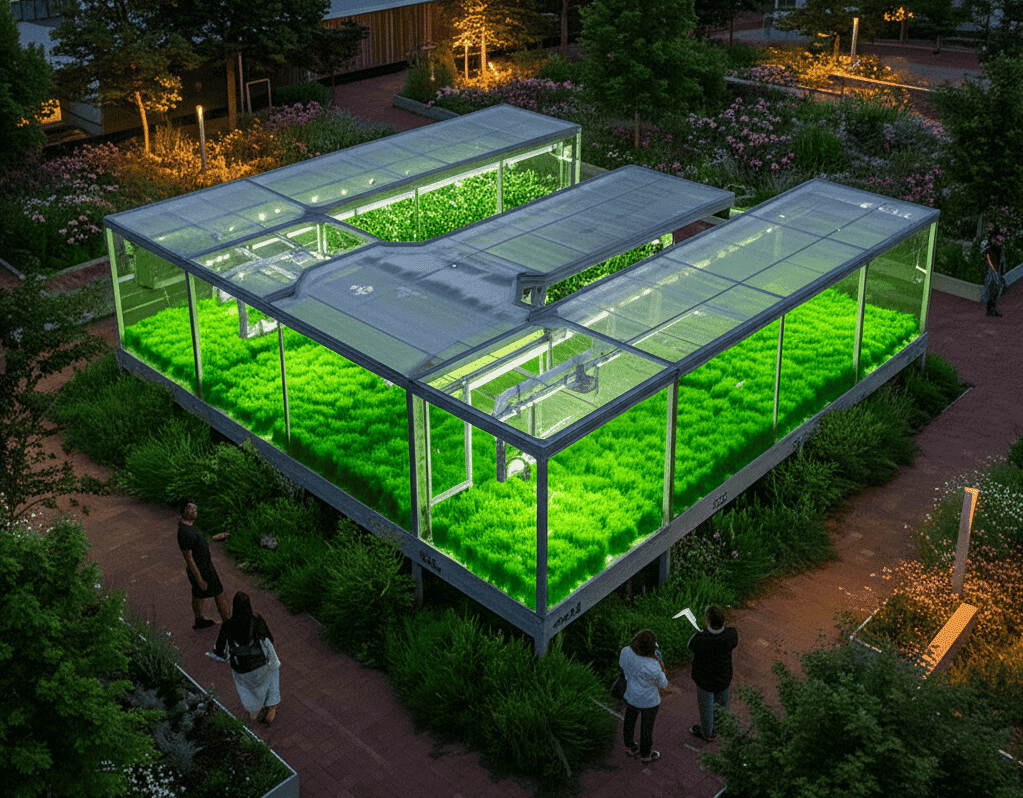
Advanced microalgae photobioreactor systems enable efficient carbon capture in compact, modular setups. These systems are increasingly used in both industrial and architectural applications, allowing algae to function as a living carbon filter within modern infrastructure.
Benefits of Converting CO₂ into Usable Products
Converting CO₂ into usable products creates both environmental and economic value. CCU supports the development of sustainable materials, fuels, and air-quality solutions while opening new opportunities in green manufacturing and climate-focused employment sectors.
From an environmental standpoint, CCU helps reduce greenhouse gas concentrations and supports long-term decarbonization goals. When paired with algae systems, captured carbon becomes part of a regenerative loop, improving air quality and resource efficiency at the same time.
Nature-Based CCU in Indoor and Built Environments
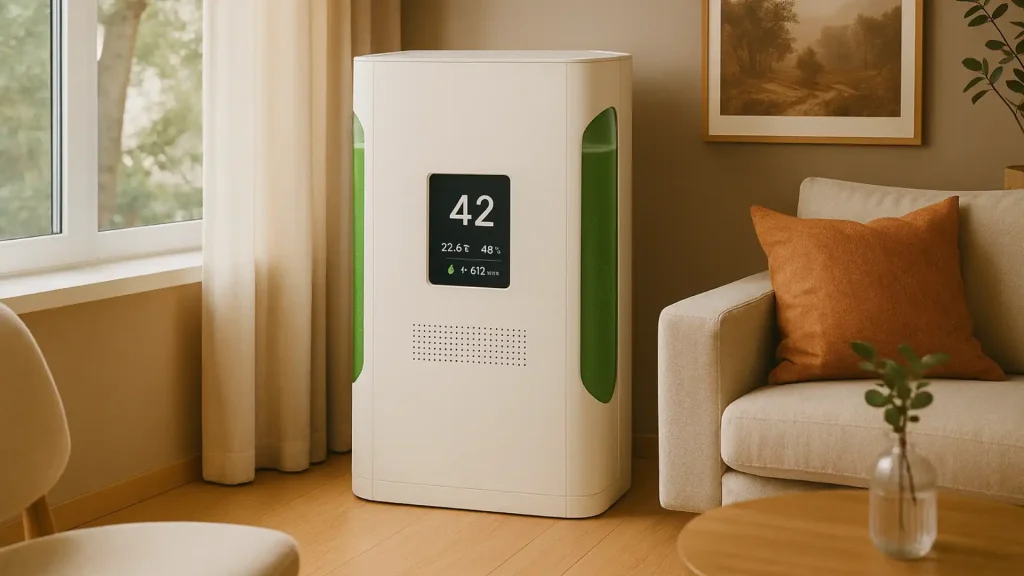
One of the most promising developments in CCU is its application in indoor spaces and urban settings. Algae-based installations can actively capture CO₂ from enclosed environments while improving oxygen levels and overall air quality. Innovations such as indoor algae air purification systems demonstrate how carbon capture can be seamlessly integrated into workplaces, public spaces, and homes.
These living systems go beyond filtration, functioning as living indoor air purification ecosystems that combine sustainability, design, and human well-being.
Spotlight on Carbelim: Nature-Based Carbon Solutions
Carbelim focuses on nature-inspired approaches to carbon management, integrating algae into scalable carbon capture infrastructure. Through solutions such as clean air CO₂ capture systems, the company demonstrates how biological processes can complement engineered climate technologies.
By combining algae cultivation with architectural and environmental design, these solutions highlight how carbon capture can be visible, functional, and educational rather than hidden industrial infrastructure.
Algae Technology: A Scalable and Eco-Friendly Alternative
Ongoing research and innovation continue to improve algae cultivation efficiency, system durability, and carbon uptake rates. Compared to traditional carbon management methods, algae-based CCU systems require lower energy input and generate valuable byproducts, making them both sustainable and economically viable.
As governments and organizations pursue net-zero targets, algae-driven CCU offers a practical pathway toward low-carbon infrastructure that actively restores environmental balance rather than merely reducing harm.
Join the Conversation: Your Thoughts on CCU
Carbon capture and utilization is evolving rapidly, and algae technology is emerging as a powerful enabler of this transition. How do you see algae-based CCU shaping future buildings, cities, and indoor environments?
By staying informed and engaged with sustainable technologies, we can collectively accelerate the adoption of solutions that move us toward a cleaner, healthier, and more resilient planet.