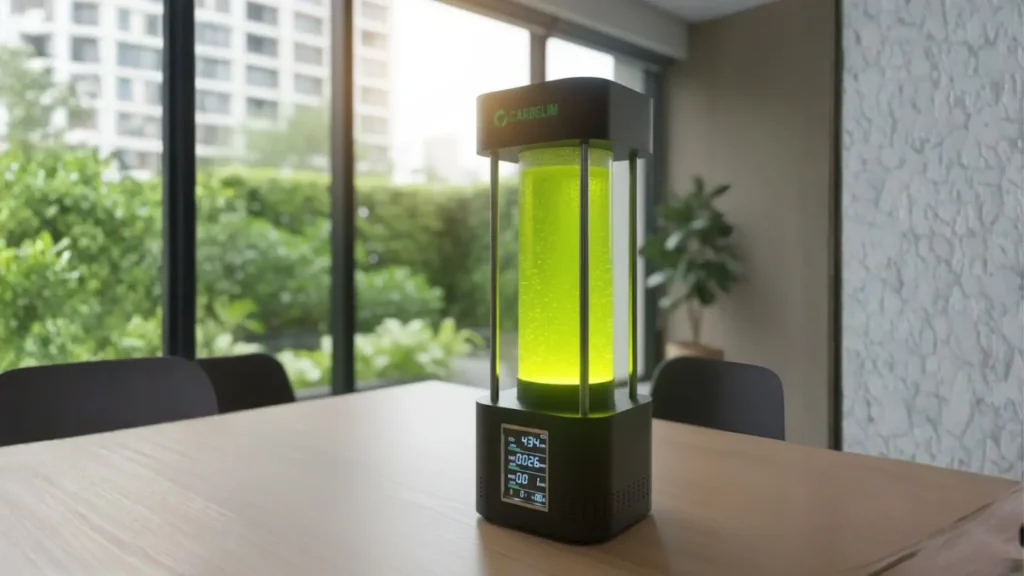
Introduction: The Urban Carbon Challenge Is Escalating
Urban centers today sit at the intersection of economic growth and environmental stress. Rapid industrialization, vehicular emissions, and energy consumption have led to a sharp increase in atmospheric carbon dioxide (CO₂) levels and particulate pollution. Cities are now responsible for over 70% of global CO₂ emissions, making them both the epicenter of the problem and the most critical arena for scalable solutions.
While policy frameworks and sustainability commitments continue to evolve, there remains a clear execution gap when it comes to deployable, measurable, and scalable carbon capture systems in urban environments. Traditional approaches—tree plantations, industrial scrubbers, and large-scale direct air capture—either lack immediacy, require significant land, or are economically unviable at scale within dense city landscapes.
This is where microalgae-based carbon capture technology emerges as a transformative solution—bridging biology, engineering, and digital monitoring to create a high-efficiency, modular, and scalable system tailored for urban deployment.

Understanding Carbon Capture: Where Current Solutions Fall Short
Carbon capture technologies have evolved across multiple paradigms, each with distinct operational frameworks:
1. Nature-Based Solutions (Trees and Forests)
Afforestation and reforestation have long been positioned as primary carbon sinks. While effective over long time horizons, they are constrained by:
- Slow growth cycles
- Land availability limitations
- Unpredictable sequestration rates
Urban environments, in particular, lack the spatial flexibility required to deploy tree-based carbon capture at meaningful scale.
2. Industrial Carbon Capture Systems
Technologies such as carbon scrubbers and direct air capture (DAC) systems are engineered for high-volume CO₂ removal. However:
- Capital expenditure (CAPEX) remains prohibitively high
- Energy requirements are significant
- Deployment is largely limited to industrial zones
These systems are not optimized for decentralized, urban applications.
3. Air Purification Technologies
Conventional air purifiers target particulate matter (PM2.5, PM10) but do not address CO₂ levels effectively. Their impact is localized, and they lack integration with carbon accounting frameworks.
The Strategic Gap
There is a clear need for a solution that is:
- Space-efficient
- Rapidly deployable
- Biologically efficient in CO₂ capture
- Digitally measurable (MRV-enabled)
Microalgae-based systems uniquely fulfill these criteria.
Microalgae: Nature’s High-Efficiency Carbon Engine
Microalgae are microscopic photosynthetic organisms that convert CO₂ into biomass using sunlight. Unlike terrestrial plants, they exhibit:
- 10–50x higher CO₂ fixation efficiency
- Rapid growth cycles (doubling within hours)
- High adaptability to controlled environments
How Microalgae Capture Carbon
At a biochemical level, microalgae perform photosynthesis:
- CO₂ + sunlight + nutrients → biomass + oxygen
This process not only removes CO₂ from the atmosphere but also generates valuable biomass that can be utilized across multiple industries, including biofuels, animal feed, and bioplastics.
From Biology to Infrastructure: The Rise of Microalgae Carbon Capture Systems
Modern microalgae-based carbon capture solutions integrate biological processes with engineered systems, typically in the form of photobioreactors (PBRs).
Key Components of the System
1. Photobioreactor Unit
- Enclosed or semi-enclosed system
- Optimized for light exposure and CO₂ diffusion
- Ensures controlled growth conditions
2. CO₂ Injection Mechanism
- Captures ambient or point-source CO₂
- Enhances algae growth rates
3. Nutrient Delivery System
- Supplies essential nitrogen, phosphorus, and micronutrients
- Can integrate with wastewater streams (circular economy model)
4. Monitoring Layer (MRV – Measurement, Reporting, Verification)
- Real-time tracking of CO₂ absorption
- Data-driven validation for carbon credits and ESG reporting
Why Microalgae Are Ideal for Urban Carbon Capture
1. Space Efficiency
Microalgae systems can be deployed vertically or modularly, making them suitable for:
- Corporate campuses
- Commercial buildings
- Public infrastructure
2. Rapid Impact
Unlike trees that take years to mature, microalgae systems begin capturing CO₂ immediately upon deployment.
3. Controlled Environment
Photobioreactors allow precise control over:
- Light intensity
- Temperature
- Nutrient levels
This leads to predictable and optimized carbon capture performance.
4. Dual Impact: Carbon + Air Quality
Beyond CO₂ removal, microalgae systems:
- Improve oxygen levels
- Contribute to localized air quality enhancement
Microalgae vs Trees: A Performance Perspective
| Parameter | Microalgae | Trees |
|---|---|---|
| CO₂ absorption rate | High (10–50x) | Moderate |
| Space requirement | Low | High |
| Growth cycle | Hours to days | Years |
| Urban deployability | High | Limited |
| Monitoring capability | Real-time (MRV) | Minimal |
From an operational standpoint, microalgae provide a high-efficiency, data-driven alternative to traditional carbon sinks.
Use Cases: Where Microalgae Systems Create Maximum Value
1. Corporate Campuses and Financial Institutions
Organizations with ESG mandates can deploy microalgae systems to:
- Offset carbon emissions
- Enhance sustainability reporting
- Improve workplace air quality
2. Smart Cities and Urban Infrastructure
Integration into:
- Bus stops
- Public spaces
- Government buildings
Enables decentralized carbon capture at scale.
3. Industrial Zones
Microalgae systems can capture emissions from:
- Manufacturing units
- Power plants
While converting waste CO₂ into valuable biomass.
4. Wastewater Treatment Integration
Aquaculture and municipal wastewater streams can serve as nutrient sources, enabling:
- Cost reduction
- Circular resource utilization
The Role of MRV: Turning Carbon Capture into Measurable Impact
One of the biggest challenges in climate technology is credibility and traceability. This is where MRV (Measurement, Reporting, Verification) becomes critical.
Why MRV Matters
- Enables carbon credit generation
- Supports regulatory compliance
- Provides transparent ESG reporting
How Microalgae Systems Enable MRV
Advanced systems integrate:
- IoT sensors
- Data analytics platforms
- Real-time dashboards
This allows stakeholders to quantify:
- CO₂ captured (kg/day)
- System efficiency
- Environmental impact
Economic Potential: Beyond Carbon Capture
Microalgae systems are not just environmental solutions—they are multi-revenue platforms.
1. Carbon Credits
Verified carbon capture can be monetized in voluntary and compliance markets.
2. Biomass Utilization
Algal biomass can be processed into:
- Biofuels
- Animal feed
- Nutraceuticals
3. ESG-Driven Partnerships
Organizations increasingly seek credible climate solutions, creating opportunities for:
- B2B deployments
- Sustainability collaborations
Challenges and Innovation Opportunities
While the technology holds significant promise, certain challenges remain:
1. Cost Optimization
- Photobioreactor manufacturing
- Energy inputs
2. Harvesting and Processing
Efficient biomass extraction remains a technical bottleneck.
3. Strain Optimization
Selecting high-performance microalgae strains is critical for maximizing yield.
Innovation Outlook
Emerging advancements are addressing these gaps through:
- AI-driven growth optimization
- Hybrid systems (open pond + PBR)
- Advanced material engineering
The Future of Urban Carbon Capture
As cities evolve into smart, data-driven ecosystems, carbon capture solutions must align with:
- Decentralization
- Scalability
- Measurability
Microalgae-based systems are uniquely positioned to become a core component of urban climate infrastructure.
Strategic Implications for Businesses and Policymakers
For Businesses
- Enhance ESG performance
- Build climate-resilient operations
- Unlock new revenue streams
For Governments
- Accelerate climate targets
- Improve urban air quality
- Enable sustainable infrastructure development
Conclusion: From Concept to Climate Infrastructure
Microalgae carbon capture represents a paradigm shift—from passive, long-term sequestration to active, real-time, and measurable climate intervention.
In a world where climate action must be both immediate and scalable, microalgae offer a compelling value proposition:
- High efficiency
- Modular deployment
- Integrated measurement systems
As urban centers continue to expand, the integration of such systems will be critical in shaping sustainable, low-carbon cities of the future.