As cities grow denser and air quality continues to decline, traditional air filtration and carbon capture systems are proving insufficient to meet long-term sustainability goals. Rising carbon dioxide concentrations, poor indoor air quality, and energy-intensive mechanical solutions have pushed urban planners and policymakers to seek alternatives that go beyond short-term mitigation.
A new, nature-based solution is gaining global attention — microalgae air purification. By harnessing the natural photosynthetic power of microalgae, urban environments can actively remove carbon dioxide, improve air quality, and contribute to climate-positive infrastructure rather than merely reducing harm.
This blog explores how microalgae air purification works, why it is becoming essential for modern cities, and how companies like Carbelim are advancing this technology for real-world urban applications.
What Is Microalgae Air Purification?
Microalgae air purification is a biological air-cleaning process that uses living microalgae to absorb carbon dioxide (CO₂) and release oxygen through photosynthesis. Unlike mechanical filters that trap pollutants temporarily, microalgae systems actively convert CO₂ into biomass, making them regenerative and carbon-negative by design.
Microalgae are microscopic photosynthetic organisms found naturally in oceans and freshwater ecosystems. In engineered systems, these organisms are cultivated under controlled conditions where they can efficiently interact with air streams containing CO₂ and other pollutants.
These systems are typically integrated into:
- Photobioreactors
- Modular algae air systems
- Biomimetic building facades
- Indoor and semi-outdoor installations
Microalgae air purification is a core component of nature-based CCU (Carbon Capture and Utilization) systems, offering a sustainable alternative to energy-intensive industrial capture technologies that rely on chemicals, compression, or underground storage.
Why Urban Areas Need Microalgae-Based Air Purification
1. Rising Urban Air Pollution
Urban centers contribute the majority of global CO₂ emissions due to transportation, construction, power generation, and high population density. Conventional air purifiers are designed primarily to remove particulate matter (PM2.5 and PM10) and volatile organic compounds, but they do not remove CO₂.
As CO₂ accumulates in enclosed and semi-enclosed urban spaces, it negatively impacts cognitive performance, comfort, and overall public health. Microalgae air purification directly addresses this gap by removing CO₂ at the source rather than diluting or displacing it.
2. Net-Zero and Decarbonization Targets
Cities worldwide are committing to net-zero emissions targets under national and international climate frameworks. However, offsets and efficiency improvements alone are insufficient to meet these goals.
Urban decarbonization solutions must move beyond passive reductions and focus on active carbon removal. Microalgae systems naturally capture carbon as part of their metabolic process, making them an ideal tool for cities seeking measurable, continuous carbon reduction.
3. Energy-Efficient and Sustainable Operation
Unlike mechanical filtration or chemical capture, microalgae systems:
- Require minimal energy input
- Operate continuously during daylight and artificial lighting cycles
- Improve air quality without secondary pollution or waste
This makes them particularly suitable for long-term deployment in smart cities, where sustainability, resilience, and operational efficiency are equally important.
How Microalgae Air Purification Works
Microalgae air purification systems operate through a simple yet powerful biological cycle that has evolved naturally over billions of years.
- CO₂-rich air is directed into a controlled cultivation chamber
- Microalgae absorb CO₂ during photosynthesis
- Oxygen-rich air is released back into the environment
- Captured carbon is converted into algal biomass
This process mirrors natural ecosystems but is engineered for urban efficiency. When integrated into advanced systems such as microalgae photobioreactors, the purification process becomes scalable, controllable, and measurable.
The captured biomass can also be harvested and repurposed for secondary uses such as bio-based materials, research applications, or circular economy initiatives, further enhancing the sustainability profile of the system.
Scientific Advantage of Microalgae Over Traditional Greenery
While trees and green spaces are essential for urban health, microalgae offer several advantages in dense urban environments:
- Microalgae can absorb significantly more CO₂ per square meter than terrestrial plants
- They do not require soil or large land areas
- Growth rates are much faster than trees
- Systems can be installed vertically or indoors
This makes microalgae air purification especially valuable in cities where space is limited and traditional green infrastructure cannot scale fast enough to meet demand.
Performance Metrics: What Makes Microalgae Effective?
Microalgae air purification systems are increasingly supported by measurable performance indicators, which are essential for urban planning and ESG reporting.
Key performance characteristics include:
- Continuous CO₂ absorption throughout operational hours
- Oxygen generation that improves indoor and outdoor air quality
- Low energy consumption compared to mechanical ventilation systems
- Predictable and monitorable output suitable for data-driven cities
According to global research on algae-based carbon capture published by international environmental agencies, biological systems can play a critical role in complementing industrial carbon reduction strategies. global research on algae-based carbon capture
Microalgae Air Purification vs Conventional Air Filters
| Feature | Conventional Air Filters | Microalgae Air Purification |
|---|---|---|
| CO₂ Removal | ❌ No | ✅ Yes |
| Oxygen Generation | ❌ No | ✅ Yes |
| Energy Demand | High | Low |
| Sustainability | Limited | Nature-based |
| Carbon Utilization | ❌ No | ✅ Yes |
This fundamental difference positions microalgae systems as living infrastructure, not just air-cleaning devices. Rather than consuming resources to reduce pollution, they actively regenerate environmental quality.
Role of Microalgae in Nature-Based CCU Systems
Microalgae air purification is a cornerstone of nature-based CCU systems, where captured carbon is not stored underground but utilized biologically. This aligns closely with circular economy principles and long-term sustainability planning.
Nature-based CCU enables:
- Continuous carbon capture without geological risks
- Visible sustainability features integrated into buildings
- Quantifiable environmental impact suitable for reporting
To understand how this fits into broader climate strategies, readers can explore Carbelim’s work on direct air capture using biological systems.
Applications of Microalgae Air Purification in Urban Spaces
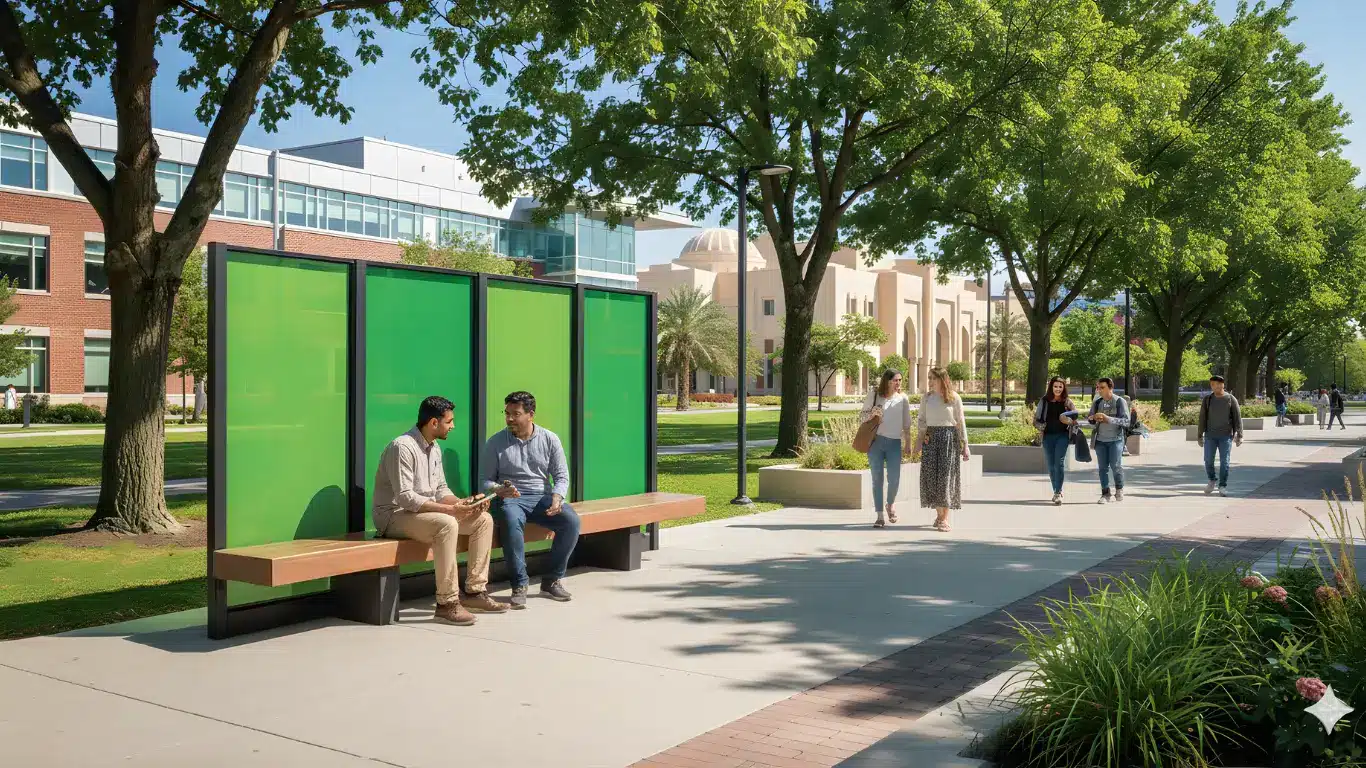
Microalgae systems are highly adaptable and can be deployed across multiple environments, from dense city centers to controlled indoor spaces.
🌆 Smart Cities & Public Infrastructure
- Outdoor air purification zones
- Carbon-capturing facades
- Green transit hubs
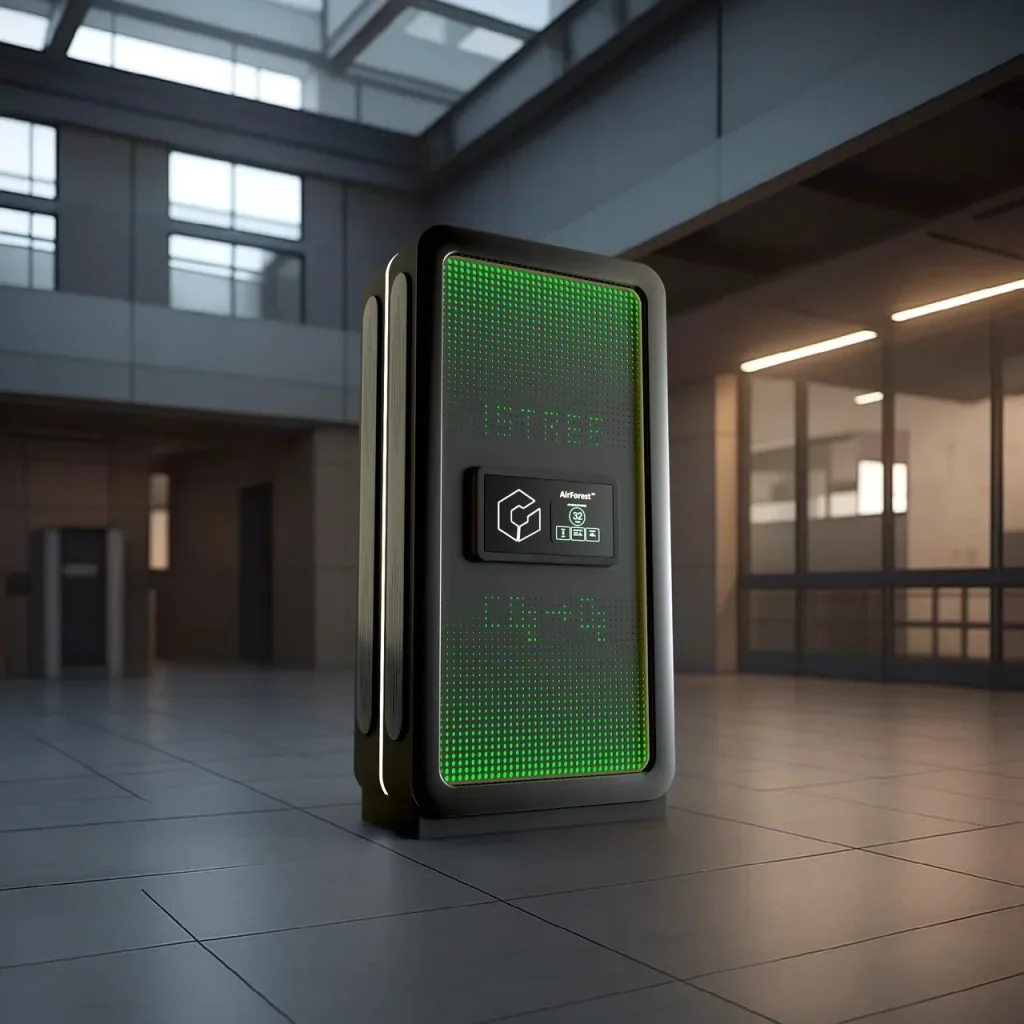
- CleanAir Hub installations for public engagement
These applications allow cities to combine air quality improvement with visible sustainability initiatives.
🏢 Commercial & Office Buildings
- Indoor air quality enhancement
- CO₂ reduction in enclosed workspaces
- Wellness-focused architectural design
Microalgae air purification supports healthier indoor environments while helping organizations meet sustainability and ESG commitments.
🏫 Institutions & Innovation Campuses
- Educational sustainability showcases
- Research-driven air purification systems
- Demonstration projects for future urban planning
Installations such as CleanAir Hub systems enable institutions to combine education, research, and real-world impact.
Carbelim’s biomimetic facade systems integrate microalgae directly into building exteriors, transforming architecture into an active carbon sink rather than a passive structure.
Integration with Biomimetic Architecture
Biomimetic architecture draws inspiration from natural systems to create buildings that function like living organisms. Microalgae air purification fits naturally within this philosophy.
By integrating algae systems into facades, walls, and structural elements, buildings can:
- Actively remove carbon from surrounding air
- Regulate microclimates
- Communicate sustainability visually
This approach aligns with emerging architectural trends that prioritize environmental performance alongside aesthetics.
Policy, ESG, and Smart City Alignment
Microalgae air purification supports multiple policy and reporting frameworks, including:
- Net-zero building standards
- ESG disclosure requirements
- Smart city sustainability metrics
Because these systems produce measurable data, they can be integrated into digital monitoring platforms for transparent reporting and performance optimization.
Why Microalgae Air Purification Is the Future of Urban Sustainability
Microalgae air purification is not just an environmental solution — it represents an urban design evolution. As cities transition toward climate-positive infrastructure, living systems will increasingly replace static, extractive technologies.
Key advantages include:
- Continuous CO₂ removal
- Improved urban air quality
- Low operational cost over long lifespans
- Alignment with ESG and sustainability goals
These benefits make microalgae-based systems essential for future-ready urban decarbonization strategies.
How Carbelim Is Advancing Microalgae Air Purification
Carbelim is pioneering scalable, modular microalgae air purification technologies designed for real-world urban deployment. By combining engineering, biology, and architectural integration, Carbelim enables cities and buildings to become active participants in carbon reduction.
From advanced photobioreactors to carbon-capturing facades and integrated CleanAir Hub systems, Carbelim’s solutions represent the next generation of nature-based climate technology.
Frequently Asked Questions (FAQs)
Is microalgae air purification safe for indoor use?
Yes. Systems are enclosed and designed to operate safely in controlled indoor environments.
Can microalgae systems replace traditional air purifiers?
They complement traditional systems by addressing CO₂, which conventional purifiers cannot remove.
How much CO₂ can microalgae capture?
Capture rates depend on system design, scale, and environmental conditions, but they are significantly higher per square meter than traditional greenery.
Are microalgae systems energy-intensive?
No. They typically consume less energy than mechanical filtration and ventilation systems.
Final Thoughts
Microalgae air purification represents a shift from mechanical pollution control to living, regenerative systems. As urban sustainability challenges intensify, solutions that actively clean air, capture carbon, and integrate seamlessly into city life will define the future of climate-positive development.
For cities, developers, and organizations committed to real environmental impact, microalgae air purification is no longer optional — it is inevitable.