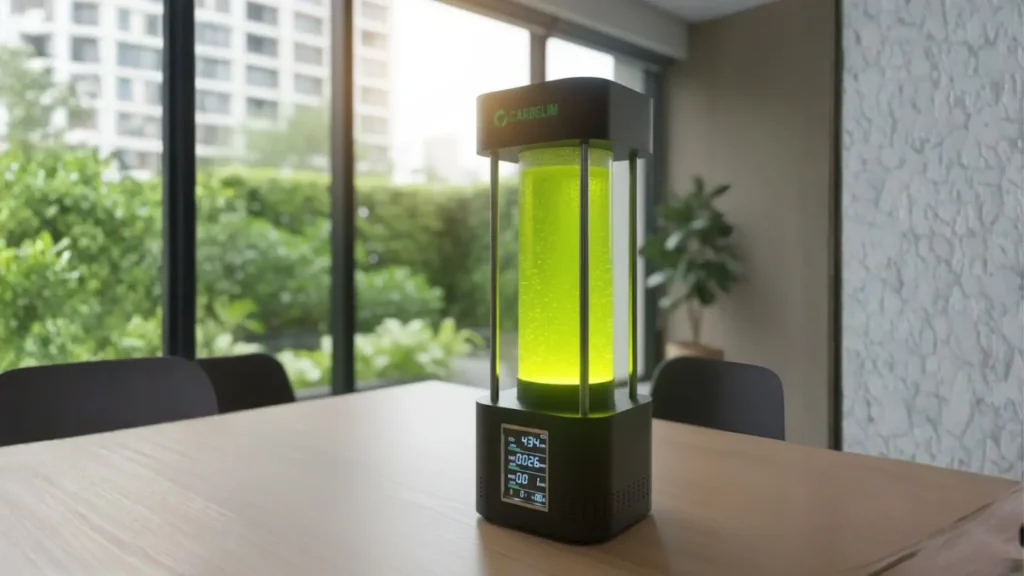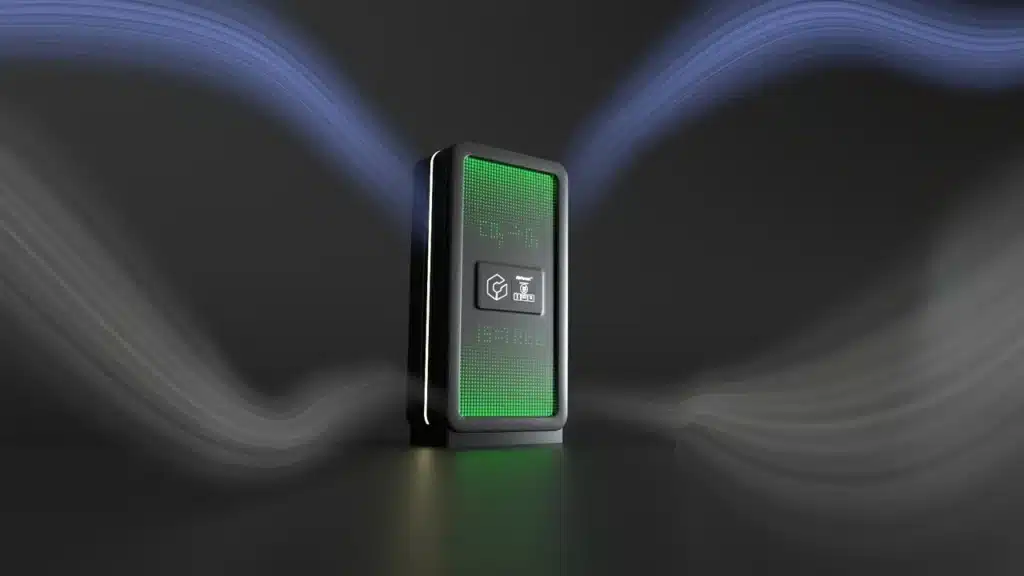
As cities worldwide grapple with deteriorating air quality and rising carbon emissions, algae carbon capture has emerged as a revolutionary nature-based solution. In 2026, living photobioreactors are no longer experimental concepts confined to laboratories—they’re becoming integral components of urban infrastructure. These innovative systems harness the natural photosynthetic power of microalgae to capture CO₂ directly from the atmosphere while simultaneously producing valuable bio-products. For urban planners, sustainability officers, and environmental engineers, understanding how this carbon capture technology works and its real-world applications has become essential for building climate-resilient cities.
Key Takeaways
Algae carbon capture systems use living microalgae in photobioreactors to absorb CO₂ up to 10-50 times more efficiently than trees, while occupying significantly less space. Modern photobioreactor manufacturers are developing modular, scalable solutions that integrate seamlessly into building facades, public infrastructure, and urban landscapes. These systems not only remove carbon from the atmosphere but also produce spirulina, omega-3 oils, and other valuable bio-products, creating a circular economy approach to urban sustainability. As clean air technologies evolve, algae CO2 capture stands out for its dual benefit of emission reduction and resource generation.
The Science Behind Algae Carbon Capture: Nature’s Most Efficient CO₂ Processor
At the heart of every living photobioreactor lies a deceptively simple yet remarkably efficient biological process. Microalgae, particularly species like Chlorella vulgaris and Spirulina platensis, perform photosynthesis at rates that far exceed terrestrial plants. During this process, algae absorb carbon dioxide from the air or flue gas streams, convert it using sunlight and water, and produce oxygen and biomass as byproducts.
The efficiency of algae carbon capture stems from several biological advantages. Unlike trees that allocate energy to developing structural tissues like bark and roots, microalgae dedicate nearly all their cellular machinery to photosynthesis and growth. A single kilogram of microalgae can capture approximately 1.8 kilograms of CO₂ per day under optimal conditions. This represents a carbon fixation rate of 10 to 50 times higher than conventional forests on an area-normalized basis.
Modern carbon capture technology has evolved beyond simple pond systems. Today’s photobioreactors are sophisticated enclosed systems that maintain precise control over light exposure, temperature, nutrient delivery, and CO₂ concentration. These controlled environments maximize algae productivity while minimizing contamination risks and water loss through evaporation. The modular nature of contemporary photobioreactor designs allows them to be scaled from small building-integrated units capturing a few kilograms of CO₂ daily to large industrial installations processing tons of emissions.
Research from leading institutions demonstrates that certain algae strains can tolerate CO₂ concentrations up to 40%, making them ideal for treating industrial flue gases. This tolerance, combined with rapid growth rates—some species double their biomass every 24 hours—positions algae CO2 capture as one of the most promising scalable solutions for atmospheric carbon reduction in urban environments.
Photobioreactor Technology: Engineering Living Carbon Capture Systems
The transformation of biological potential into practical urban solutions required significant engineering innovation. Today’s photobioreactor manufacturers have developed systems that bridge the gap between laboratory performance and real-world urban deployment.
Closed Loop Photobioreactors represent the current gold standard in urban algae cultivation. These systems feature transparent panels or tubes that house microalgae cultures while protecting them from environmental contaminants and temperature fluctuations. Advanced designs incorporate LED lighting systems that supplement natural sunlight, ensuring consistent productivity regardless of weather conditions or seasonal variations. The closed-loop architecture also enables precise CO₂ delivery, pumping targeted concentrations of carbon dioxide directly into the algae culture where it’s immediately available for photosynthesis.
Biomimetic Facade Integration has revolutionized how we think about building exteriors. The Carbelim Biomimetic Facade (CBF™) exemplifies this approach, transforming conventional glass and concrete surfaces into active carbon-sequestering systems. These building-integrated photobioreactors serve triple duty as architectural features, carbon capture devices, and thermal regulators. Buildings fitted with algae-based facades can capture between 1 to 2 tons of CO₂ per 100 square meters annually while reducing cooling costs through natural shading and evaporative cooling effects.
The technological sophistication extends to monitoring and automation systems. Modern photobioreactors incorporate sensors that continuously track pH levels, dissolved oxygen, turbidity, and cell density. Machine learning algorithms analyze this data in real-time, automatically adjusting nutrient dosing, CO₂ injection rates, and harvesting schedules to maintain optimal productivity. This level of automation has reduced manual intervention requirements by over 70% compared to early-generation systems, making large-scale deployment economically viable.
Energy efficiency remains a critical design consideration. Latest-generation systems consume as little as 0.2 kWh per kilogram of CO₂ captured when operating in optimal conditions—a fraction of the energy required by mechanical direct air capture technologies. When integrated with building management systems, photobioreactors can even contribute to net energy savings through reduced HVAC loads and the production of biofuels from harvested algae biomass.
Urban Implementation: From Concept to City-Scale Deployment
The theoretical promise of algae carbon capture becomes tangible when examining real-world urban implementations across different geographic contexts. In 2026, several cities have moved beyond pilot projects to city-scale deployment, offering valuable insights into practical challenges and solutions.
Building Integration Projects demonstrate the versatility of photobioreactor technology. Office towers in London, Dubai, and New York have retrofitted their south-facing facades with modular algae panels, creating living walls that capture CO₂ while providing dynamic visual interest. These installations typically achieve carbon capture rates of 150-200 kg CO₂ per year per facade panel, with buildings hosting 50-100 panels collectively removing 7.5 to 20 tons of carbon dioxide annually. The aesthetic appeal of gently circulating green algae cultures has unexpectedly become a selling point, with tenants reporting improved occupant satisfaction and biophilic connection to nature.
Public Infrastructure Applications extend carbon capture into shared urban spaces. Transit stations, parking structures, and pedestrian bridges increasingly incorporate photobioreactor arrays as functional art installations. Mumbai’s experimental metro station integration captures approximately 1.5 tons of CO₂ monthly while educating commuters about climate solutions through interactive displays showing real-time capture rates and oxygen production. These high-visibility installations serve dual purposes: meaningful carbon reduction and public awareness cultivation.
Industrial Zone Deployments target point-source emissions where CO₂ concentrations are highest. Manufacturing facilities and power plants in Coimbatore have partnered with industrial CCUS providers to install large-scale photobioreactor arrays adjacent to exhaust stacks. By capturing carbon dioxide before it enters the atmosphere, these systems achieve removal efficiencies of 30-40% from flue gas streams. The harvested algae biomass then enters supply chains for animal feed, bioplastics, or biochemical production, creating circular economy value chains that improve project economics.
Smart City Integration represents the cutting edge of urban algae deployment. Emerging frameworks connect distributed photobioreactor networks through IoT platforms, creating city-wide carbon capture ecosystems. Sensor networks monitor air quality across neighborhoods, with algorithms dynamically adjusting photobioreactor operation to target pollution hotspots. During high-traffic periods or thermal inversions that trap pollutants, systems can increase CO₂ uptake rates by up to 35% through automated lighting and nutrient adjustments, providing responsive environmental services exactly when and where they’re needed most.
The scalability of these implementations varies considerably. Modular photobioreactor designs allow incremental expansion from pilot installations of 10-20 units to district-scale networks comprising hundreds of interconnected systems. Cities typically begin with showcase installations at municipal buildings or cultural institutions before expanding to regulatory requirements for new construction or major renovations.
Economic Viability: The Business Case for Living Carbon Capture
Understanding the economics of algae carbon capture proves essential for widespread adoption. While environmental benefits drive initial interest, financial sustainability determines long-term success.
Capital Investment Requirements for photobioreactor systems have decreased significantly as manufacturing scales up. Entry-level building-integrated systems now cost approximately $300-500 per square meter installed, compared to $800-1,200 per square meter just three years ago. Larger industrial installations benefit from economies of scale, with per-unit costs dropping to $200-350 per square meter for projects exceeding 1,000 square meters. These costs compare favorably with mechanical direct air capture systems that typically require $500-1,000 per ton of annual CO₂ capture capacity.
Operating Expenses include nutrient supplies, energy consumption, monitoring systems, and periodic maintenance. Modern systems operate at $20-40 per ton of CO₂ captured annually, significantly below the $100-300 per ton operating costs associated with conventional carbon capture technologies. Energy represents the largest variable cost, though many building-integrated systems achieve near-energy-neutral operation by leveraging waste heat and integrating with building automation systems.
Revenue Generation from bio-product sales substantially improves project economics. Harvested microalgae biomass commands premium prices across multiple markets. Food-grade spirulina sells for $15-30 per kilogram, omega-3 oils reach $40-80 per kilogram, and even lower-grade biomass for animal feed generates $2-5 per kilogram. A typical urban photobioreactor capturing 10 tons of CO₂ annually produces approximately 5 tons of dry algae biomass, potentially generating $10,000-50,000 in product revenue depending on end-use applications and quality grades achieved.
Carbon Credit Markets provide additional revenue streams. With carbon credits trading between $30-80 per ton in compliance markets and $10-30 per ton in voluntary markets, projects can generate significant offset revenues. However, methodological challenges around permanence, additionality, and monitoring have slowed credit certification for algae-based systems. Emerging standardized protocols specifically designed for biological carbon capture should improve market access for photobioreactor projects throughout 2026-2027.
Payback Periods for typical installations now range from 5-8 years when accounting for carbon credit revenues and bio-product sales, compared to 10-15 years for systems relying solely on regulatory compliance or corporate sustainability targets. Government incentives, green building credits, and tax advantages can reduce payback periods by 30-50% in jurisdictions prioritizing climate action.
The direct air capture sector increasingly recognizes that hybrid approaches combining mechanical and biological systems may offer optimal cost-effectiveness, with each technology addressing its comparative advantages in different contexts and scales.
Future Outlook: Innovations Reshaping Algae Carbon Capture
The algae carbon capture field continues evolving rapidly, with several emerging innovations promising to enhance performance, reduce costs, and expand applications.
Genetic Engineering Advances are producing algae strains with enhanced CO₂ fixation rates, improved stress tolerance, and optimized bio-product profiles. Recent developments include strains engineered to produce higher concentrations of specific lipids for biodiesel production, accumulate valuable pigments like astaxanthin, or synthesize pharmaceutical precursors. While regulatory frameworks governing genetically modified organisms in open environments remain cautious, contained photobioreactor systems provide controlled settings that address biosafety concerns while enabling commercial deployment of enhanced strains.
Hybrid System Architectures integrate algae carbon capture with complementary clean air technologies. New designs combine photobioreactors with electrochemical carbon mineralization, using algae to capture CO₂ and then mineralizing a portion of the harvested biomass into stable carbonate compounds for long-term storage or use in construction materials. Other hybrid approaches pairalgae-based air purifiers with mechanical filtration systems, addressing both gaseous pollutants through biological capture and particulate matter through physical filtration.
AI-Driven Optimization leverages machine learning to maximize photobioreactor performance. Advanced algorithms now predict optimal harvesting times based on growth curves, weather forecasts, and market prices for bio-products. Predictive maintenance systems identify equipment issues before failures occur, reducing downtime by up to 40%. Some operators report productivity improvements of 15-25% after implementing AI-powered management systems compared to manual operation.
Novel Deployment Platforms extend algae carbon capture into previously unexplored niches. Floating photobioreactor arrays on urban water bodies, photobioreactor-integrated sound barriers along highways, and even algae cultivation systems integrated into shipping containers for modular rapid deployment represent emerging application areas. Each platform type addresses specific urban contexts while expanding the total available surface area for carbon capture implementation.
Policy and Regulatory Evolution will significantly impact adoption rates. Several jurisdictions now mandate carbon capture capabilities for new construction above certain square footage thresholds, with biological systems often qualifying for enhanced compliance credits due to their co-benefits. International standards for measuring and verifying biological carbon capture continue to mature, improving investor confidence and market transparency.
Looking ahead to 2030, industry projections suggest that optimized algae carbon capture systems could achieve costs below $50 per ton of CO₂ removed while generating sufficient bio-product revenue to achieve profitability without carbon credit markets. If realized, this milestone would position algae-based systems as the most economically attractive carbon removal technology for urban environments.
Conclusion
Algae carbon capture has transitioned from promising research concept to practical urban climate solution throughout 2026. Living photobioreactors now demonstrate proven carbon removal capabilities, scalable deployment models, and increasingly favorable economics through bio-product revenue generation. For cities committed to meaningful emission reductions, these nature-based systems offer immediate implementation pathways that complement rather than compete with other carbon capture technologies.
The integration of algae CO2 capture into building facades, public infrastructure, and industrial facilities represents more than technological innovation—it reflects a fundamental reimagining of urban environments as active participants in climate stabilization rather than passive emission sources. As photobioreactor manufacturers continue advancing system efficiency and reducing costs, and as genetic engineering produces enhanced algae strains, the potential for biological carbon capture continues expanding.
Organizations evaluating clean air technologies for sustainability initiatives should consider algae-based systems among their portfolio of solutions. The dual benefits of atmospheric carbon removal and valuable bio-product generation create unique value propositions unavailable through purely mechanical approaches. Ready to explore how algae carbon capture can transform your organization’s sustainability strategy? Contact Carbelim’s team to discuss custom photobioreactor solutions tailored to your specific urban environment and carbon reduction goals.
What is algae carbon capture and how does it work?
Algae carbon capture uses living microalgae in controlled photobioreactor systems to absorb CO₂ from air or industrial emissions through photosynthesis. The microalgae convert carbon dioxide into oxygen and biomass at rates 10-50 times higher than trees, making it an exceptionally efficient nature-based carbon removal solution for urban environments.
How much CO₂ can photobioreactors capture daily?
Modern photobioreactors capture between 150-200 kg of CO₂ per year per standard facade panel, with optimal conditions. Industrial-scale systems can process 30-40% of CO₂ from flue gas streams. A single kilogram of microalgae typically captures approximately 1.8 kg of CO₂ daily under controlled conditions.
Are algae-based carbon capture systems cost-effective?
Yes, current systems operate at $20-40 per ton of CO₂ captured, significantly below mechanical alternatives. When factoring in bio-product revenues from harvested algae—including spirulina, omega-3 oils, and animal feed—many installations achieve payback periods of 5-8 years and can become profitable without relying solely on carbon credits.
What are the main advantages of photobioreactor technology over traditional carbon capture?
Photobioreactors require significantly less energy (0.2 kWh per kg CO₂ vs. several kWh for mechanical systems), occupy less space, produce valuable bio-products, generate oxygen, and integrate aesthetically into urban architecture. They also provide thermal regulation benefits when installed as building facades, reducing cooling costs.
Can algae carbon capture work in different climates?
Yes, modern closed-loop photobioreactors operate effectively across diverse climates from tropical to temperate regions. Advanced systems incorporate climate control features including supplemental LED lighting, temperature regulation, and automated adjustments that maintain optimal algae growth conditions regardless of external weather variations throughout the year. Algae-based air purifier systems in India demonstrate successful adaptation to hot, humid tropical conditions.
What bio-products can be produced from captured CO₂ in algae systems?
Harvested microalgae biomass yields multiple valuable products including food-grade spirulina ($15-30/kg), vegan omega-3 oils ($40-80/kg), animal feed ($2-5/kg), bioplastics, biofuels, natural pigments like astaxanthin, and pharmaceutical precursors. This multi-product approach significantly improves the economic viability of algae carbon capture projects.
How do building-integrated photobioreactors affect property values?
Studies indicate that buildings featuring living algae facades experience 8-15% premiums in rental rates and property valuations due to enhanced sustainability credentials, improved aesthetic appeal, reduced operating costs, and positive biophilic effects on occupant wellbeing. LEED and similar green building certifications also provide additional market value.
What maintenance do photobioreactor systems require?
Modern automated systems require minimal maintenance—typically quarterly inspections, semi-annual nutrient system servicing, and annual deep cleaning. Advanced monitoring systems predict maintenance needs before failures occur. Overall, maintenance requirements have decreased by 70% compared to early-generation systems through improved automation and reliability.
How does algae carbon capture compare to planting trees for CO₂ removal?
While trees remain important for ecosystems, algae capture CO₂ at 10-50 times higher rates per unit area, produce measurable results within days rather than decades, require no arable land, and generate valuable bio-products. In space-constrained urban environments where large-scale forestation isn’t feasible, photobioreactors provide practical alternatives for meaningful carbon reduction. Carbelim’s PureAir Network™ demonstrates how distributed algae systems can create city-wide carbon capture ecosystems that complement traditional green infrastructure.
Are there any environmental concerns with large-scale algae cultivation?
Closed-loop photobioreactor systems address most environmental concerns by preventing algae release into natural ecosystems, eliminating nutrient runoff, and minimizing water consumption through recirculation. Rigorous biosafety protocols govern the use of genetically modified strains. Responsible system design and operation ensure algae carbon capture complements rather than compromises environmental health.