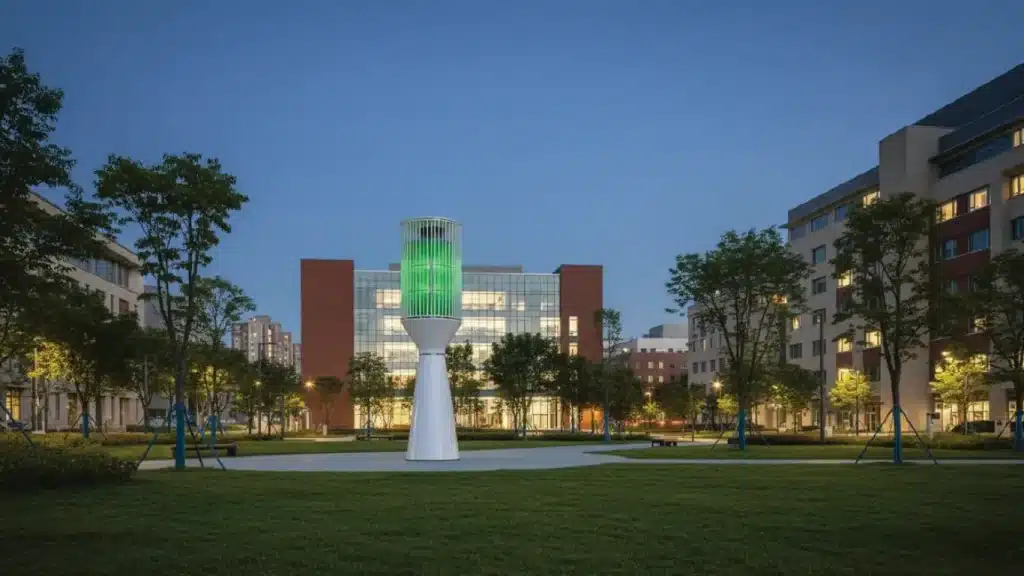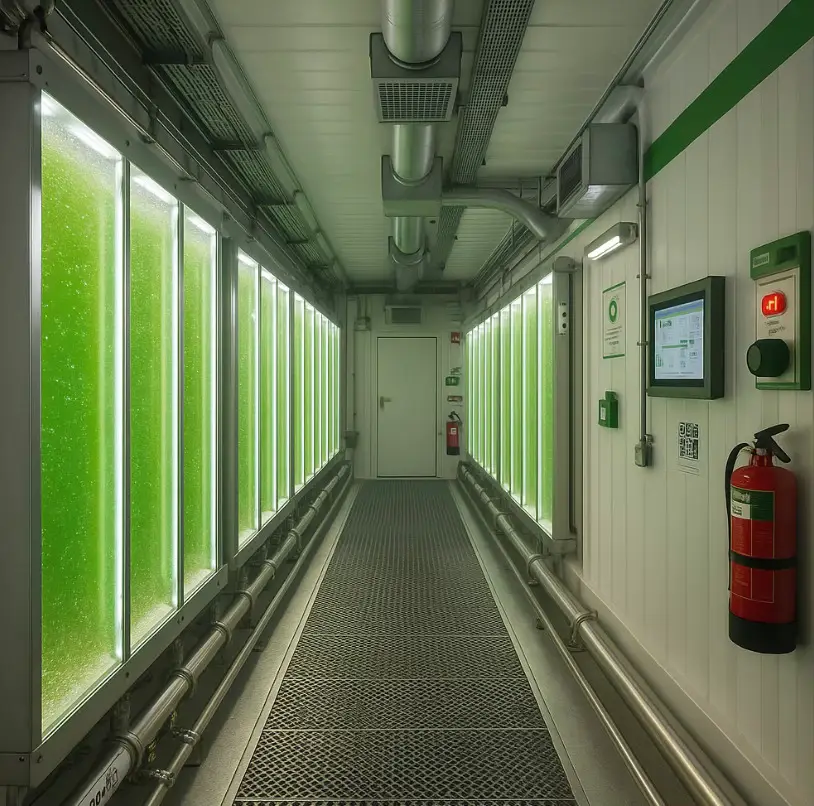
Indoor air pollution is no longer just about dust and allergens. As people spend more time indoors, concerns around carbon dioxide (CO₂), oxygen balance, and overall air freshness are growing rapidly. This has led to new air purification technologies entering the market—most notably algae-based indoor air purification.
Traditional HEPA air purifiers are widely used, but do they actually address today’s indoor air quality challenges? And how do they compare with algae air purification systems?
This article provides a clear, science-backed comparison between algae air purifiers and HEPA filters to help you understand which solution is better for modern indoor spaces.
Understanding Indoor Air Quality Beyond Particles
Indoor air quality (IAQ) is influenced by multiple factors:
- Particulate matter (PM2.5, PM10)
- Volatile organic compounds (VOCs)
- Carbon dioxide (CO₂)
- Oxygen levels
- Humidity
- Biological contaminants
Most conventional air purifiers focus only on particles, while newer biological systems—such as Carbelim’s nature-based carbon capture technology—aim to address gaseous pollutants like CO₂ as well.
What Is a HEPA Air Purifier?
HEPA (High-Efficiency Particulate Air) filters are designed to trap 99.97% of particles as small as 0.3 microns.
HEPA air purifiers are effective at removing:
- Dust
- Pollen
- Pet dander
- Mold spores
- Smoke particles
- Airborne bacteria attached to particles
How HEPA filters work:
Air is pulled through dense fibrous filters that physically trap particles. The cleaned air is then recirculated back into the room.
Limitations of HEPA Air Purifiers
While HEPA filters are excellent for particle removal, they have critical limitations:
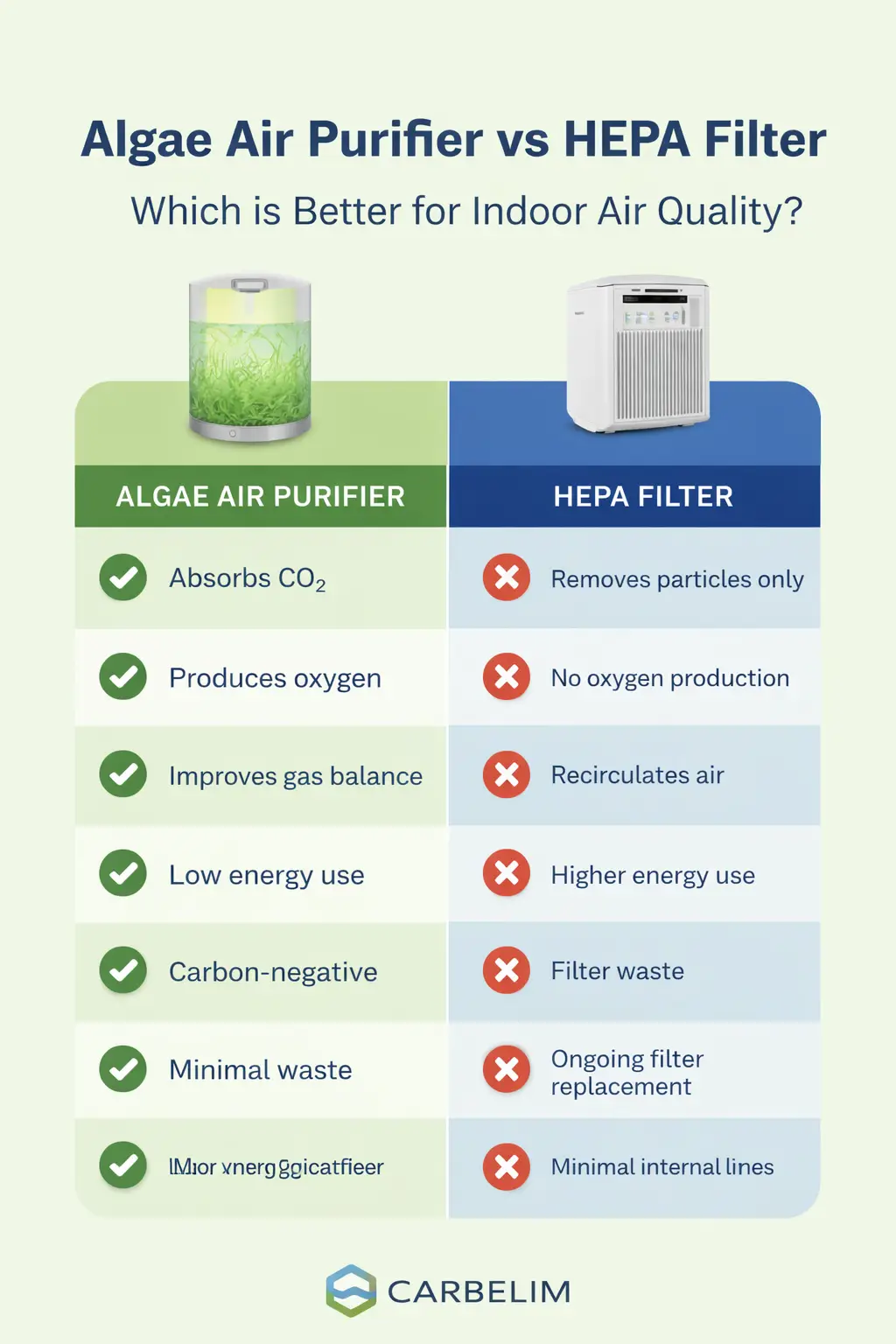
❌ Do not remove CO₂
❌ Do not generate oxygen
❌ Require frequent filter replacement
❌ Increase energy consumption
❌ Recirculate indoor air rather than refreshing it
In tightly sealed buildings, HEPA purifiers can give a false sense of clean air, while CO₂ levels continue to rise unnoticed—an issue increasingly addressed by algae based air purifiers in India.
What Is an Algae Air Purifier?
An algae air purifier uses living microalgae to clean indoor air through photosynthesis.
How algae air purification works:
- Indoor air containing CO₂ is passed through an algae system
- Microalgae absorb CO₂
- Oxygen-rich air is released back into the space
- The process mimics natural carbon capture, indoors
Unlike mechanical filtration, algae systems—such as Carbelim Biomimetic façade—rely on biological CO₂ absorption, making them fundamentally different from HEPA purifiers.
Key Differences Between Algae Air Purifiers and HEPA Filters
1️⃣ CO₂ Removal Capability
HEPA Filter:
❌ No CO₂ removal
Only filters particles
Algae Air Purifier:
✅ Actively absorbs CO₂
Converts CO₂ into oxygen and biomass using microalgae carbon capture technology
This is the single most important difference between the two technologies.
2️⃣ Oxygen Generation
HEPA Filter:
❌ No oxygen generation
Algae Air Purifier:
✅ Produces oxygen as a byproduct of photosynthesis
This contributes to a fresher indoor environment, especially in high-occupancy spaces using systems like the Clean Air & CO2 Capture.
3️⃣ Air Refreshment vs Air Recirculation
HEPA systems clean the same indoor air repeatedly.
Algae systems biologically refresh air composition by altering gas balance.
For spaces with rising CO₂ levels, air composition matters more than particle count alone—particularly in offices using Carbelim Biomimietic facade.
4️⃣ Energy Consumption
Algae systems use energy mainly for lighting and airflow, not dense mechanical filtration—making them more efficient for long-term indoor air management.
5️⃣ Maintenance & Lifecycle
HEPA Air Purifier:
- Regular filter replacements
- Ongoing consumable costs
- Waste generation from used filters
Algae Air Purifier:
- Periodic algae culture maintenance
- No disposable filters
- Longer operational lifespan
6️⃣ Sustainability & Environmental Impact
HEPA filters:
- Create filter waste
- Do not capture carbon
- Offer no climate benefit
Algae air purifiers:
- Capture CO₂
- Support carbon-negative goals
- Align with green building standards
- Act as living, regenerative systems
Which Is Better for Homes?
HEPA is better if:
- Primary concern is dust or allergens
- CO₂ levels are already controlled via ventilation
Algae is better if:
- CO₂ buildup is a concern
- Rooms are frequently occupied
- Natural, low-energy solutions are preferred
Which Is Better for Offices & Commercial Spaces?
In offices, CO₂ levels often exceed 1,200–1,500 ppm, leading to reduced concentration, fatigue, and lower productivity.
HEPA filters do not solve this problem.
Algae air purifiers—such as Carbelim’s commercial indoor air solutions—are more suitable for offices, schools, hospitals, and green-certified buildings.
The Future of Indoor Air Purification
As buildings become more airtight and urban populations grow, CO₂ management will define indoor air quality standards.
Algae air purifiers represent a shift from
❌ cleaning polluted air
to
✅ preventing pollution buildup naturally
This positions Carbelim’s algae systems as a key component of net-zero buildings and climate-resilient infrastructure.
Frequently Asked Questions (FAQs)
No. HEPA filters cannot remove gases like carbon dioxide.
Yes. They use controlled microalgae systems designed for indoor environments.
They reduce CO₂ but work best alongside smart ventilation strategies.
Algae systems help maintain healthier CO₂ levels, which directly supports cognitive performance.
Final Verdict: Algae vs HEPA
If your goal is particle removal, HEPA filters work well.
If your goal is true indoor air quality—including CO₂ reduction and oxygen balance, algae air purifiers offer a more advanced, future-ready solution.
For modern indoor environments, clean air is no longer enough—balanced air matters.