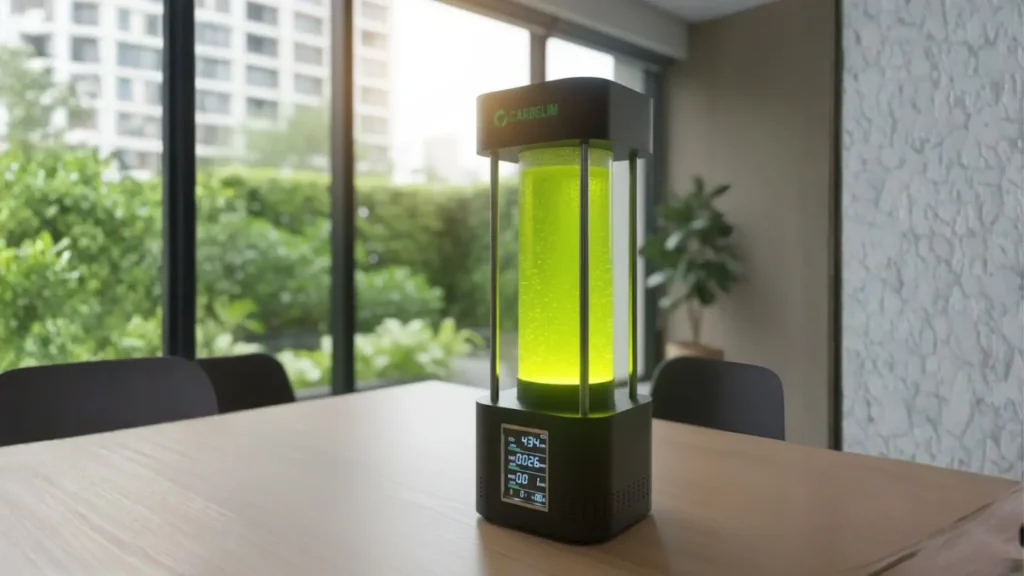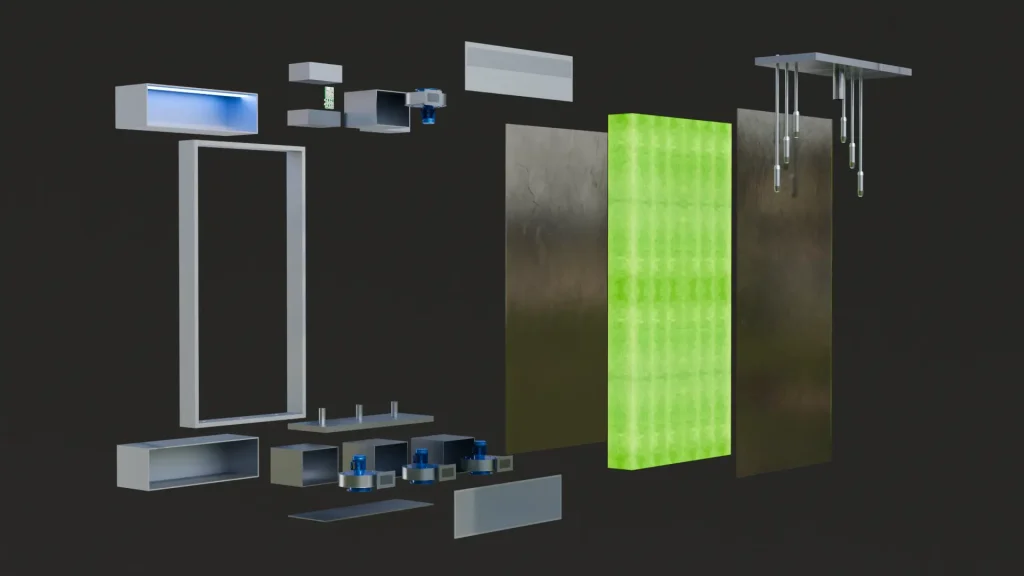

Indoor air quality has traditionally been discussed in terms of dust, allergens, and visible pollutants. However, as buildings become more energy-efficient and increasingly sealed, a less visible but equally important challenge has emerged: the accumulation of carbon dioxide (CO₂) in indoor environments. Elevated CO₂ levels are now recognized as a factor influencing comfort, cognitive performance, and overall indoor air freshness.
Airforest represents a nature-inspired approach to addressing this challenge. Rather than relying solely on mechanical filtration or ventilation, Airforest explores how biological processes can be integrated into indoor spaces to continuously interact with indoor air. The concept draws inspiration from natural ecosystems, where air quality is regulated not by filters, but by living systems.
This article explains the idea behind Airforest, the problem it addresses, and why biological air systems are becoming relevant in modern indoor environments. Airforest clean air and CO₂ capture solutions
The Changing Nature of Indoor Air Quality Challenges
Modern buildings are designed to minimize energy loss. While this improves efficiency, it often reduces natural air exchange. In offices, schools, commercial buildings, and public indoor spaces, high occupancy combined with limited ventilation can cause carbon dioxide levels to rise significantly during the day.
Unlike particulate pollutants, CO₂ is:
- Odorless and invisible
- Continuously generated by human presence
- Not removed by standard air filters
As a result, indoor spaces can appear clean while still experiencing poor air freshness and elevated CO₂ concentrations. This has led to growing awareness that indoor air quality must be addressed as a dynamic balance, not just a filtration problem.
Limits of Conventional Air Purification Approaches
Mechanical air purifiers, particularly those using HEPA filtration, have proven effective at removing particulate matter such as dust, pollen, and smoke. However, these systems operate on a fundamentally different principle than biological air systems.
Conventional approaches:
- Trap particles rather than transforming gases
- Depend on regular filter replacement
- Do not reduce carbon dioxide levels
- Often treat air quality as a static condition
While mechanical filtration remains essential for particulate control, it does not address gaseous buildup caused by human occupancy. This gap has created interest in complementary approaches that can work alongside existing systems.
Introducing the Airforest Concept
Airforest is designed as a biological indoor air system, inspired by how natural green environments regulate air composition outdoors. In forests and green spaces, plants continuously absorb carbon dioxide and release oxygen through photosynthesis, contributing to air balance over time.
Airforest brings this principle indoors by creating a controlled system where biological processes actively interact with indoor air. Rather than functioning as a portable device, Airforest is conceived as a stationary, integrated installation that operates continuously within an indoor environment.
The concept emphasizes:
- Continuous CO₂ interaction rather than episodic filtration
- Living biological processes rather than disposable components
- Integration into spaces rather than isolated placement
Biological Processes in Indoor Air Management
At the core of Airforest is the use of photosynthesis-based carbon capture. Through this natural process, carbon dioxide is absorbed and oxygen is released as part of normal biological activity.
Key characteristics of biological air systems include:
- Continuous operation without filter replacement
- Low-energy interaction with indoor air
- Transformation of CO₂ rather than temporary containment
- Alignment with natural carbon cycles
Unlike mechanical systems that require frequent maintenance cycles, biological systems are designed to function as long-term air management elements, similar to living infrastructure within a building.
Why Biological Air Systems Are Relevant Indoors
Indoor environments differ from outdoor ecosystems in scale, airflow, and density. However, the principle of distributed biological interaction can still be applied in controlled ways.
Biological indoor air systems are particularly relevant in:
- High-occupancy spaces
- Environments with limited natural ventilation
- Areas where air freshness impacts comfort and productivity
- Buildings exploring sustainability-driven design strategies
Airforest does not attempt to replace ventilation or filtration. Instead, it introduces an additional layer of air management that focuses specifically on carbon dioxide dynamics within enclosed spaces.
Airforest as a System, Not a Single Product
One important distinction in understanding Airforest is recognizing it as a system-level approach, not a single standardized product. Indoor spaces vary widely in size, occupancy patterns, and operational requirements. As a result, biological air systems must be adaptable.
Airforest is structured as a solution platform that can include multiple configurations and formats, depending on deployment needs. These configurations may vary in scale, placement, and integration, while remaining aligned with the same biological operating principle.
This system-based approach allows Airforest to be applied across:
- Corporate offices
- Educational institutions
- Public indoor environments
- Experience centers and shared spaces
Integration Into Indoor Spaces
Unlike standalone air purifiers that are added after construction, Airforest-type systems are designed to be spatially integrated. Their placement and presence are considered part of the indoor environment rather than an accessory.
Integration considerations include:
- Visual compatibility with interior design
- Continuous air interaction without airflow obstruction
- Stable environmental conditions for biological operation
- Long-term operational consistency
This integration reinforces the idea that indoor air quality is not a temporary condition, but an ongoing environmental factor.
Comparing Biological Systems and Mechanical Filtration
Mechanical and biological approaches serve different purposes in indoor air management. Understanding this distinction is critical for making informed decisions.
Mechanical filtration:
- Targets particulate matter
- Operates intermittently
- Requires consumables
- Addresses symptoms of pollution
Biological air systems:
- Interact with gaseous components like CO₂
- Operate continuously
- Function through natural processes
- Address underlying air balance
Rather than competing, these approaches can complement each other, forming a more complete indoor air strategy.
Where Airforest-Type Systems Make Sense
Airforest-inspired systems are best suited for environments where:
- Occupancy drives air quality changes
- CO₂ accumulation occurs during normal use
- Long-term air freshness is prioritized
- Sustainability considerations influence design decisions
Typical application contexts include:
- Office floors and meeting areas
- University campuses and classrooms
- Cultural and public indoor venues
- Corporate lobbies and shared spaces
Indoor Air Quality and Human Experience
Research increasingly links indoor air composition with human comfort and performance. Elevated CO₂ levels have been associated with:
- Reduced concentration
- Perceived stuffiness
- Fatigue during prolonged indoor occupancy
By addressing carbon dioxide continuously, biological systems contribute to more stable indoor air conditions, which can support comfort over extended periods.
Sustainability and Nature-Inspired Design
Airforest aligns with broader trends in biophilic and sustainable building design, where natural systems are incorporated into built environments. Rather than isolating nature outdoors, these approaches integrate natural processes indoors in controlled, functional ways.
Nature-inspired indoor systems reflect a shift toward:
- Long-term environmental thinking
- Reduced dependence on consumables
- Integration of ecological principles into architecture
This perspective positions air quality as part of a building’s environmental responsibility, not just a maintenance task.
Operational Continuity and Long-Term Thinking
Traditional air purification often focuses on immediate improvement. Biological systems, by contrast, emphasize continuous equilibrium. This long-term view aligns well with institutional and commercial environments where air quality must be managed day after day.
Airforest-type systems are designed to:
- Operate steadily rather than intermittently
- Integrate into daily building operation
- Support ongoing air balance rather than short-term correction
Airforest and the Future of Indoor Air Management
As awareness of indoor CO₂ dynamics grows, air management strategies are likely to evolve beyond filtration-only models. Biological systems represent one direction in this evolution, offering a way to address air composition using natural processes adapted for indoor use.
Airforest reflects this shift by positioning biological air interaction as a functional component of indoor environments, rather than a decorative or experimental element.
Conclusion
Indoor air quality is no longer defined solely by what we remove from the air, but also by how we maintain balance within enclosed environments. Carbon dioxide accumulation presents a challenge that mechanical filtration alone cannot solve.
Airforest introduces a nature-inspired perspective on indoor air management, emphasizing biological interaction, continuous operation, and system-level integration. By drawing from natural processes and adapting them to indoor spaces, Airforest contributes to a broader conversation about how buildings can support healthier and more sustainable air environments over time.
Airforest is an innovative air purification system that uses the natural properties of plants to enhance indoor air quality sustainably.
Unlike conventional air purifiers that rely on mechanical filters and chemicals, Airforest uses plants and technology to create a natural air purification ecosystem.
Some key benefits include improved air quality, reduction of allergens, increased humidity, and a beautiful, green aesthetic in your living space.
Plants like the peace lily, spider plant, and bamboo palm are known for their air-purifying qualities and thrive in Airforest systems.
Position Airforest in bright, indirect sunlight, regularly water the plants, and use nutrient-rich soil to optimize its natural air purification capabilities.
Airforest helps absorb pollutants, allergens, and particulate matter from the air, leading to a cleaner and healthier indoor environment.
Yes, Airforest promotes a sustainable lifestyle by being energy-efficient and reducing waste compared to traditional air purifiers that rely on disposable filters.
Many users report feeling fresher air, reduced allergy symptoms, and appreciation for the visual appeal of integrating plants into their home.
Yes, by reducing allergens and improving air quality, Airforest can contribute to clearer airways and improved respiratory functions.
Consider integrating Airforest into your home, and engage with the community by sharing your experiences and thoughts in the comments section.