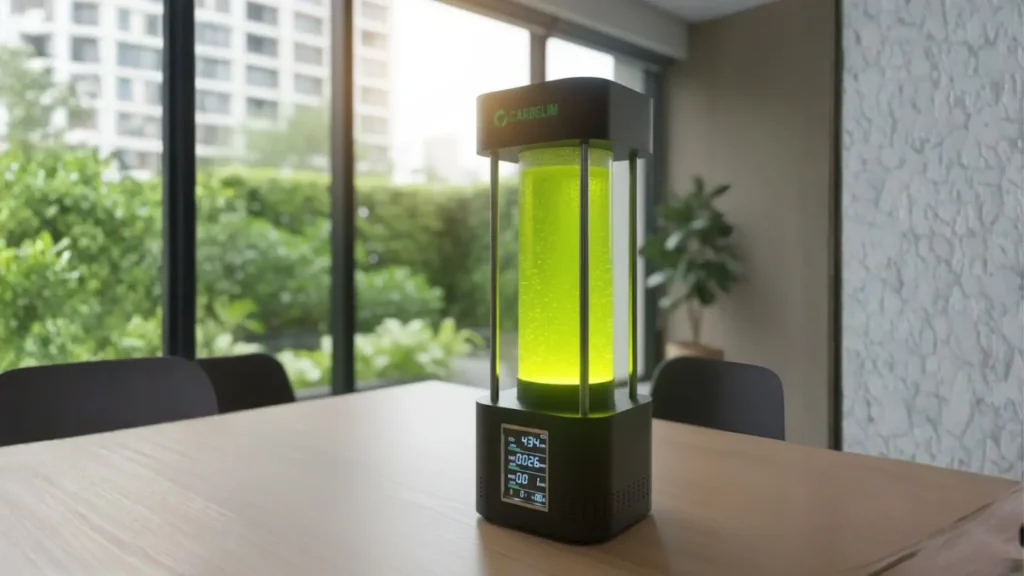
Urban air is becoming one of the defining sustainability challenges of this decade. Cities are growing faster than their infrastructure can adapt, emissions are rising, and public health systems are under pressure from pollution-driven respiratory and cardiovascular risks.
According to the World Health Organization, 99% of the global population breathes air that exceeds WHO guideline limits, while pollutants such as particulate matter, nitrogen dioxide, ozone, sulfur dioxide, and carbon monoxide remain major public health concerns. The State of Global Air 2024 report also found that air pollution accounted for 8.1 million deaths globally in 2021, making it the world’s second-leading risk factor for death.
At the same time, urbanization is accelerating. The United Nations projects that 68% of the world’s population will live in urban areas by 2050, adding another 2.5 billion people to cities.
This creates a clear strategic mandate: cities need cleaner air, lower emissions, smarter infrastructure, and scalable carbon reduction strategies.
That is where microalgae carbon capture enters the picture.
Microalgae-based systems combine biology, engineering, and climate-tech innovation to create a new category of clean air technology. By using algae’s natural ability to absorb carbon dioxide through photosynthesis, these systems can support urban air pollution solutions, biological carbon capture, and net-zero carbon infrastructure.
What Is Microalgae Carbon Capture?
Microalgae carbon capture is a biological carbon capture process that uses microscopic algae to absorb CO₂ and convert it into biomass through photosynthesis.
In simple terms:
Microalgae consume carbon dioxide, use light as an energy source, and produce oxygen-rich biomass that can be harvested, processed, or converted into useful products.
Unlike traditional tree-based carbon sequestration, microalgae can be cultivated in controlled environments such as tanks, panels, tubes, building facades, bus shelters, urban towers, and closed-loop photobioreactor systems.
Peer-reviewed research has described microalgae as a promising pathway for CO₂ capture and conversion into valuable products such as biofuels, biohydrogen, nutraceuticals, chemicals, and other bio-based materials.
This makes microalgae carbon capture more than an environmental concept. It is a climate-tech platform.
Why Urban Air Pollution Needs New Solutions
Urban air pollution is not caused by one problem. It is the result of multiple overlapping emission sources:
- vehicle exhaust
- industrial activity
- construction dust
- fossil-fuel power generation
- poor ventilation
- waste burning
- heating and cooling systems
- rising urban density
The challenge is also multidimensional. CO₂ contributes to climate change, while pollutants such as PM2.5, NO₂, ozone, and sulfur dioxide directly affect human health. WHO identifies particulate matter, carbon monoxide, ozone, nitrogen dioxide, and sulfur dioxide as pollutants of major public health concern.
This distinction matters.
Microalgae carbon capture is strongest as a CO₂ reduction and biological carbon utilization technology. For full-spectrum urban air purification, it should be integrated with filtration, sensors, air-flow engineering, and real-time environmental monitoring.
That creates a bigger opportunity: algae-based systems can become part of smart city sustainability infrastructure, not just standalone carbon capture devices.
How Microalgae Absorb CO₂
Microalgae absorb CO₂ through photosynthesis.
The process works like this:
- CO₂ enters the algae cultivation system
Carbon dioxide can come from ambient air, concentrated air streams, flue gas, or controlled ventilation systems. - Light activates photosynthesis
Sunlight or artificial light provides the energy needed for algae growth. - Algae convert CO₂ into biomass
Through photosynthetic carbon fixation, microalgae convert carbon dioxide into organic matter. - Oxygen is released
Oxygen is generated as a byproduct of photosynthesis. - Biomass is harvested
The algae biomass can be processed into biofertilizers, biofuels, pigments, proteins, or other value-added materials.
Some research reports that microalgae can fix CO₂ at rates 10–50 times higher than terrestrial plants, depending on species, growth conditions, and system design.
This high productivity is one reason microalgae are attracting interest from climate-tech startups, smart city planners, and carbon removal researchers.
How Photobioreactor Technology Works
A photobioreactor is a controlled system designed to grow microalgae efficiently.
It gives algae the right operating environment:
- light
- CO₂
- nutrients
- water
- temperature control
- pH balance
- circulation
- contamination protection
- sensor-based monitoring
Photobioreactors can be designed as vertical tubes, flat panels, columns, facade systems, urban furniture, or modular infrastructure units. A review on microalgae cultivation in photobioreactors highlights their role in CO₂ bioremediation, wastewater treatment, biofuel production, and high-value product generation.
Key Components of a Microalgae Photobioreactor
1. Transparent Growth Chamber
This is where algae grow. It allows light to enter while keeping the biological system contained.
2. CO₂ Delivery System
CO₂-rich air is introduced into the system so algae can absorb it.
3. Light Management
Natural sunlight, LEDs, or hybrid lighting systems support photosynthesis.
4. Nutrient Supply
Algae need nitrogen, phosphorus, and trace minerals to grow.
5. Sensors and Controls
Smart systems can track CO₂, oxygen, temperature, pH, turbidity, biomass density, and operating efficiency.
6. Biomass Harvesting
The algae biomass is periodically collected and processed.
This is where climate-tech innovation becomes critical. The future of photobioreactor technology will depend on automation, AI optimization, material science, low-energy circulation, and reliable maintenance models.
MIT researchers have also highlighted fouling as a key challenge in photobioreactors because algae buildup on transparent surfaces can reduce light penetration and efficiency.
Microalgae Carbon Capture vs Direct Air Capture
Direct air capture uses engineered systems to remove CO₂ from ambient air, usually through chemical sorbents, fans, heat, and compression. It is an important net-zero technology, but it is still in an early scale-up phase.
The International Energy Agency notes that DAC plants currently operate at small scale; as of its latest tracking, 27 DAC plants had been commissioned, and only three were capturing at least 1,000 tonnes of CO₂ per year.
Microalgae carbon capture works differently. It uses a biological pathway instead of a purely mechanical or chemical process.
Strategic Comparison
| Factor | Direct Air Capture | Microalgae Carbon Capture |
|---|---|---|
| Core process | Chemical/engineered CO₂ removal | Biological CO₂ fixation |
| Energy demand | Often energy-intensive | Can use sunlight or hybrid lighting |
| Output | Captured CO₂ for storage/use | Biomass, oxygen, bio-based products |
| Urban integration | Industrial or modular plants | Buildings, shelters, towers, facades |
| Key challenge | Cost, energy, storage | Scale, maintenance, biomass handling |
| Best use case | Durable carbon removal | Distributed clean-air and bio-circular infrastructure |
The strongest opportunity is not “either-or.” It is a diversified net-zero portfolio where engineered DAC, nature-based solutions, biochar, enhanced weathering, and microalgae systems work together.
Benefits of Biological Carbon Capture Using Microalgae
Microalgae-based carbon capture offers a differentiated value proposition for cities, businesses, campuses, and infrastructure owners.
1. Compact Urban Deployment
Microalgae systems can be integrated into:
- bus shelters
- EV charging stations
- commercial buildings
- metro stations
- airports
- campuses
- smart poles
- public plazas
- green corridors
- urban facades
This makes the technology highly relevant for sustainable urban infrastructure.
A 2024 study on an “Artificial Tree” concept explored the integration of microalgae into urban furniture for CO₂ capture, biomass production, and urban cooling. The study estimated that one unit using Scenedesmus microalgae could capture 50 kg of CO₂ annually and generate 28 kg of biomass.
2. Carbon Capture Plus Biomass Valorization
Microalgae do not just absorb CO₂. They create biomass.
That biomass can potentially support:
- biofertilizer
- biofuel
- pigments
- proteins
- bioplastics
- animal feed ingredients
- nutraceutical compounds
- soil-enhancement products
This circular economy angle is one of the strongest business cases for algae air purification and biological carbon capture.
3. Strong Public Visibility
Unlike hidden industrial carbon capture systems, urban algae infrastructure is visible.
That visibility matters for:
- ESG storytelling
- public engagement
- smart city branding
- climate education
- investor communication
- sustainability reporting
A microalgae bus shelter, algae-powered urban tower, or green building facade can become a public-facing climate asset.
4. Smart City Data Integration
When paired with sensors, microalgae systems can support real-time environmental intelligence.
Useful data layers include:
- CO₂ concentration
- temperature
- humidity
- particulate matter
- NO₂ levels
- system efficiency
- biomass growth
- energy consumption
- maintenance cycles
This supports MRV: measurement, reporting, and verification.
For ESG sustainability teams, MRV is essential. Without measurable data, carbon reduction claims become weak. With verified data, clean air technology becomes investable infrastructure.
Important Reality Check: Microalgae Is Not a Magic Filter
For credibility and EEAT, this point is important.
Microalgae carbon capture primarily targets CO₂ through biological fixation. However, urban air pollution includes many harmful pollutants beyond CO₂, especially PM2.5, PM10, NO₂, ozone, sulfur dioxide, and volatile organic compounds.
That means the best real-world systems should combine:
- microalgae carbon capture
- particulate filtration
- airflow design
- sensor-based monitoring
- renewable energy integration
- low-maintenance modular hardware
- verified carbon accounting
This integrated model is where the category becomes commercially powerful.
The future is not just algae. The future is algae-enabled intelligent air infrastructure.
Smart City Sustainability Applications
Microalgae carbon capture can support cities that want infrastructure to be both functional and regenerative.
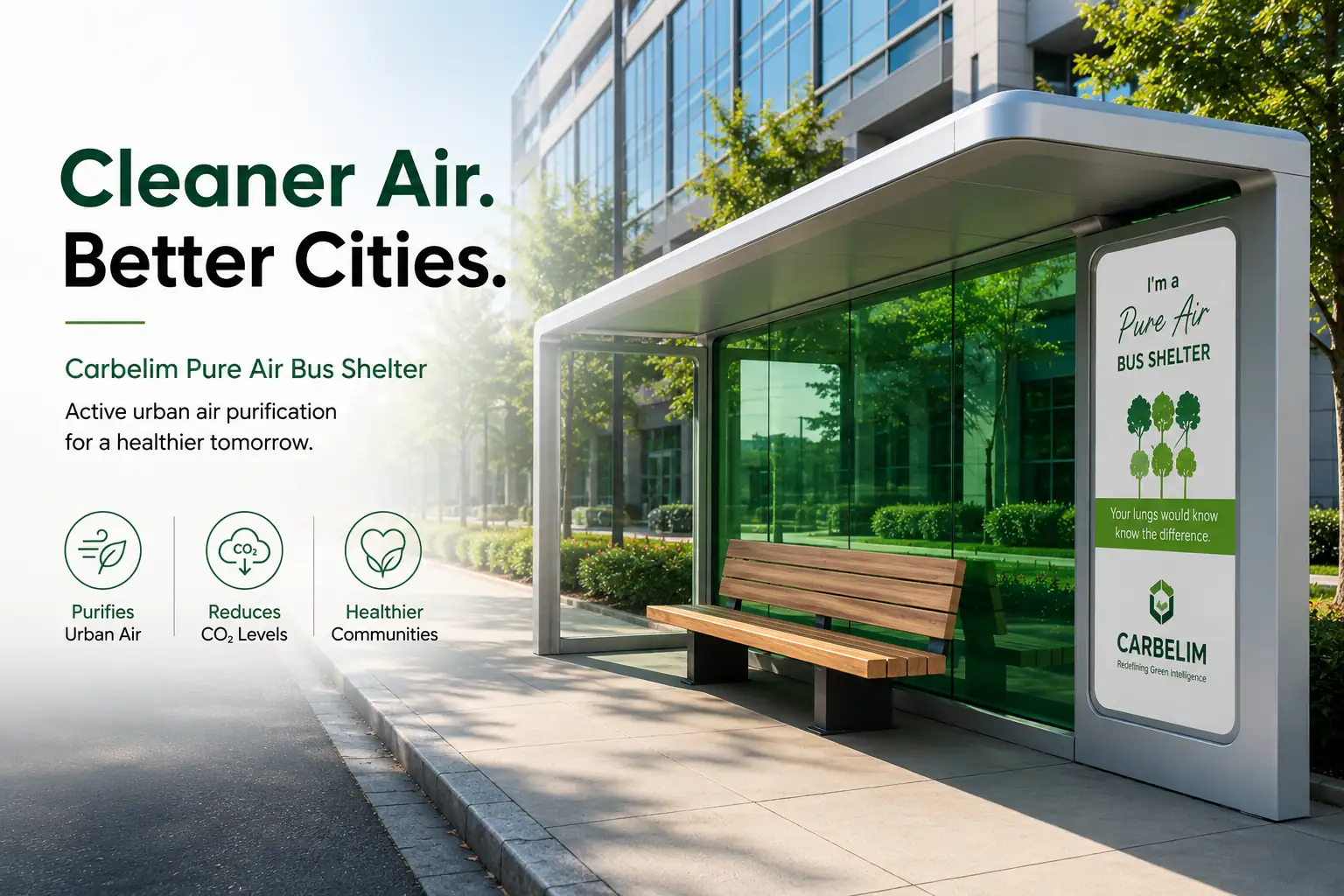
1. Pure Air Bus Shelters
Bus shelters are ideal because they sit close to roads, commuters, and traffic emissions.
A microalgae-enabled bus shelter can become:
- a waiting space
- a clean air zone
- a sustainability billboard
- a data collection point
- a public climate-tech asset
2. Air Purification Towers
Urban towers can be placed in high-footfall areas such as:
- business districts
- public parks
- transport hubs
- campuses
- hospitals
- government zones
They create strong brand visibility while supporting air quality and climate resilience goals.
3. Green Building Facades
Buildings can integrate algae panels into exterior structures. This creates a new class of living facade systems that combine architecture, sustainability, and carbon capture technology.
4. EV Charging and Mobility Hubs
EV charging infrastructure already signals decarbonization. Adding algae-based air purification can enhance the sustainability value of charging stations and mobility corridors.
5. Corporate ESG Campuses
Large campuses can deploy microalgae systems as part of:
- ESG sustainability programs
- green workplace initiatives
- net-zero carbon strategies
- employee wellness infrastructure
- climate-tech demonstration zones
Climate-Tech Investment Opportunities
The business case for microalgae carbon capture sits at the intersection of four major investment themes:
- Carbon removal systems
- Urban sustainability
- Climate resilience
- Bio-based circular economy
The broader carbon removal market is still underdeveloped relative to future needs. The 2024 State of Carbon Dioxide Removal report found that around 7–9 billion tonnes of CO₂ per year may need to be removed by mid-century to align with the 1.5°C pathway, while novel carbon dioxide removal methods currently contribute only a small fraction of total removals.
That creates a market gap.
Investors are looking for climate-tech solutions that can demonstrate:
- measurable impact
- scalable deployment
- low operating cost
- recurring revenue
- hardware-software integration
- strong MRV systems
- defensible IP
- clear customer use cases
- credible lifecycle assessment
Microalgae carbon capture can become attractive when it moves from concept to measurable infrastructure.
The highest-potential business models include:
- algae-powered public infrastructure
- carbon capture as a service
- ESG infrastructure leasing
- smart city air-quality contracts
- green building integrations
- verified carbon data platforms
- biomass valorization partnerships
- climate-tech demonstration projects
Net-Zero Infrastructure Potential
Global fossil CO₂ emissions reached an estimated 37.4 GtCO₂ in 2024, a historical record high according to the Global Carbon Budget 2024.
That scale makes one thing clear: no single solution will solve the climate crisis.
Cities need a portfolio of net-zero carbon solutions:
- renewable energy
- electrified mobility
- energy-efficient buildings
- nature-based solutions
- biological carbon capture
- engineered direct air capture
- carbon utilization
- circular materials
- climate data platforms
Microalgae carbon capture fits into this portfolio as a distributed, visible, biology-driven infrastructure layer.
Its role is especially compelling in places where cities need:
- compact solutions
- public-facing sustainability
- air-quality engagement
- low-footprint carbon capture
- climate education
- ESG-aligned infrastructure
Future Climate-Tech Trends in Microalgae Carbon Capture
1. AI-Controlled Photobioreactors
Future systems will use AI to optimize light, nutrients, CO₂ flow, pH, temperature, and biomass productivity.
2. Carbon Capture + Air Quality Monitoring
Next-generation algae air purification systems will combine carbon capture with pollution sensors, dashboards, and smart city APIs.
3. Modular Urban Infrastructure
Microalgae systems will move into bus shelters, towers, walls, facades, and mobility hubs.
4. MRV-Ready Carbon Systems
Measurement, reporting, and verification will become a core product layer, not an afterthought.
5. Bio-Circular Revenue Streams
The biomass created from carbon capture can support new revenue opportunities across fertilizer, materials, energy, and bio-based product categories.
6. Public-Private Climate Partnerships
Cities, climate-tech startups, real estate developers, transport authorities, and corporates will increasingly collaborate to deploy visible climate infrastructure.
How Cities Can Deploy Microalgae Carbon Capture
A practical roadmap:
- Identify high-impact locations
Prioritize traffic corridors, public transport zones, commercial districts, campuses, and high-density urban areas. - Define the air-quality objective
Separate CO₂ reduction goals from PM2.5, NO₂, and general air purification goals. - Select the right product format
Choose from bus shelters, towers, building panels, indoor units, or modular urban installations. - Add sensor intelligence
Track CO₂, particulate matter, temperature, humidity, and system performance. - Build an MRV framework
Create verified reporting for ESG, climate disclosure, and sustainability dashboards. - Plan biomass utilization
Decide whether biomass will be composted, processed, used in biofertilizer, or integrated into a circular product stream. - Scale through partnerships
Work with smart city authorities, infrastructure owners, campuses, mobility operators, and ESG-led enterprises.
Why Microalgae Carbon Capture Matters Now
The climate-tech market is moving from promises to proof.
Cities do not need more abstract climate claims. They need measurable, deployable, infrastructure-ready solutions.
Microalgae carbon capture offers a compelling pathway because it is:
- biological
- visible
- modular
- scalable
- data-enabled
- compatible with smart city sustainability
- aligned with ESG and net-zero goals
- capable of creating circular biomass outputs
It will not replace every carbon capture technology. But it can become one of the most practical and engaging solutions for cleaner urban environments.
In the future, cities may not only plant trees along roads. They may also install living, intelligent, algae-powered infrastructure that captures carbon, improves environmental awareness, and turns public spaces into climate-positive assets.
Conclusion: Cleaner Cities Need Living Infrastructure
The next generation of urban sustainability will not be built only with concrete, steel, and software. It will also be built with biology.
Microalgae carbon capture represents a powerful shift in how cities can think about carbon reduction, air quality, and climate resilience. By combining algae air purification, photobioreactor technology, smart sensors, and ESG-grade measurement systems, cities can move toward cleaner, healthier, and more climate-aligned infrastructure.
For governments, investors, real estate leaders, and sustainability teams, the opportunity is clear:
Urban air pollution needs scalable innovation.
Net-zero cities need distributed carbon solutions.
And climate-tech needs technologies that people can see, measure, and trust.
Microalgae carbon capture is not just a future concept. It is an emerging infrastructure opportunity for cleaner air, smarter cities, and a more sustainable urban economy.
CTA
Looking to explore next-generation clean air infrastructure for smart cities, campuses, public spaces, or ESG-led developments?
Partner with Carbelim to build scalable microalgae-powered carbon capture and urban air purification solutions for a cleaner, net-zero future.
FAQ Section
What is microalgae carbon capture?
Microalgae carbon capture is a biological carbon capture process that uses microscopic algae to absorb CO₂ through photosynthesis and convert it into biomass. It can be deployed in photobioreactors, urban towers, green facades, bus shelters, and modular clean-air systems.
How do microalgae capture carbon dioxide?
Microalgae absorb CO₂ during photosynthesis. They use light energy to convert carbon dioxide and nutrients into biomass while releasing oxygen. The captured carbon remains in the biomass until it is harvested, processed, stored, or converted into useful bio-based products.
Is microalgae carbon capture better than trees?
Microalgae can grow faster than many terrestrial plants and may achieve higher CO₂ fixation rates under controlled conditions. However, trees provide biodiversity, cooling, shade, and ecosystem benefits. The best climate strategy combines trees, microalgae systems, engineered carbon capture, and broader emissions reduction.
Can microalgae reduce urban air pollution?
Microalgae systems can help capture CO₂ and support cleaner urban infrastructure. For pollutants such as PM2.5, NO₂, and VOCs, microalgae systems should be combined with filtration, airflow engineering, and sensor-based air-quality monitoring.
What is a photobioreactor?
A photobioreactor is a controlled system used to cultivate microalgae. It provides light, CO₂, nutrients, water, and environmental controls to optimize algae growth and carbon capture performance.
How can microalgae support smart city sustainability?
Microalgae can be integrated into bus shelters, towers, buildings, EV charging hubs, and public spaces. When paired with sensors and dashboards, these systems can support ESG reporting, air-quality monitoring, public engagement, and net-zero infrastructure goals.
Is microalgae carbon capture commercially scalable?
The technology has strong potential, but scaling depends on system design, maintenance cost, biomass handling, MRV accuracy, energy efficiency, and customer adoption. Modular urban deployments are one of the most promising near-term pathways.