Climate-Active Buildings with Carbelim, Carbon Capture & Algae Infrastructure Solutions
Explore how Carbelim, carbon capture, and algae are shaping climate-active buildings and sustainable infrastructure for the future.
Introduction: A New Era in Sustainable Architecture with Carbelim, Carbon Capture, and Climate-Active Buildings
The global construction industry is at a critical turning point. As urbanization accelerates and energy demands increase, buildings are responsible for a significant portion of global carbon emissions. According to international environmental reports, nearly 40% of worldwide emissions originate from building construction and operations. Despite the rise of green buildings, the current approach is still largely passive, focusing on reducing harm rather than actively reversing environmental damage.
This gap has led to the emergence of climate-active buildings, a new generation of infrastructure designed not only to minimize environmental impact but to actively contribute to climate solutions. By integrating carbon capture systems, algae-based technologies, and advanced solutions like Carbelim, modern buildings can now absorb carbon dioxide, improve indoor air quality, and even generate valuable byproducts.
This article explores how Carbelim, carbon capture, algae, and smart infrastructure are redefining sustainable architecture and why they are essential for the future of urban development.
What Are Climate-Active Buildings?
Climate-active buildings represent a shift from sustainability to regeneration. While traditional green buildings aim to reduce energy consumption and emissions, climate-active structures are designed to actively remove carbon dioxide from the environment.
Core Characteristics of Climate-Active Buildings
- Integration of carbon capture technologies
- Use of algae systems for CO₂ absorption
- Smart infrastructure powered by data and automation
- Systems that convert captured carbon into usable resources
- Continuous monitoring of environmental performance
Definition for Clarity
Climate-active buildings are structures that actively improve environmental conditions by capturing carbon emissions, enhancing air quality, and contributing to a regenerative ecosystem.
The Limitations of Traditional Sustainable Infrastructure
Over the past two decades, sustainable construction has focused on reducing negative environmental impacts. While this approach has led to significant improvements, it has several limitations.
Key Challenges
- Buildings still emit carbon during daily operations
- Energy efficiency alone cannot offset total emissions
- Indoor air quality is often overlooked
- No active mechanisms for carbon removal
Why Passive Sustainability Is No Longer Enough
Passive systems such as insulation, energy-efficient lighting, and renewable energy integration are important, but they do not address the root problem: excess carbon dioxide in the atmosphere. As climate targets become more ambitious, infrastructure must evolve to include active environmental solutions.
Understanding Carbon Capture in Modern Buildings
Carbon capture technology is at the core of climate-active infrastructure. It involves the process of collecting carbon dioxide from the air and either storing it or converting it into useful materials.
How Carbon Capture Works
- Air is drawn into a system within the building
- Carbon dioxide is separated using chemical or biological processes
- Captured carbon is stored or processed further
- Clean air is released back into the environment
Types of Carbon Capture Systems
- Mechanical systems using filters and chemical reactions
- Biological systems using algae and microorganisms
- Hybrid systems combining both approaches
Carbelim: A Breakthrough in Carbon Capture Infrastructure
Carbelim represents a new class of integrated carbon capture solutions designed specifically for buildings and infrastructure.
What Makes Carbelim Unique
- Designed for indoor and built environments
- Combines carbon capture with resource conversion
- Integrates seamlessly into existing infrastructure
- Focuses on both environmental and economic benefits
Operational Process
- Captures carbon dioxide from indoor air
- Channels it into algae-based or chemical systems
- Converts carbon into usable outputs such as biomass or industrial materials
Why Carbelim Matters
Unlike traditional systems that simply store carbon, Carbelim emphasizes value creation, turning emissions into resources that can be reused in various industries.
The Role of Algae in Climate-Active Buildings
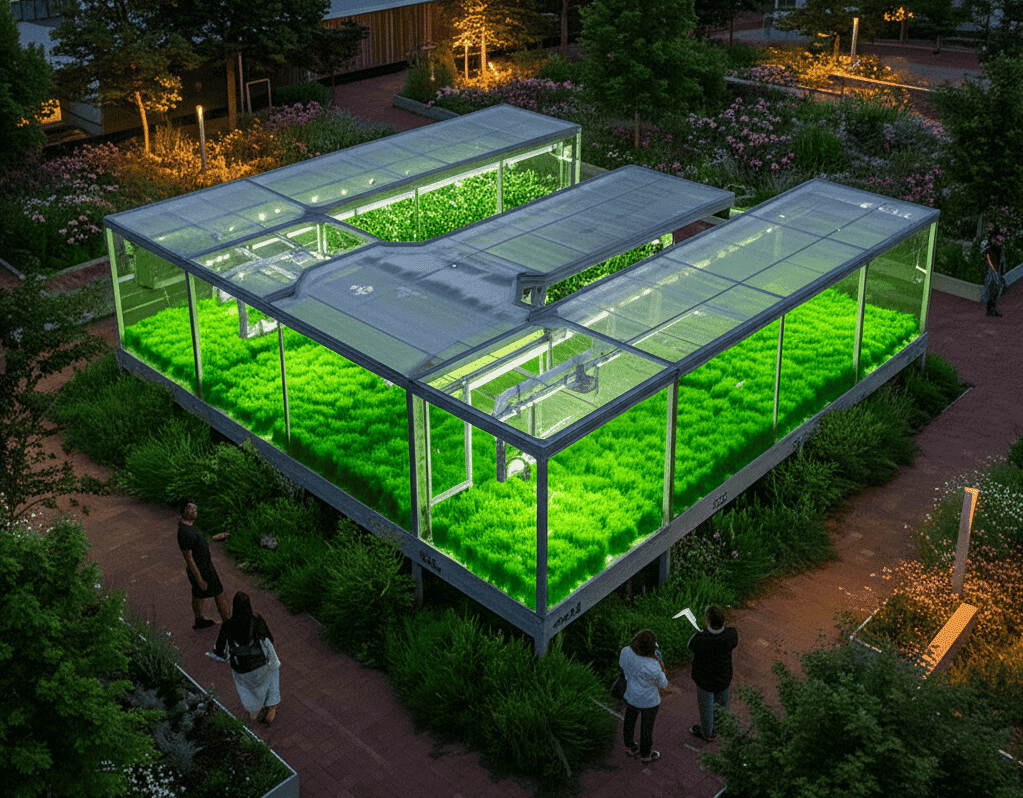
Algae is one of the most efficient natural systems for absorbing carbon dioxide. Its application in architecture is transforming how buildings interact with the environment.
How Algae Systems Work in Buildings
- Installed as bioreactors in walls, roofs, or facades
- Use sunlight and CO₂ to grow biomass
- Release oxygen and improve air quality
Advantages of Algae-Based Infrastructure
- High carbon absorption rate compared to trees
- Minimal space requirements
- Continuous operation throughout the year
- Potential to produce biofuels, fertilizers, and other products
Comparison Table: Traditional vs Algae-Based Carbon Capture
| Parameter | Traditional Methods | Algae Systems |
|---|---|---|
| Carbon Absorption | Moderate | High |
| Space Efficiency | Low | High |
| Integration | Limited | Flexible |
| Output Value | None | Biomass and energy |
Key Components of Climate-Active Infrastructure
Climate-active buildings rely on a combination of technologies working together.
1. Smart Air Management Systems
These systems continuously monitor air quality and regulate the flow of air through carbon capture units.
2. Algae Bioreactors
Installed within the structure, these systems absorb carbon dioxide and produce oxygen.
3. Carbon Conversion Units
Technologies like Carbelim convert captured carbon into useful byproducts.
4. Data and AI Integration
Artificial intelligence optimizes system performance by analyzing environmental data and adjusting operations in real time.
Real-World Applications and Case Studies
Commercial Buildings
Many modern office spaces are integrating carbon capture technologies to improve sustainability and employee well-being. Studies show that better air quality can significantly enhance productivity and cognitive performance.
Educational Institutions
Schools and universities are adopting algae-based systems to create healthier learning environments while promoting environmental awareness.
Industrial Infrastructure
Factories are using carbon capture systems to reduce emissions and generate additional revenue by converting captured carbon into valuable materials.
Economic and Environmental Benefits
Environmental Impact
- Reduction in greenhouse gas emissions
- Improved urban air quality
- Contribution to global climate goals
Economic Advantages
- Increased property value
- Long-term operational savings
- Potential revenue from carbon-based products
Health and Productivity Benefits
- Improved indoor air quality
- Reduced fatigue and health issues
- Enhanced focus and performance
What are climate-active buildings?
Climate-active buildings are structures that actively reduce environmental impact by capturing carbon dioxide, improving air quality, and generating sustainable resources through technologies like algae systems and carbon capture.
Future Trends in Climate-Active Architecture
The future of sustainable infrastructure is rapidly evolving, with several emerging trends shaping the industry.
Key Developments
- Integration of artificial intelligence in building management
- Development of carbon-negative materials
- Expansion of algae-based facades
- Smart city ecosystems incorporating climate-active buildings
These innovations will transform buildings into dynamic systems that actively contribute to environmental sustainability.
Challenges and Considerations
While climate-active buildings offer numerous benefits, there are challenges to consider.
Implementation Challenges
- High initial investment costs
- Need for specialized technology and expertise
- Limited awareness in developing markets
Possible Solutions
- Government incentives and subsidies
- Increased research and development
- Public-private partnerships
Conclusion: The Shift Toward Regenerative Infrastructure
The transition from traditional buildings to climate-active infrastructure marks a significant step forward in the fight against climate change. By integrating Carbelim, carbon capture systems, algae technologies, and smart infrastructure, buildings can become active participants in environmental restoration.
This shift is not just about sustainability—it is about creating a regenerative future where infrastructure contributes positively to the planet. As technology advances and adoption increases, climate-active buildings will play a crucial role in shaping healthier, more resilient cities.
Organizations, developers, and policymakers must act now to embrace this transformation and lead the next evolution of sustainable architecture.
FAQs
1. What is a climate-active building?
A climate-active building is designed to actively reduce environmental impact by capturing carbon dioxide and improving air quality.
2. How does carbon capture work in buildings?
Carbon capture systems remove CO₂ from the air and either store it or convert it into useful materials.
3. What is Carbelim technology?
Carbelim is an advanced system that captures carbon emissions and transforms them into valuable resources within infrastructure.
4. Why is algae important in sustainable architecture?
Algae absorbs carbon dioxide efficiently and produces oxygen, making it ideal for integration into buildings.
5. Are climate-active buildings cost-effective?
Although initial costs may be higher, long-term savings and environmental benefits make them a valuable investment.