Indoor air quality has become a pressing concern as we spend nearly 90% of our time indoors. While traditional HEPA filters excel at trapping particles, they can’t address one of indoor air’s biggest problems: elevated carbon dioxide levels. Enter the algae based air purifier—a revolutionary technology that doesn’t just filter air but actively removes CO2 while producing fresh oxygen through natural photosynthesis.
Unlike conventional purifiers that simply circulate filtered air, algae-powered systems work like miniature forests inside your building. These living air purifiers harness microalgae’s natural ability to consume carbon dioxide and release oxygen, creating a truly regenerative approach to indoor air quality. This isn’t just about cleaner air; it’s about transforming stale, CO2-laden indoor environments into healthier, more productive spaces.
Key Takeaways
- Active CO2 Removal: Algae based air purifiers remove carbon dioxide from indoor air through photosynthesis, reducing CO2 concentrations from typical indoor levels of 1000-2000 ppm to optimal levels below 800 ppm, while HEPA filters cannot address CO2 at all.
- Dual Functionality: These systems simultaneously purify air by capturing particulate matter and biofilter pollutants while generating fresh oxygen, making them more comprehensive than traditional filtration systems that only trap particles.
- Sustainable & Cost-Effective: Living algae systems require minimal energy compared to conventional HVAC systems, reduce operational costs by up to 40%, and can even produce valuable biomass as a byproduct, creating a circular economy approach to air purification.
Why Traditional Air Purifiers Fall Short on CO2
Traditional air purifiers work by removing particles, chemicals, and biological contaminants from the air. HEPA filters excel at trapping dust, pollen, and smoke, but they have a fundamental limitation—they cannot address elevated carbon dioxide levels.
In poorly ventilated offices, classrooms, and homes, CO2 concentrations regularly reach 1500-2500 parts per million (ppm), well above the 800-1000 ppm threshold where cognitive function begins to decline. Studies from Harvard’s T.H. Chan School of Public Health show that cognitive performance drops by up to 50% when CO2 levels reach 1400 ppm.
This is where the algae oxygen generator concept becomes transformative. Instead of just filtering air, these biological systems actively consume CO2 molecules and release oxygen through photosynthesis. A typical microalgae photobioreactor system can process 150-400 grams of CO2 per square meter per day, equivalent to the carbon capture capacity of several mature trees in a compact, indoor-friendly format.
How Algae Air Purifiers Actually Work: The Science Behind the Green Revolution
Understanding removing CO2 from indoor air using algae requires looking at how these microscopic organisms function. Microalgae are among the most efficient photosynthetic organisms on Earth, with carbon fixation rates 10-50 times higher per unit area than terrestrial plants.
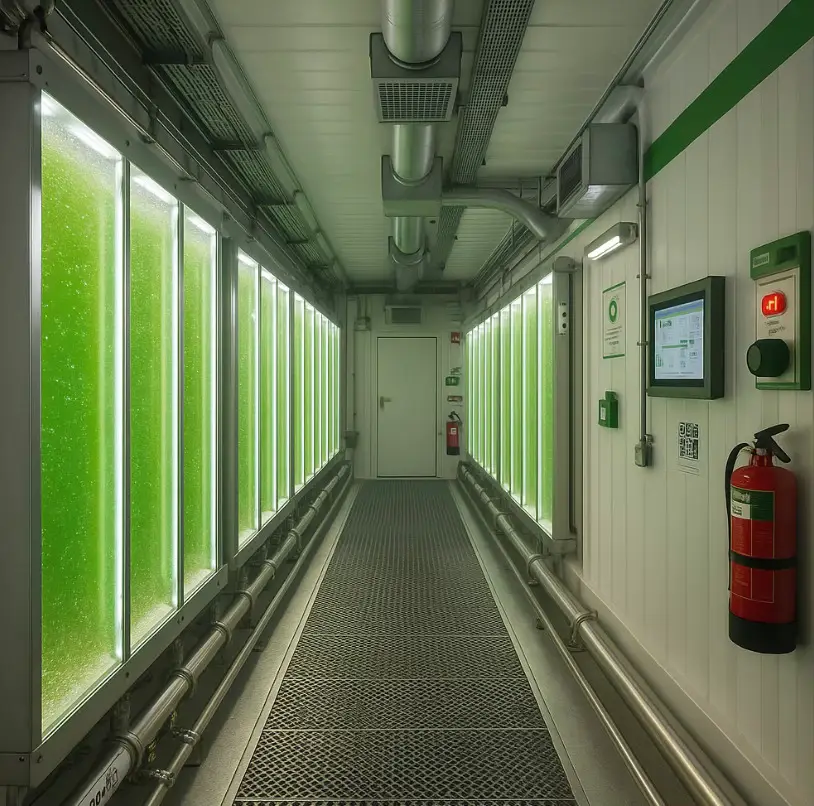
The algae purifier remove CO2 through a carefully designed system: Indoor air containing elevated CO2 enters the photobioreactor chamber where microalgae cultures are maintained in a nutrient-rich medium. LED lighting provides the precise spectrum needed for photosynthesis—typically blue and red wavelengths that algae utilize most efficiently.
As light energy activates chlorophyll, the algae split water molecules and use the freed electrons to convert CO2 into organic compounds, simultaneously releasing oxygen. This process happens millions of times per second across billions of algae cells, resulting in measurable CO2 reduction and proportional oxygen increase.
Advanced systems incorporate real-time monitoring of CO2 levels, pH, temperature, and algae density to maintain optimal growing conditions. When algae cultures reach peak density, a portion is harvested automatically. This biomass can be processed into valuable products like protein supplements, omega-3 oils, or biofuels, creating a circular economy model.
What sets these biological systems apart is their ability to improve with time rather than degrade. While HEPA filters lose efficiency as they clog, healthy algae cultures continuously reproduce and maintain their purification capacity indefinitely with proper maintenance.
Comparing Performance: Algae vs. Traditional HEPA Filtration Systems
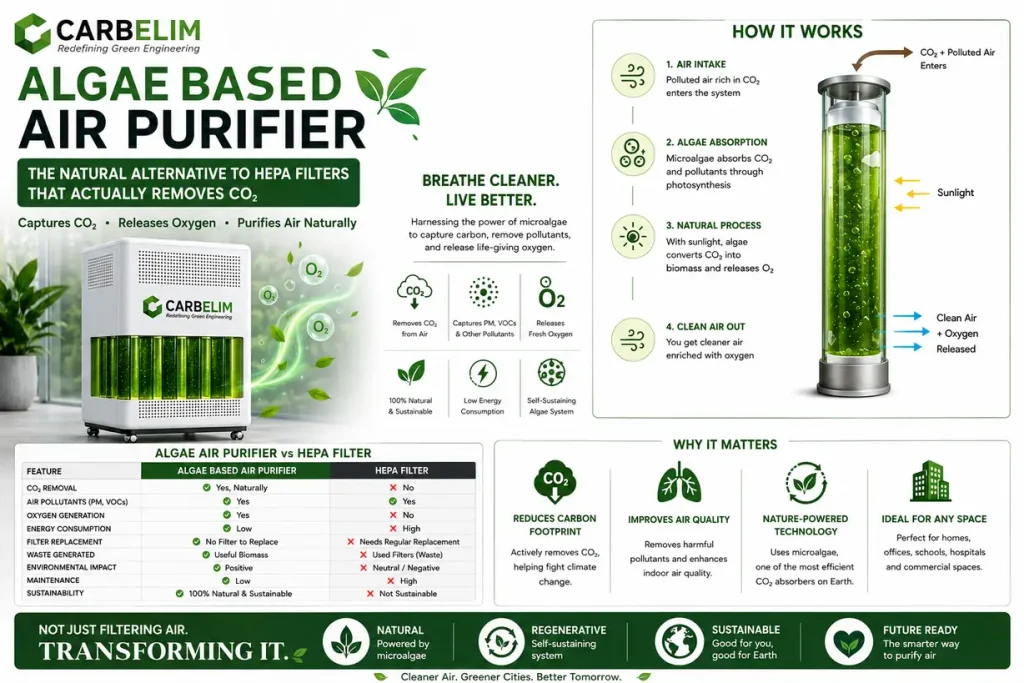
When evaluating air purifier remove CO2 capabilities, the comparison between algae-based and traditional systems reveals stark differences:
CO2 Reduction: A HEPA filter provides zero CO2 removal. An algae-based system can reduce indoor CO2 by 200-500 ppm. For a 1000 square foot office with 10 occupants, this means maintaining levels at 700-800 ppm versus 1400-1800 ppm with standard ventilation alone.
Oxygen Generation: Traditional purifiers recirculate existing air without changing oxygen content.Algae oxygen generators actively produce fresh oxygen, potentially increasing concentration by 1-3% in enclosed spaces.
Energy Consumption: A typical HEPA purifier consumes 50-120 watts continuously. Algae photobioreactor systems use 30-80 watts, often less than half the energy of HVAC-intensive ventilation solutions needed for similar CO2 reduction.
Particulate Matter: HEPA filters excel at capturing 99.97% of particles 0.3 microns or larger. Algae systems provide moderate filtration (60-80% efficiency) through biofilm formation. However, hybrid systems combining pre-filters with algae achieve comprehensive purification.
VOC Removal: Activated carbon filters adsorb VOCs until saturated, requiring replacement. Microalgae can metabolize VOCs including formaldehyde and benzene, providing continuous biofiltration. Research shows certain strains remove up to 90% of formaldehyde over 24 hours.
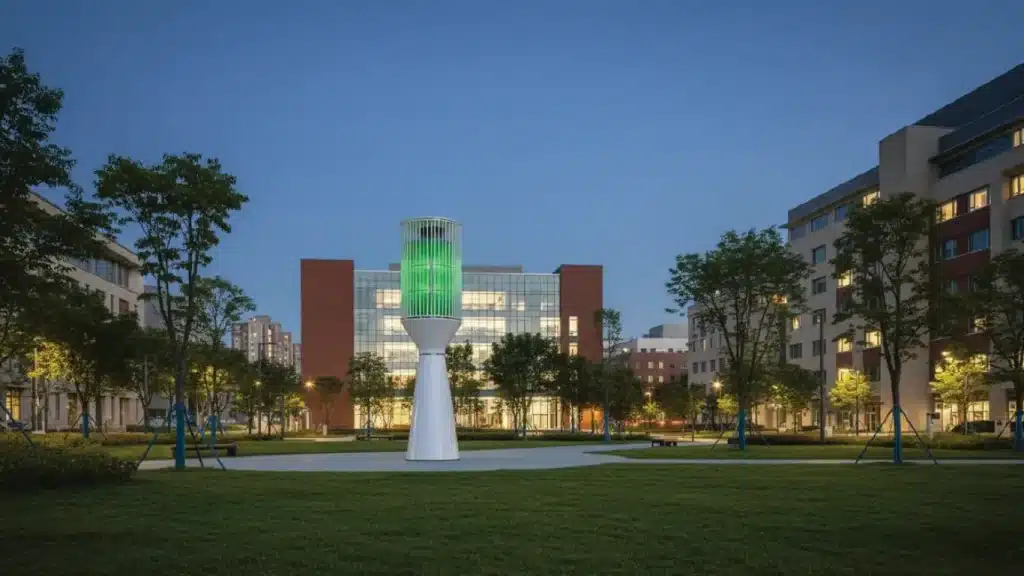
Scalability: Traditional purifiers work well for individual rooms but become expensive when scaled to buildings. The Carbelim Biomimetic Façade (CBF™) demonstrates how algae systems integrate directly into building architecture, turning facades into air purification surfaces.
Sustainability: HEPA purifiers last 5-10 years before replacement, contributing to electronic waste. Algae-based systems, when properly maintained, operate indefinitely with photobioreactors needing refurbishment after 15-20 years.
The verdict? For comprehensive indoor air quality addressing both particulates and CO2, a hybrid approach combining pre-filtration with algae-based CO2 removal offers the most complete solution.
Real-World Applications: Where Algae Air Purifiers Shine Brightest
The practical implementation of air purifier remove CO2 technology extends across multiple sectors:
Corporate Offices: Open-plan offices with dense occupancy experience rapid CO2 buildup. A study in Amsterdam office buildings found spaces with integrated algae photobioreactor walls maintained CO2 levels 30% lower than comparable spaces, while employees reported 15% improvement in productivity and 23% reduction in afternoon fatigue.
Educational Institutions: Schools represent ideal settings for removing CO2 from indoor air using algae technology. Classrooms with 25-35 students see CO2 spike to 3000+ ppm during lessons. A UK pilot program showed students in algae-equipped classrooms scored 7-12% higher on standardized tests.
Healthcare Facilities: While HEPA filtration remains essential for pathogen control, supplementary algae systems address high CO2 loads from patient rooms and waiting areas. The dual benefit of CO2 reduction and oxygen enrichment proves valuable in respiratory care wards.
Residential High-Rises: Urban apartments often suffer from inadequate ventilation. Luxury developments in Dubai and Singapore have begun incorporating algae systems as premium amenities, with some installations reducing HVAC costs by 35-40% while maintaining superior air quality.
Underground Spaces: Gyms, restaurants, and offices below ground face unique challenges. Limited natural ventilation makes CO2 accumulation problematic. Algae-based systems provide elegant solutions that align with carbon capture and utilization strategies for urban environments.
Economic and Environmental Benefits: The Long-Term Value Proposition
Investing in algae-based air purification requires higher upfront costs than traditional HEPA systems, but the long-term returns make a compelling case:
Energy Savings: Conventional CO2 control relies on increased outdoor air ventilation, adding 20-40% to HVAC energy costs. Algae systems reduce required ventilation by 30-50%, translating to $1,500-$5,000 annual savings per 1,000 square feet. Over 15 years, these savings exceed $50,000.
Productivity Gains: Research from Lawrence Berkeley National Laboratory shows reducing CO2 from 1400 ppm to 700 ppm improves decision-making by 25%. In a 50-employee office, even a 5% productivity improvement equals $150,000 in additional annual value.
Property Value: Buildings featuring innovative air purification technologies like algae-based air purifiers in India and globally command premium valuations and faster lease-up rates. Properties with verified superior indoor air quality see rental premiums of 3-8% in major markets.
Biomass Revenue: Harvested algae biomass sells for $5-$30 per kilogram. A 100-square-meter installation might produce 500-1,500 kg annually, generating $2,500-$45,000 in potential revenue depending on species and market access.
Environmental Impact: Every kilogram of CO2 captured reduces energy-intensive ventilation needs. A typical commercial algae installation sequesters 1-3 tons of CO2 annually while reducing HVAC-related emissions by 5-10 tons through decreased energy consumption.
The economics become favorable when considering avoided health costs. Organizations implementing comprehensive air quality solutions report 15-35% reductions in employee sick days annually, translating to hundreds of saved workdays.
Implementation Considerations and Future Outlook
Adopting algae based air purifier technology requires thoughtful planning to maximize benefits:
Integration Requirements: Unlike plug-and-play HEPA units, algae systems need connection to building ventilation, moderate lighting (LED or natural), and climate control within 20-30°C. Retrofitting existing buildings may require architectural modifications, while new construction can incorporate these systems from design phase.
Species Selection: Different microalgae offer varying performance. Chlorella excels at CO2 capture and rapid growth. Spirulina provides superior biomass value for nutritional products. Nannochloropsis offers excellent oil production. Selection depends on whether the priority is pure air purification, biomass production, or architectural aesthetics.
Maintenance: Successfully operating algae systems requires basic biological culture management—similar to maintaining an aquarium. Organizations should develop in-house expertise through training or contract with specialized service providers. The learning curve is modest but requires attention to culture health and nutrient balance.
Hybrid Design: Optimal results combine technologies. Pre-filters remove large particles before air reaches algae cultures, while post-treatment with UV or HEPA adds safety layers. This approach delivers both CO2 removal and comprehensive filtration.
Future Advances: The field is evolving rapidly with focus on genetically optimized strains with 2-3x faster CO2 uptake, smart building integration for automated management, thin-film designs that integrate into windows, and machine learning algorithms that optimize lighting and nutrients.
Market Growth: Industry analysts project biological air purification will grow at 18-25% annually through 2030 as building codes increasingly mandate CO2 monitoring. Early adopters will benefit from operational experience and established infrastructure as mainstream adoption accelerates.
Conclusion: Breathing Life into the Future of Indoor Air Quality
The algae based air purifier represents more than just an alternative to HEPA filters—it’s a fundamental reimagining of how we approach indoor environmental quality. By harnessing nature’s most efficient photosynthetic organisms, we can transform our buildings from static boxes that trap and recirculate stale air into dynamic living systems that actively regenerate air quality.
Traditional filtration technologies serve important roles in removing particulate matter and pollutants, but they cannot address the invisible problem of CO2 accumulation that silently degrades our cognitive performance, health, and comfort. Algae-based systems fill this critical gap while simultaneously producing oxygen, reducing energy consumption, and generating valuable biomass—a truly circular approach to air purification.
For organizations serious about creating healthier, more productive, and more sustainable indoor environments, exploring algae air purification technology is no longer optional—it’s imperative. The convergence of demonstrated performance, improving economics, and growing regulatory requirements makes this an opportune moment to embrace biological air purification solutions.
Ready to transform your indoor air quality with cutting-edge algae-based technology? Contact Carbelim to discuss how our innovative air purification systems can create healthier, more sustainable spaces for your organization.
What is an algae based air purifier and how does it differ from traditional air purifiers?
An algae based air purifier uses living microalgae cultures to remove CO2 from indoor air through photosynthesis while releasing oxygen, unlike traditional HEPA filters that only trap particles. These biological systems actively improve air composition rather than just filtering contaminants, making them uniquely effective for addressing poor indoor air quality.
Can algae air purifiers really remove enough CO2 to make a difference indoors?
Yes, properly sized algae purification systems can reduce indoor CO2 concentrations by 200-500 ppm. In typical office or classroom settings where CO2 often reaches 1400-2500 ppm, these systems help maintain levels below the 800 ppm threshold recommended for optimal cognitive function and comfort.
How much maintenance do algae-based air purification systems require?
Algae systems require weekly nutrient replenishment, monthly cleaning, and quarterly biomass harvesting. While different from replacing HEPA filters, maintenance is straightforward—similar to maintaining an aquarium. After initial learning, most facilities manage maintenance with 2-4 hours of labor monthly.
Are algae air purifiers safe for indoor use in homes and offices?
Absolutely. The microalgae species used are non-toxic and often consumed as food supplements like spirulina. Systems are fully enclosed to prevent algae release into spaces. They meet standard indoor air quality regulations and pose no health risks when properly maintained.
How much does it cost to install and operate an algae air purifier system?
Initial installation costs range from $3,000-$8,000 for residential systems and $15,000-$100,000 for commercial installations depending on size. Annual operating costs typically run $500-$2,000 for homes and $3,000-$10,000 for commercial spaces, competitive with high-quality conventional HVAC and filtration systems. For detailed consultation on system sizing and costs.
Can algae purification systems work in spaces without natural light?
Yes, modern systems use energy-efficient LED lighting designed specifically for photosynthesis, providing the precise light spectrum algae need to grow. Systems don’t require natural sunlight and actually perform more consistently with controlled LED illumination tailored to optimal wavelengths.
What happens to the algae that’s harvested from these systems?
Harvested algae biomass can be processed into nutritional supplements, animal feed, cosmetics ingredients, or biofuels depending on species cultivated. Some operators sell their biomass commercially while others compost it. The biomass represents captured carbon in solid form, contributing to industrial carbon capture and utilization strategies.
How long does it take for algae systems to show measurable improvements in air quality?
Initial CO2 reduction typically becomes measurable within 7-14 days as algae cultures establish optimal density. Full system performance stabilizes after 4-6 weeks of operation. Real-time CO2 monitors clearly demonstrate the systems’ effectiveness, with noticeable improvements during occupied hours.
Can algae air purifiers replace HEPA filters entirely?
For particulate removal, HEPA filters remain superior, but algae systems uniquely address CO2—something HEPA filters cannot do at all. The ideal approach combines pre-filtration for particles with algae-based systems for CO2 and oxygen management, creating comprehensive indoor air quality solutions. Explore PureAir Network™ for integrated air purification approaches.
What’s the lifespan of an algae air purification system?
With proper maintenance, photobioreactor vessels and infrastructure last 15-20 years before requiring refurbishment. The biological component—the algae themselves—reproduce continuously and maintain viability indefinitely. This makes them more sustainable than disposable filter systems requiring frequent replacement.