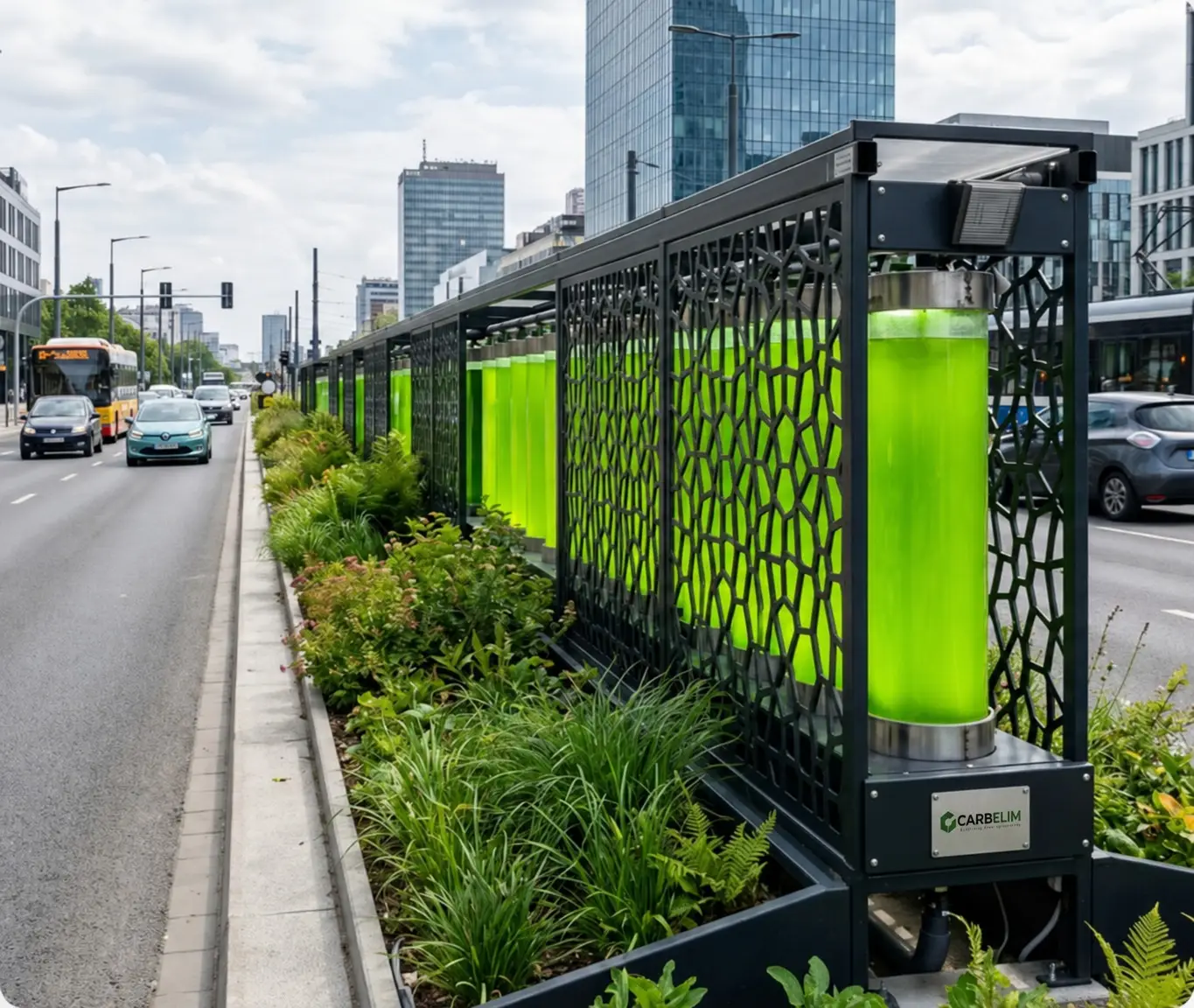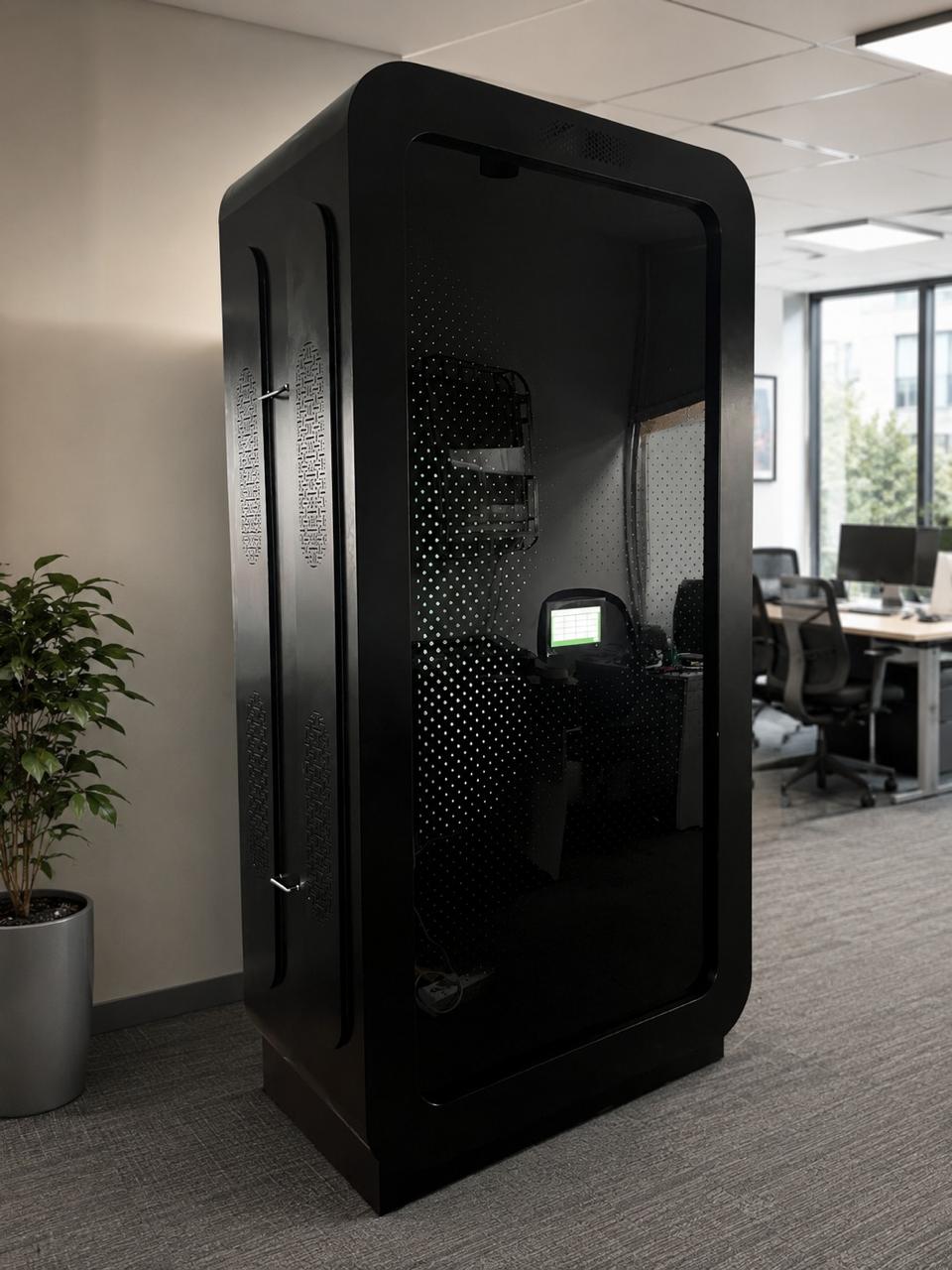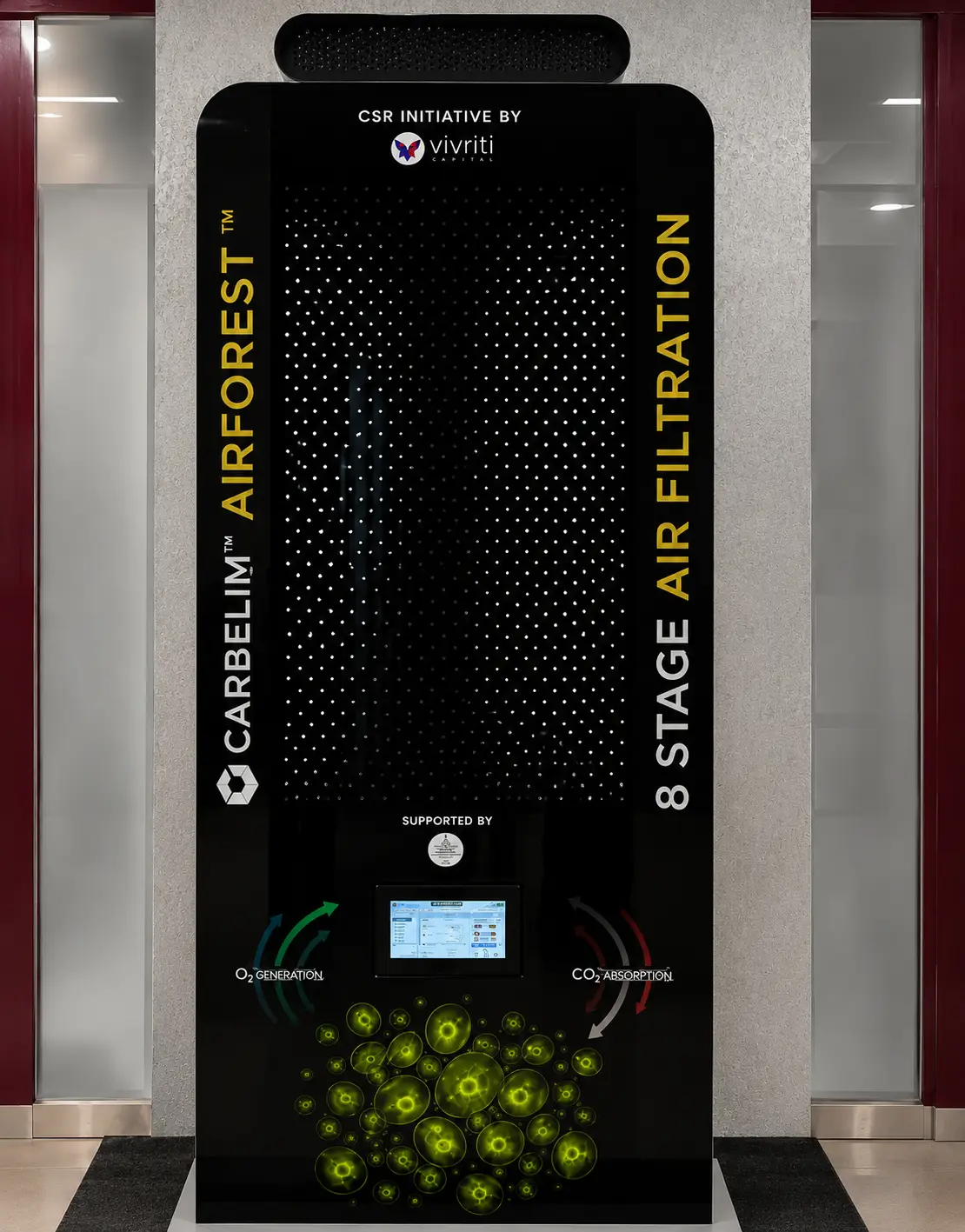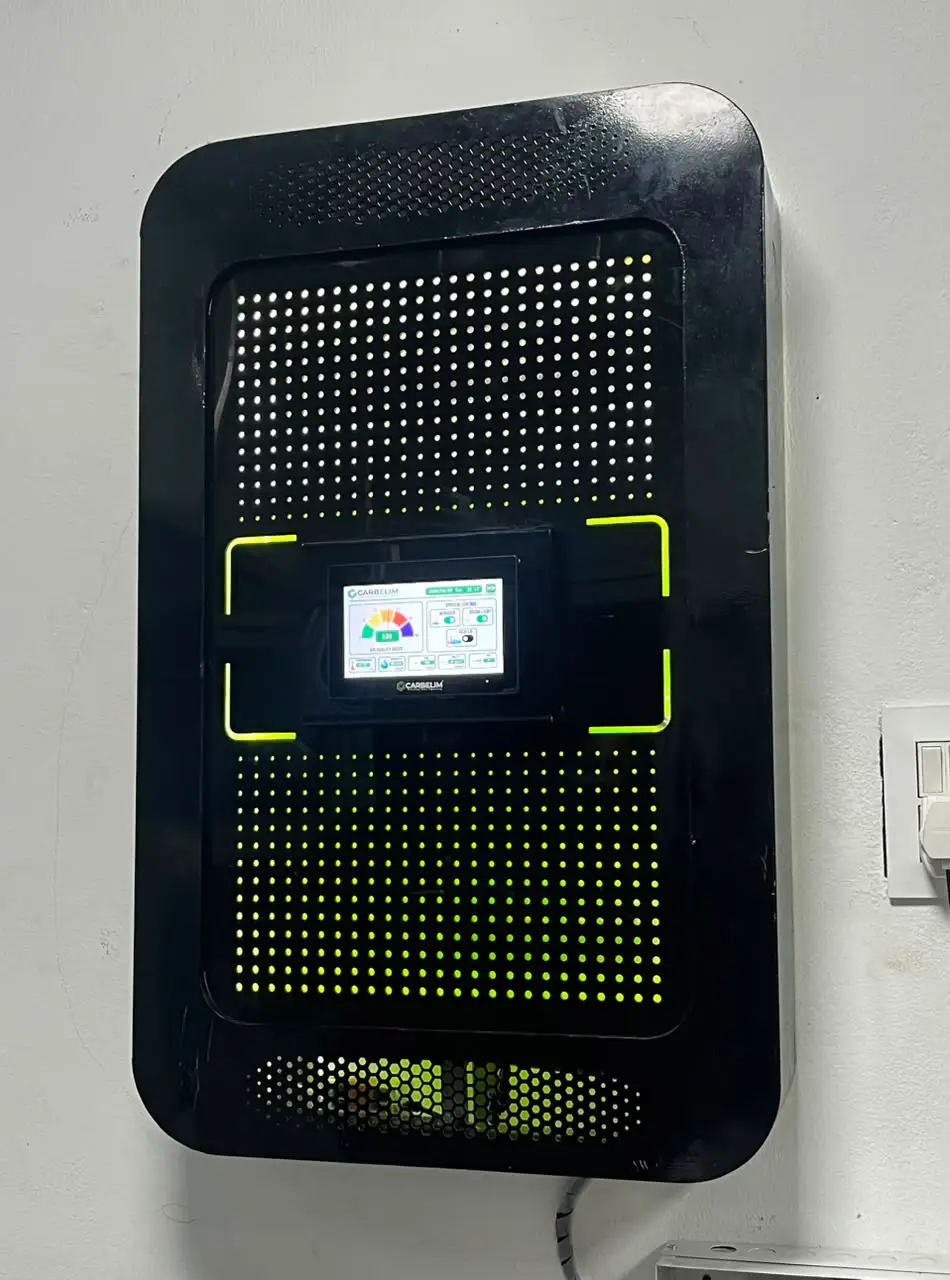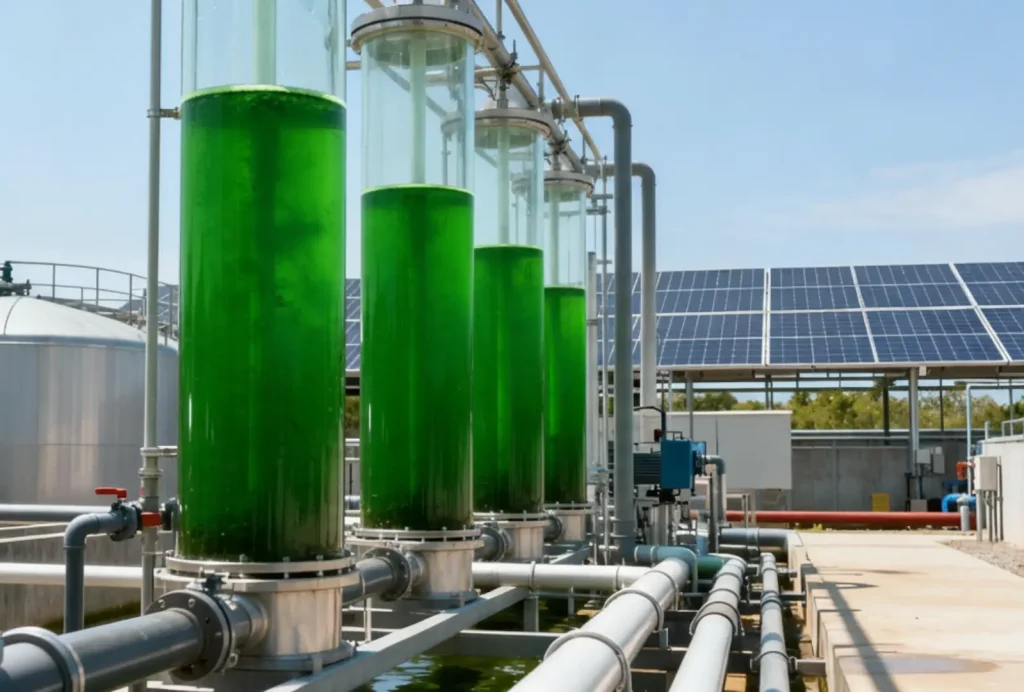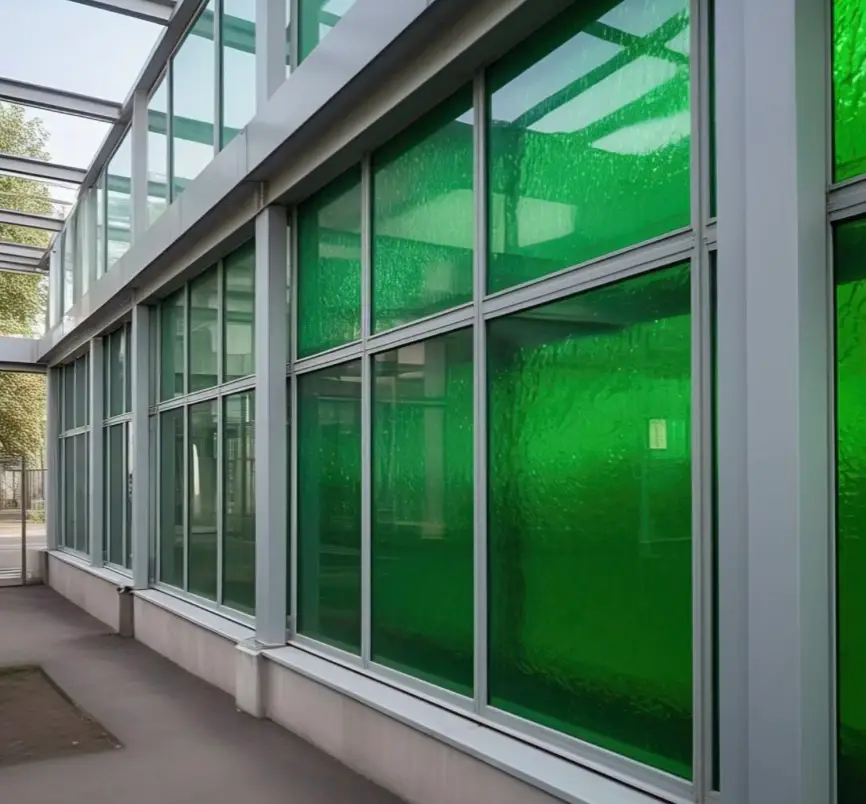
Direct Air Capture system using microalgae technology

Direct Air Capture (DAC) Technology Inspired by Living Systems

Direct Air Capture (DAC) is a carbon dioxide removal approach designed to extract CO₂ directly from ambient air. Carbelim explores biologically inspired DAC concepts, using living systems like microalgae to study more energy-efficient pathways for localized and indoor CO₂ reduction.

Why Direct Air Capture Matters for CO₂ Reduction

Direct Air Capture (DAC) is generally deployed as a large-scale, outdoor approach to remove carbon dioxide from ambient air. While most DAC systems operate at industrial scale, the underlying principles help inform alternative, localized approaches to CO₂ reduction, especially in environments where traditional DAC deployment is not practical.

Direct Air Capture

The Biological Advantage in Carbon Capture

Unlike conventional DAC systems that rely on energy-intensive sorbents and thermal regeneration cycles exceeding 900°C, Carbelim harnesses microalgae nature’s carbon capture champions to remove atmospheric CO₂ with unprecedented efficiency and minimal energy consumption.

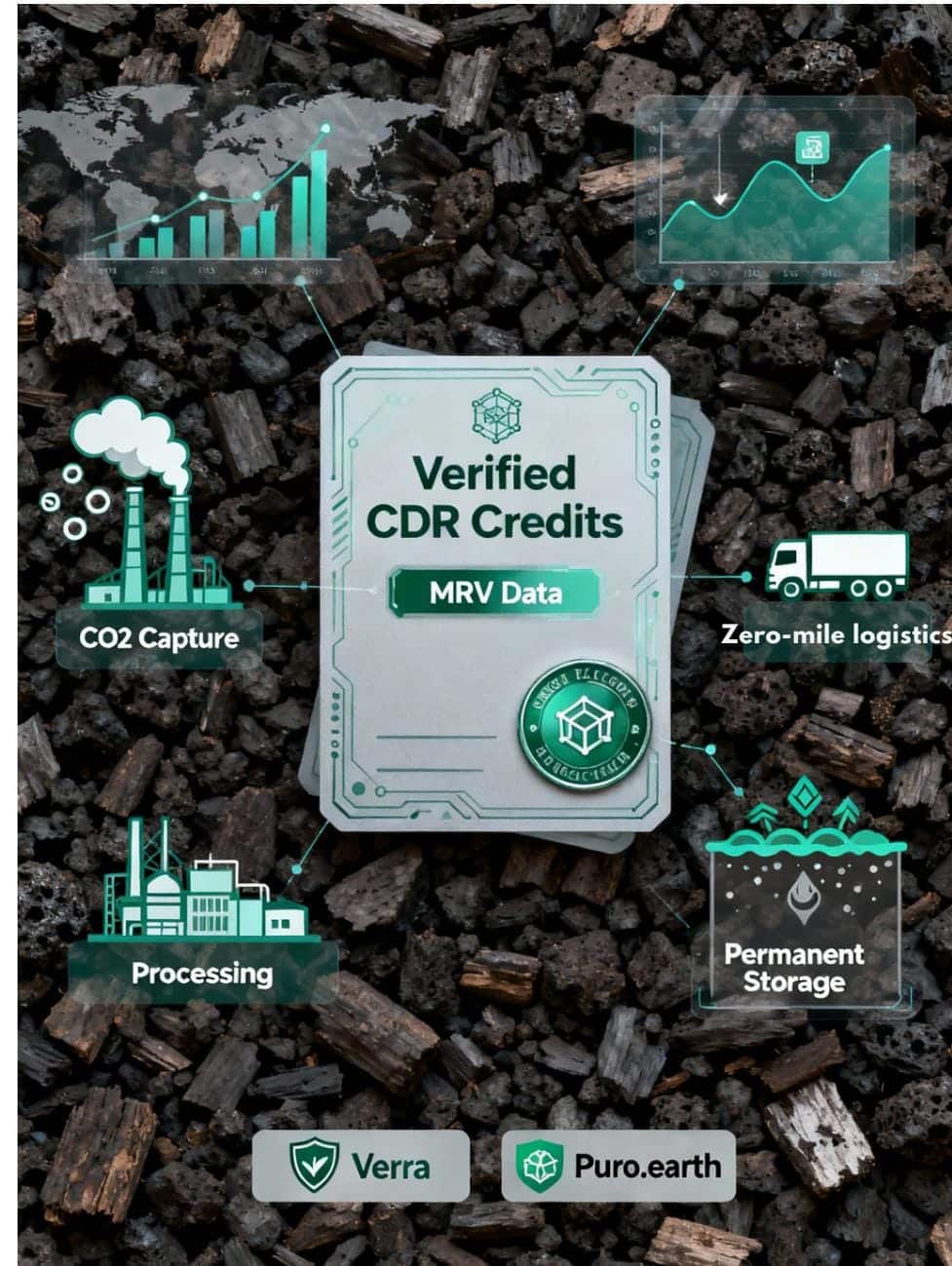
Our nature-enhanced DAC pathway creates a closed-loop system where captured carbon transforms into valuable biomass, then engineered biochar, delivering permanent carbon storage that satisfies the most rigorous MRV (Monitoring, Reporting & Verification) standards for climate commitments worldwide.

Why Microalgae Outperforms Traditional Direct Air Capture

Biomimicking Technology

400x Faster CO₂ Capture


Microalgae assimilate atmospheric carbon 400 times more efficiently than trees, making them amongst the world's most powerful biological carbon removal mechanisms available for industrial deployment.

Negligible Energy Cost

Low-Energy Operation


Our continuous DAC operation consumes significantly less energy than most other existing DAC companies worldwide, due to innovative technology and process efficiencies that minimize power use without compromising performance.

Modular Engineering

Globally Scalable


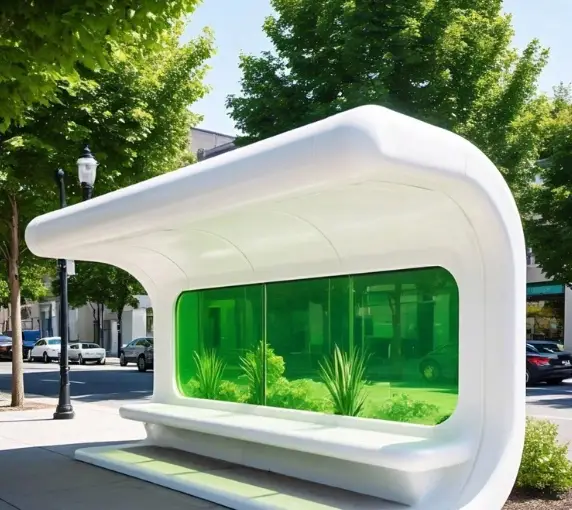
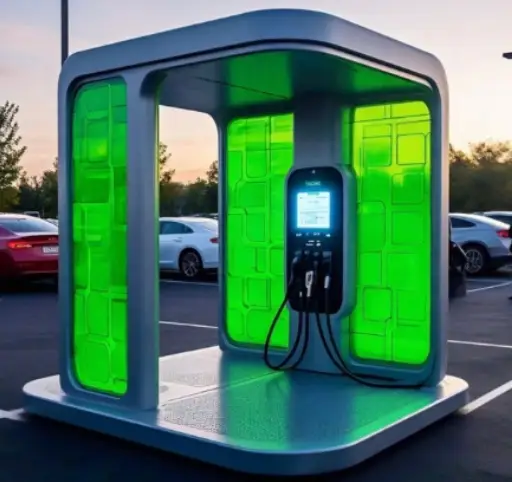
Deploy as urban facade systems, rooftop farms, modular pods for remote locations, or photobioreactor fields across desert, coastal, and industrial environments worldwide.

Biomimicking Technology

Complete Carbon Removal Lifecycle

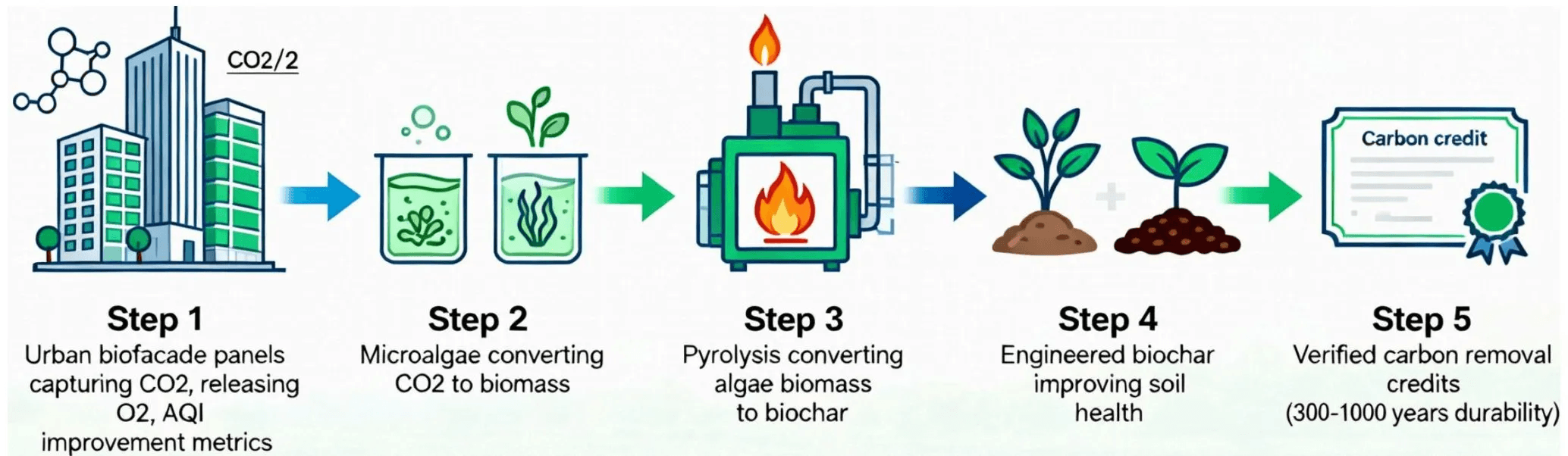
Carbelim’s DAC system operates as a fully integrated carbon capture, utilisation, and storage (CCUS) pipeline—from atmospheric intake through permanent sequestration.

Atmospheric CO₂ Intake
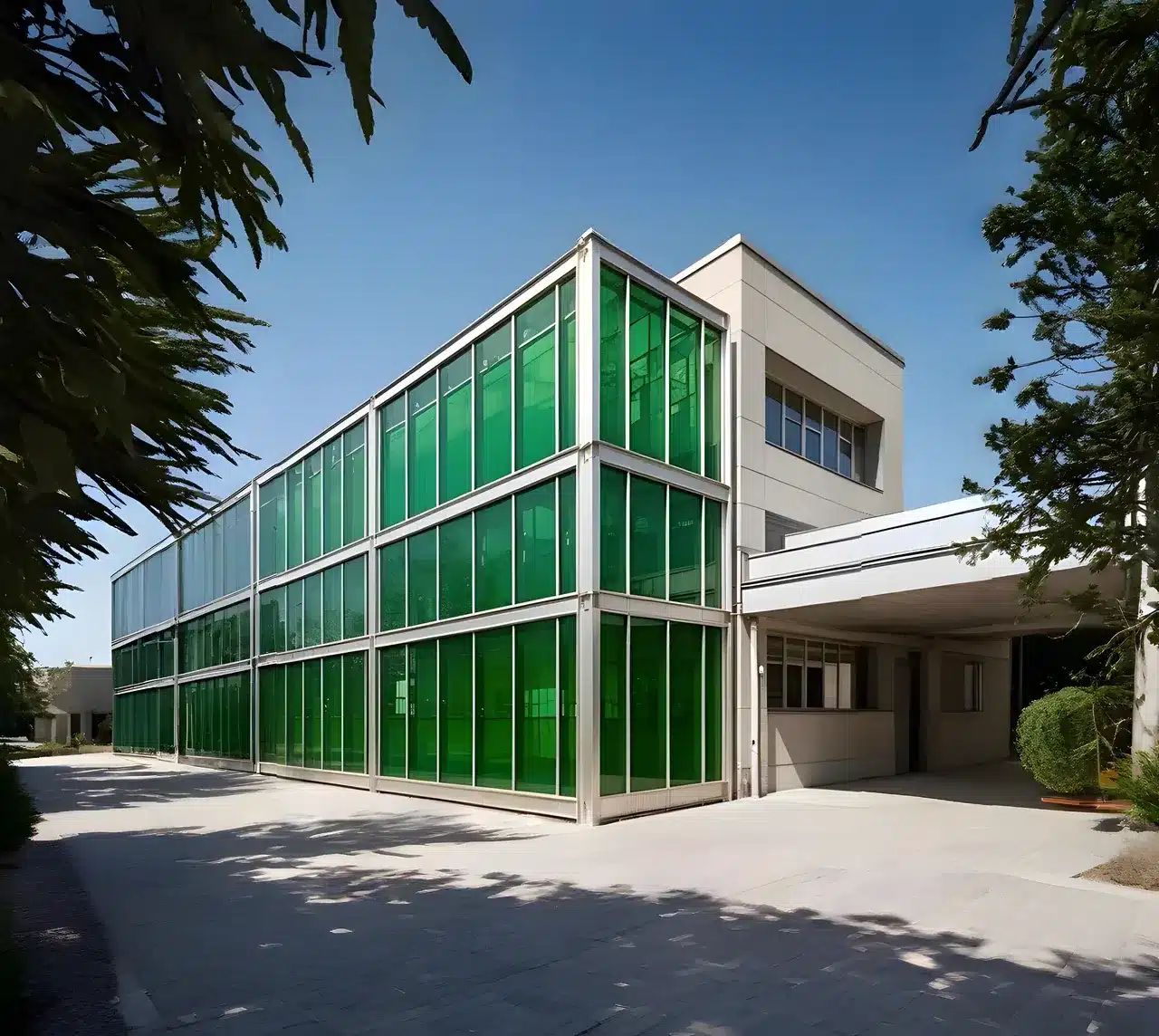
Ambient air flows continuously through transparent photobioreactors containing optimised microalgae strains engineered for rapid CO₂ fixation and stable year-round growth.
Enhanced Photosynthesis
Microalgae convert CO₂ into oxygen and dense biomass using biomimetic light-harvesting mechanisms, optimised lighting, pH balancing, and turbulent-flow circulation.

Biomass Harvesting
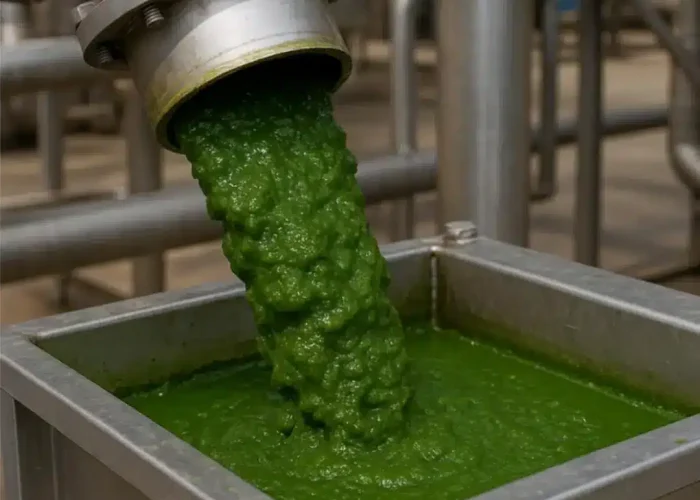
Captured carbon is harvested as concentrated algal slurry using gravity separation, microfiltration, and low-energy drying technologies.
Biochar Engineering
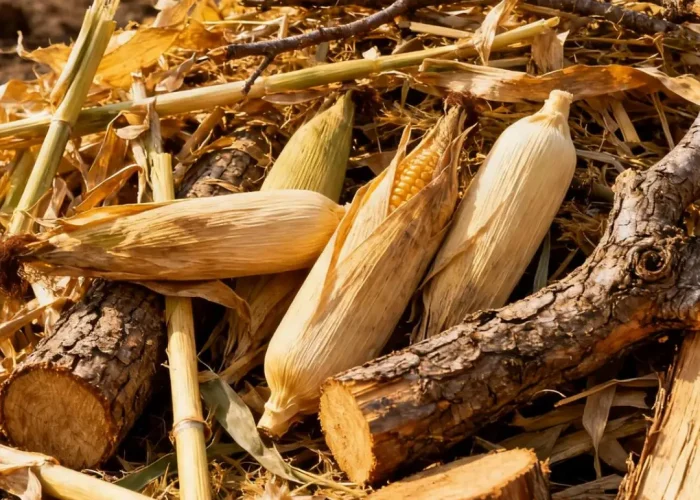
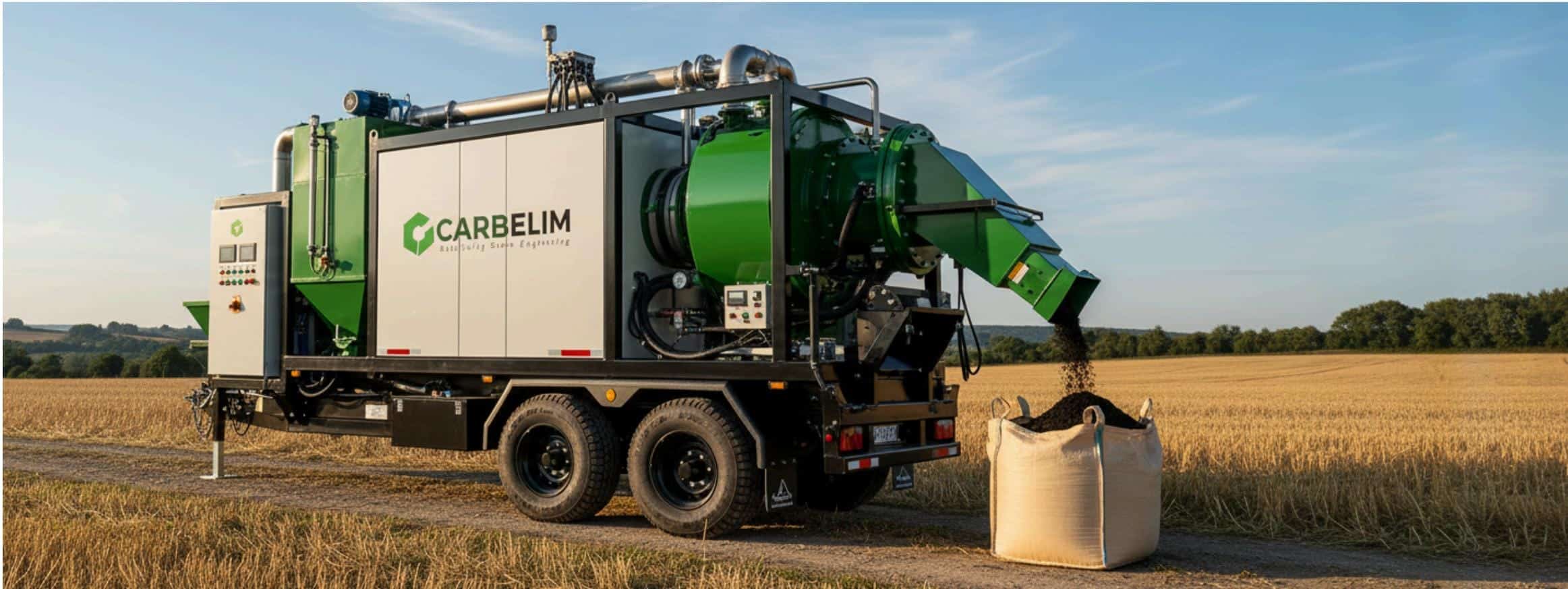
Biomass blends with agro-forestry residues in controlled pyrolysis, producing ultra-stable biochar locking carbon for centuries.
MRV & CDR Credits
Full MRV enables verifiable carbon removal credits with QR-coded batches and geotagged audit trails.

Deployment Versatility Across Environments

Urban Infrastructure

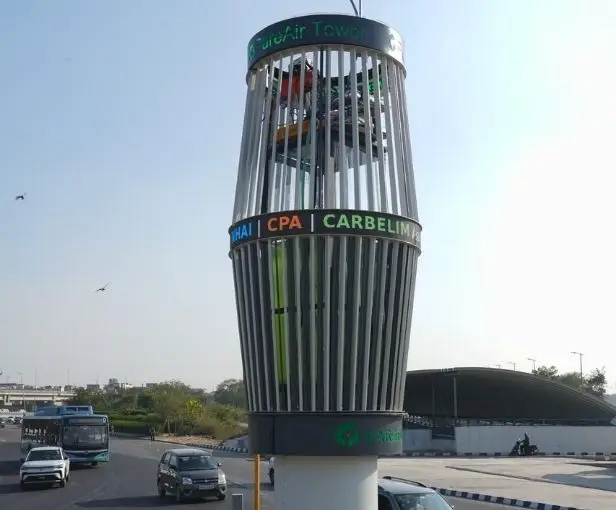
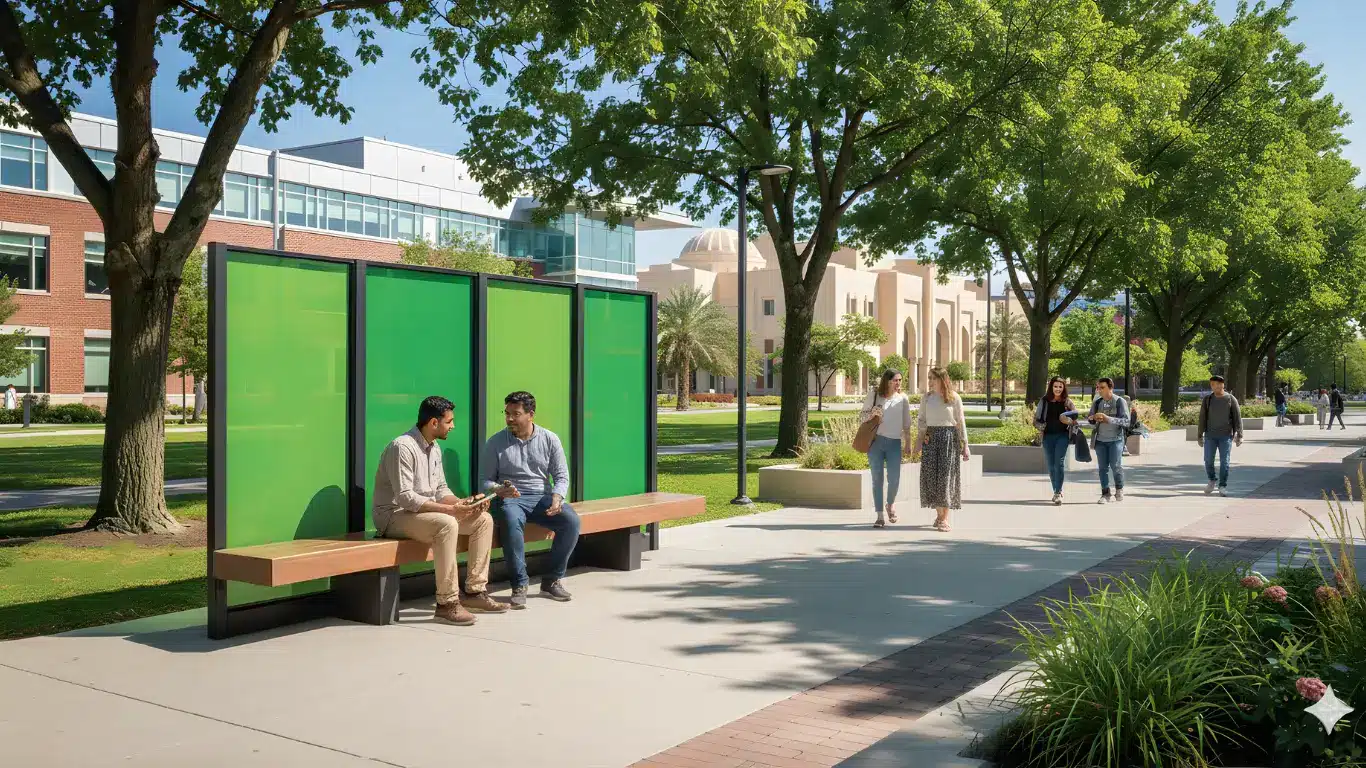
Transform building facades, rooftops of commercial complexes, smart-city infrastructure, and roadway corridors into distributed carbon sinks integrating climate action directly into the urban fabric where emissions concentrate.

Industrial Facilities

Co-locate DAC farms at cement plants, steel mills, glass manufacturers, chemical facilities, refineries, and logistics hubs enabling facility-level carbon dioxide removal at the source of hard-to-abate emissions.

Remote & High-Emission Zones

Deploy modular DAC pods in deserts, arid regions, landfills, waste sites, and renewable energy farms turning underutilised land into productive carbon removal infrastructure with minimal water requirements.

Agricultural Regions

Establish DAC farms co-located with agricultural operations where agro-residues can be integrated into biochar blending creating circular carbon economies that enhance soil health whilst removing atmospheric CO₂.

Performance Metrics That Matter

1000+
Years of Carbon Storage
Algae-derived biomass is co-pyrolyzed with agroforestry residues to produce ultra-stable biochar, locking carbon for 300–1,000+ years.
3
Tons CO₂ Captured
Each module captures approximately 3 tons of CO₂, equivalent to ~2.6 verified carbon credits, permanently stored as stable biochar.
Carbon capture data's

Carbelim vs Traditional Direct Air Capture Technology

Performance FactorTraditional Chemical DACCarbelim Microalgae DAC
Energy ConsumptionHigh demand, 800–900°C regenerationUltra-low operational energy, no thermal cycles
Capture MediumExpensive chemical sorbents requiring replacementSelf-replicating biological medium
Co-ProductsNone – pure cost centreBiomass → Biochar → Soil enhancement
Public PerceptionIndustrial, limited acceptanceGreen, visible, community-friendly
MaintenanceComplex operations & maintenanceAutomated AI/IoT control systems
ScalabilityLimited by energy infrastructureModular deployment in any climate

Carbelim’s nature-enhanced approach delivers superior economics, environmental performance, and social acceptance making it the pragmatic choice for organisations committed to meaningful climate action at scale.

High-Integrity Carbon Removal Credits

MRV Transparency for Global Markets

Carbelim’s DAC pipeline includes comprehensive Monitoring, Reporting & Verification protocols that satisfy the most stringent carbon market requirements. Our system tracks every stage of the carbon removal process with unprecedented precision and transparency.
Input CO₂ Monitoring
Continuous atmospheric intake measurement with sensors and cloud backups
Growth & Yield Tracking
Real-time biomass productivity data and photosynthetic efficiency metrics
Pyrolysis Carbon Retention
Laboratory-verified biochar stability and carbon fraction analysis
Batch Traceability
QR-coded documentation linking removal to storage with geotagged reports
This rigorous approach produces premium carbon dioxide removal credits qualified for Puro.Earth, Verra, and upcoming ICROA-aligned methodologies—giving corporate buyers and government programmes the confidence they need for climate commitments.

Direct Air Capture Systems for Industrial & Commercial Applications

1
Corporate Net-Zero Programmes
Offset unavoidable Scope 1, 2, and 3 emissions with verifiable, nature-based DAC. Meet SBTi targets with permanent carbon removal credits.
2
Urban Climate Infrastructure
Install DAC façade systems that convert cities into visible climate-positive corridors while improving air quality.
3
Government Climate Action
Deploy DAC microfarms for NDC alignment, climate tech capacity building, and green job creation.

4
Industrial Carbon Removal
Co-locate DAC systems at industrial sites to remove hard-to-abate emissions while enabling circular carbon management.
5
Carbon Credit Markets
Access premium DAC+biochar carbon credits with additionality and permanence that satisfy global compliance and voluntary markets.

Build Your Direct Air Capture Technology with Carbelim

Next-Generation Climate Infrastructure

Carbelim represents the convergence of nature and engineering delivering real, durable carbon removal at scale through microalgae-powered DAC systems designed for global deployment.

Whether you’re a corporate sustainability leader navigating net-zero commitments, a government agency implementing climate action plans, or a carbon-credit buyer seeking high-integrity CDR, Carbelim provides a scalable, verifiable path to permanent atmospheric carbon dioxide removal.

Best-in-Class Energy Efficiency

Ultra-low operational costs without thermal regeneration

Full CCUS Pipeline

Capture → Biomass → Biochar → Premium CDR Credits

MRV-Ready Platform

Compliance and voluntary market transparency

Carbon Credit

Direct Air Capture FAQs

Direct Air Capture is generally relevant for industries with high or hard-to-abate carbon emissions, such as manufacturing, cement, steel, energy, and urban infrastructure. Carbelim’s work focuses on biologically inspired DAC concepts that explore how living systems may support localized and distributed CO₂ reduction in selected built environments.

In industrial and commercial settings, Direct Air Capture systems continuously draw in ambient air and selectively remove carbon dioxide. Carbelim’s biological DAC approach uses microalgae to naturally absorb CO₂ through photosynthesis, converting it into biomass. This process operates at ambient conditions, reducing energy demand compared to conventional thermal or chemical DAC systems.

Carbelim’s biologically inspired Direct Air Capture concepts are best suited for pilot-scale, localized, and built-environment applications, such as commercial buildings, campuses, data centers, urban infrastructure, and controlled industrial environments. These settings allow DAC principles to be explored where emissions are diffuse and conventional point-source capture is not feasible.

Traditional carbon capture systems typically capture CO₂ directly from industrial exhaust streams, while Direct Air Capture removes carbon dioxide directly from the atmosphere. DAC can address emissions that are already released or cannot be captured at source, making it complementary to CCS. Biological DAC further differs by using natural processes instead of energy-intensive chemical sorbents.

Biological Direct Air Capture can be suitable for industrial and large-scale facilities when implemented as a distributed or phased solution. Carbelim’s approach is intended to reduce operational complexity and energy demand compared to traditional DAC, making it adaptable for pilot projects and scalable deployments.

Direct Air Capture forms part of Carbelim’s broader Clean Air CO₂ Capture platform by informing how biological systems can be integrated into modular, distributed solutions. Rather than operating as standalone industrial DAC plants, these concepts complement Carbelim’s focus on indoor air quality, localized CO₂ reduction, and nature-inspired carbon management approaches.

Contact us to learn more about Carbelim’s biologically inspired CO₂ reduction research and explore how living systems can support localized and indoor air quality improvement initiatives.


Scroll to Top