Indoor air quality plays a critical role in our health, comfort, and productivity. While most people focus on dust, allergens, or PM2.5 particles, one invisible factor often goes unnoticed—carbon dioxide (CO₂). High indoor CO₂ levels are increasingly common in modern homes, offices, and schools, and they can significantly affect how we feel and perform.
In this guide, we’ll explore why indoor CO₂ levels rise, how they impact health, and most importantly, natural and sustainable ways to reduce high CO₂ levels indoors—without relying solely on energy-intensive mechanical systems.
What Is CO₂ and Why Does It Build Up Indoors?
Carbon dioxide is a natural gas produced when humans and animals breathe. Outdoors, CO₂ typically stays around 400–420 ppm (parts per million). Indoors, however, CO₂ can accumulate quickly due to:
- Poor ventilation
- Airtight building designs
- High occupancy
- Long hours spent in enclosed spaces
Modern energy-efficient buildings are designed to minimize air leakage. While this reduces energy loss, it also traps exhaled CO₂ indoors, especially in offices, classrooms, meeting rooms, and bedrooms.
Unlike outdoor pollution, indoor CO₂ doesn’t come from factories or vehicles—it comes from us.
What Are Safe Indoor CO₂ Levels?
Understanding safe CO₂ thresholds helps you recognize when action is needed.
| CO₂ Level (ppm) | Indoor Air Quality |
|---|---|
| 400–600 | Excellent (fresh outdoor air) |
| 600–1,000 | Acceptable |
| 1,000–1,500 | Poor (drowsiness, reduced focus) |
| 1,500–2,000 | Unhealthy |
| 2,000+ | Very unhealthy |
Many offices and homes regularly exceed 1,200–1,500 ppm, especially during meetings or at night in closed bedrooms.
Symptoms of High CO₂ Levels Indoors
Elevated CO₂ doesn’t smell bad or cause immediate alarm—but its effects are real.
Common symptoms include:
- Headaches
- Fatigue and sleepiness
- Difficulty concentrating
- Poor decision-making
- Reduced cognitive performance
- Restless sleep
Studies show that cognitive performance can drop by up to 15–20% at CO₂ levels above 1,500 ppm—even when oxygen levels remain normal.
Why Reducing Indoor CO₂ Naturally Matters
Mechanical ventilation systems can help, but they often:
- Increase energy consumption
- Require significant infrastructure
- Pull in polluted outdoor air (especially in cities)
Natural CO₂ reduction strategies focus on:
- Sustainable airflow
- Biological processes
- Low-energy solutions
- Long-term indoor health
These approaches are especially relevant for urban homes, green buildings, and net-zero spaces.
1. Improve Natural Ventilation (The First Step)
The most straightforward way to reduce indoor CO₂ is to replace stale indoor air with fresh outdoor air.
Practical tips:
- Open windows on opposite sides of a room for cross-ventilation
- Ventilate rooms early morning or late evening when outdoor pollution is lower
- Keep doors between rooms open to improve airflow
- Avoid sealing rooms completely during occupancy
Limitation:
In polluted cities or extreme climates, opening windows is not always practical or healthy.
2. Optimize Room Occupancy
CO₂ levels rise directly with the number of people in a space.
Natural strategies:
- Avoid overcrowding small rooms
- Take breaks from enclosed spaces every 1–2 hours
- Use larger rooms for meetings
- Stagger work schedules where possible
This is especially important in:
- Conference rooms
- Classrooms
- Home offices
- Bedrooms at night
3. Use Indoor Plants (With Realistic Expectations)
Plants absorb CO₂ during photosynthesis—but the effect is often misunderstood.
What plants can do:
- Slightly reduce CO₂ over long periods
- Improve psychological comfort
- Increase humidity balance
What they cannot do:
- Rapidly reduce high CO₂ in occupied rooms
- Replace ventilation or active systems
To match the CO₂ absorption of one person, you would need dozens to hundreds of plants in a single room.
Plants are beneficial—but not a complete solution.
4. Reduce CO₂ Buildup at Night (Bedrooms)
Bedrooms often experience the highest overnight CO₂ levels, especially with doors and windows closed.
Natural bedroom tips:
- Ventilate the room before sleeping
- Keep bedroom doors slightly open
- Avoid sealing windows completely overnight if outdoor air allows
- Use passive airflow paths (vents, louvers)
Improving nighttime CO₂ levels can significantly improve sleep quality and morning alertness.
5. Use Low-Energy Air Exchange Strategies
If full mechanical ventilation isn’t possible, consider passive or hybrid approaches:
- Window vents with filters
- Trickle vents in walls
- Stack ventilation using vertical airflow
- Ceiling fans to distribute fresh air evenly
These methods don’t remove CO₂, but they prevent localized buildup.
6. Biological CO₂ Reduction Using Living Systems
This is where natural solutions go beyond plants.
How living systems help:
- Microalgae actively absorb CO₂ at much higher rates than plants
- They convert CO₂ into oxygen and biomass
- The process works continuously with light and airflow
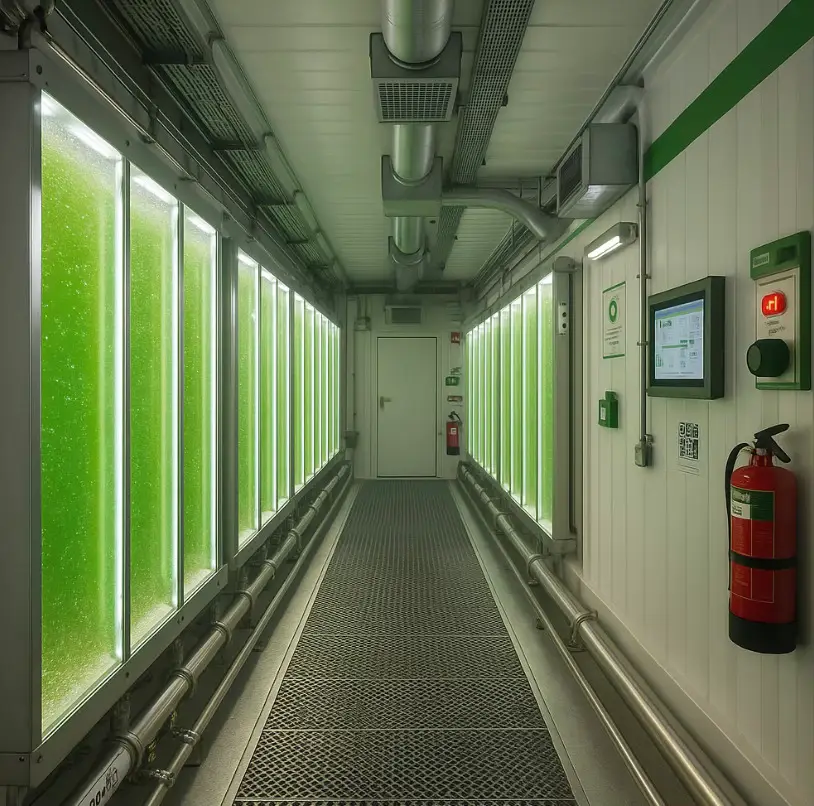
Unlike decorative plants, algae-based systems are engineered specifically for CO₂ capture, making them suitable for indoor environments.
This approach bridges nature and technology—often referred to as living air purification.
7. Algae-Based Air Purification: A Natural Next Step
Algae are among the most efficient natural CO₂ absorbers on Earth.
Why algae work better indoors:
- Much higher photosynthetic efficiency than plants
- Compact systems can operate in occupied spaces
- Continuous CO₂ absorption during use
- Oxygen-rich output air
Modern algae air purification systems integrate:
- Microalgae cultures
- Controlled lighting
- Air circulation
- Minimal energy input
These systems naturally reduce CO₂ while improving overall indoor air quality, without relying on chemical filters.
8. Monitor Indoor CO₂ Levels
You can’t manage what you don’t measure.
Use CO₂ monitors to:
- Identify problem rooms
- Track daily and nighttime peaks
- Measure improvement after changes
- Optimize ventilation timing
Affordable CO₂ sensors now make real-time monitoring accessible for homes and offices.
Natural vs Mechanical CO₂ Reduction: A Comparison
| Aspect | Natural Methods | Mechanical Ventilation |
|---|---|---|
| Energy use | Low | High |
| Maintenance | Minimal | Regular |
| Sustainability | High | Moderate |
| CO₂ removal | Gradual | Fast |
| Long-term health | Excellent | Depends on air source |
The most effective approach often combines natural strategies with intelligent systems rather than relying on one method alone.
Who Should Be Most Concerned About Indoor CO₂?
High indoor CO₂ levels are especially problematic for:
- Offices and co-working spaces
- Schools and classrooms
- Hospitals and clinics
- Urban apartments
- Smart and green buildings
In these environments, natural CO₂ reduction methods offer long-term benefits for health, productivity, and sustainability.
Frequently Asked Questions (FAQs)
Indoor CO₂ above 1,000 ppm is considered poor, and levels above 1,500 ppm can impact health and performance.
Traditional HEPA air purifiers do not remove CO₂. Only ventilation or biological systems can reduce CO₂ levels.
Plants absorb CO₂, but not fast enough to significantly reduce levels in occupied rooms.
Short-term exposure causes discomfort and reduced focus. Chronic exposure can affect sleep, productivity, and wellbeing.
A combination of ventilation, occupancy control, and biological systems like algae is the most natural and sustainable approach.
Final Thoughts: Creating Healthier Indoor Spaces Naturally
As buildings become more airtight and urban lifestyles keep us indoors longer, indoor CO₂ management is no longer optional.
Natural strategies—when applied correctly—can:
- Improve cognitive performance
- Enhance sleep quality
- Reduce fatigue
- Support sustainable living
By combining ventilation, smart design, and nature-based solutions, we can create indoor spaces that don’t just look green—but actually breathe with us.